A NEW CHAPTER
After nearly four decades, storied novelist Susan Straight retires from teaching
By John Sanford | Photos by Stan Lim
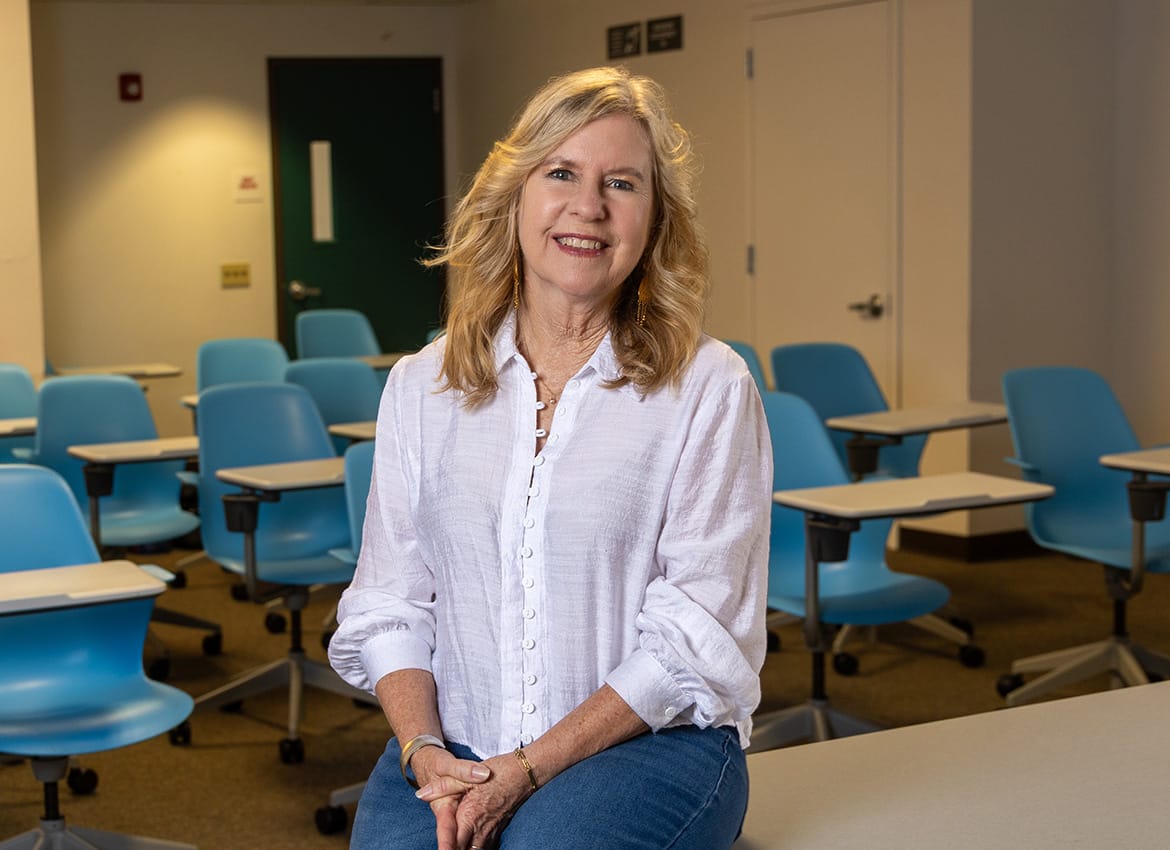
O ver her nearly 40-year career at UC Riverside, Susan Straight has shown students and readers that compelling stories abound in unheralded places.
The award-winning novelist is a lifelong resident of the Inland Empire, a place that barely registers on the mental maps of most Californians, let alone most Americans.
Yet by setting her fiction among the region’s multiethnic families, citrus groves, arroyos, pepper trees, irrigation canals, packing houses, hills, and heat, Straight has helped reshape what literary ambition looks like to generations of aspiring writers.
In June, Straight retired from UCR, where she helped found what is still the only department of creative writing across the UC system.
Now a distinguished professor emerita, Straight has mentored hundreds of students. Many were the first in their families to attend college and have since become successful writers, including Rigoberto González, one of the country’s leading Latino poets and literary critics, and the award-winning novelist and essayist Alex Espinoza, who holds the Tomás Rivera Endowed Chair of Creative Writing at UCR.
“I don’t think there would be a creative writing department here if it weren’t for Susan,” Espinoza said. “She’s been a cornerstone of it for as long as many of us can remember. Not only did she influence me and shape my writing, but she’s done it for countless others, too. I’m the writer I am because of Susan. I’m the teacher I am because of Susan.”
Several of her former students, including Espinoza, described Straight as a no-nonsense teacher. “My first impression of her was that she was very direct, very straightforward, very honest — no bulls--t, if you’ll pardon my language,” Espinoza said.
Espinoza was born in Tijuana, Mexico, and grew up in the San Gabriel Valley and Inland Empire. As a transfer student to UCR in 1997, he enrolled in Straight’s introductory fiction-writing course. On the first day of class, she asked the assembled students if any of them knew what a “ranfla” was, Espinoza recalled. He raised his hand: a lowrider.
“She made me feel welcome with just one word,” Espinoza said.
“Here was this short white woman with glasses and blonde hair, using language I was familiar with from my own neighborhood in the San Gabriel Valley. It blew me away that someone who looked like her could possess that knowledge, and that she was allowing that language into the larger academic sphere, shattering the perception that academia needs lofty language to describe or explain things.”
González, who was among her earliest students, echoed those sentiments.
“Susan was an inspiration from the very beginning — she walked into the classroom excited, curious, and willing to listen, and suddenly I felt heard and seen,” he said. “I became more willing to speak and take risks — a way of being in the world I was not used to.”
As a mentor to young writers, Straight said she tries to emulate the late James Baldwin, the distinguished novelist and essayist who nurtured her development in the early 1980s, when she was an MFA student at the University of Massachusetts Amherst. Baldwin fostered her belief in herself as a writer, she said.
“I love when my students tell me they didn’t think they could be a writer until I told them they could, because that’s pretty much how I felt until James Baldwin told me I could,” she said.
It was also Baldwin who encouraged Straight to draw inspiration from the Inland Empire, telling her, “It is imperative that you write about this world.” She said she approaches her students’ work with the same eye, helping them pinpoint what makes their writing distinctive.
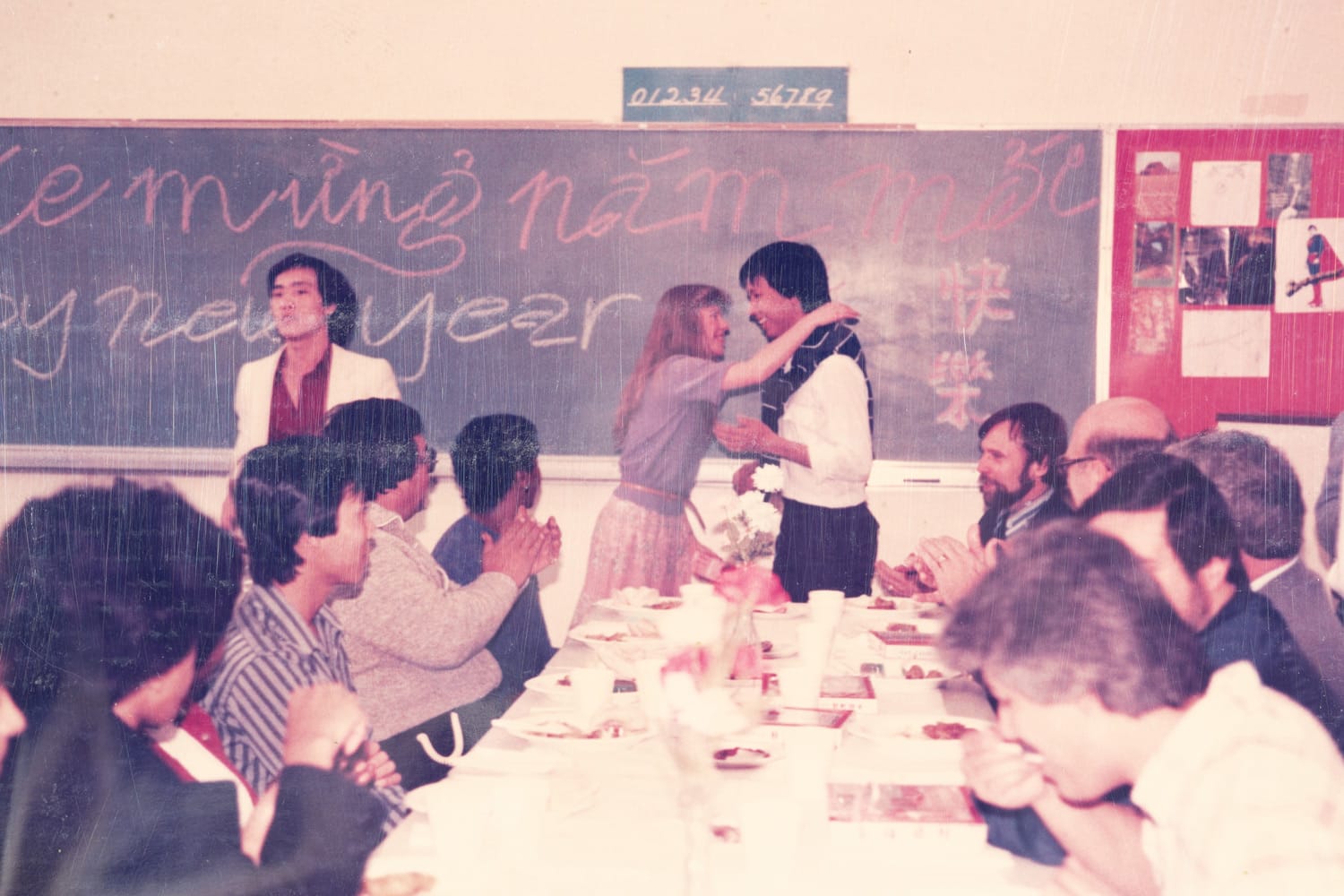
Even in retirement, Straight continues to work with former students, such as Daniel Lopez, who grew up in San Bernardino and works as a high school teacher there, and Martin Velasco Ramos, who lives in Visalia, California.
“With a student like Daniel Lopez, I tell him no one could write this story but him,” she said. “Martin Velasco Ramos is writing about Visalia. The minute I had him in class, I told him he was the real thing — that he had to be published.”
In class, Straight would insist that material for stories was everywhere, Espinoza said.
“She really challenged us to look not just at who our characters are or were, but where they lived, and how they embodied and breathed the landscape they inhabited,” he said. “I think she taught me to really value and respect places that typically don’t get written about or chronicled in literature.”
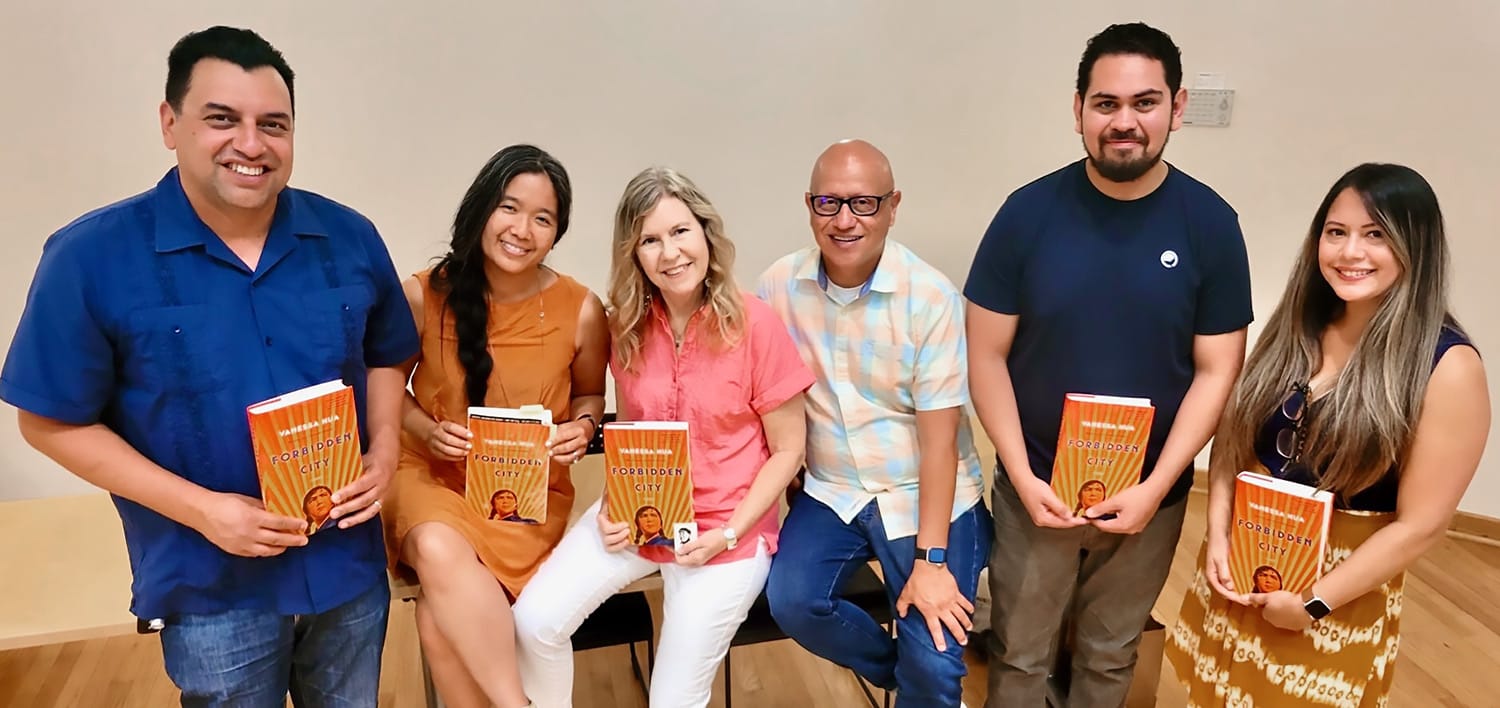
Vanessa Hua, a journalist and award-winning author of four books, said she recently met up with several fellow graduates of the MFA program at UCR. They talked about how fortunate they were to have Straight as a role model.
“Susan has been an amazing mentor for more than a decade — generously teaching me so much about writing and how to be in the world: with curiosity, openness, strength, and compassion,” Hua said.
The breakout science fiction writer Micaiah Johnson — whose debut novel, “The Space Between Worlds,” won critical acclaim and multiple awards — said that being taught by Straight was one of her luckiest breaks.
“She is the reason I still view writing as a gift prepared for others, rather than a self-aggrandizing ego trip,” said Johnson, who earned a bachelor’s degree at UCR in 2013. “Not a day passes in this business where I don’t encounter someone that makes me think, ‘You clearly didn’t have Susan Straight as a teacher, and it shows.’ She remains one of the most inspiring teachers I have encountered in my life.”
Notes of a Native Daughter
Baldwin said that every writer has one essential story to tell, and the task is to keep telling it in ways that become ever more precise and resonant.
For Straight, that story has been the Inland Empire, particularly Riverside, where she was born in 1960 and has lived ever since, except for several years as a student at Amherst and the University of Southern California, in Los Angeles, where she was an undergraduate. In 1988, she and her then-husband, Dwayne Sims, bought a 1910 Craftsman bungalow with a broad porch and picket fence in one of Riverside’s historic neighborhoods. It’s where she raised her three daughters and continues to reside.
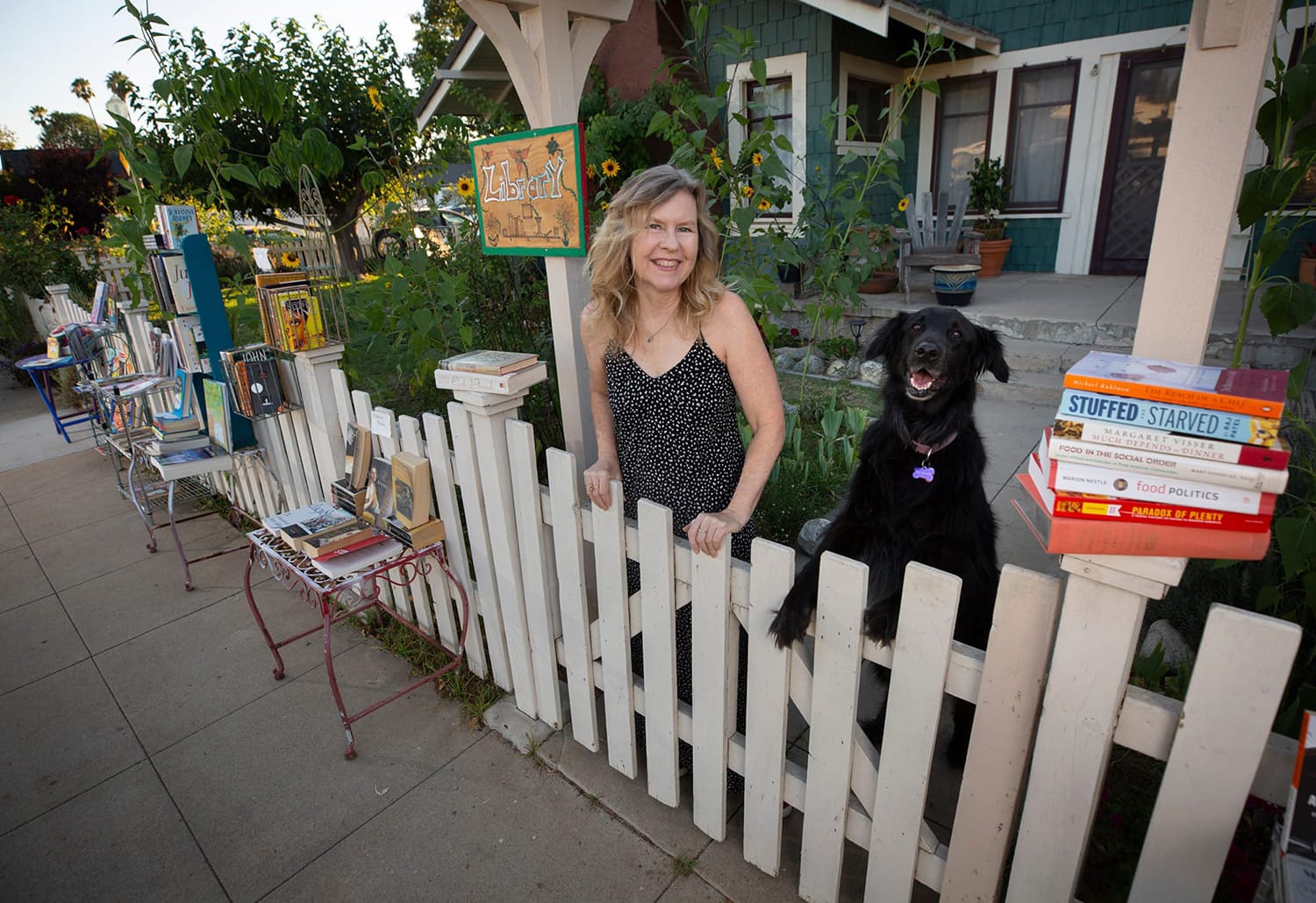
During the coronavirus pandemic, when schools and libraries closed, she began putting books on shelves and tables on the sidewalk outside her home, forming what became known as the fence library. What started as an improvised response to a crisis became a fixture of the neighborhood, sustained by donations from colleagues, students, and UCR staff.
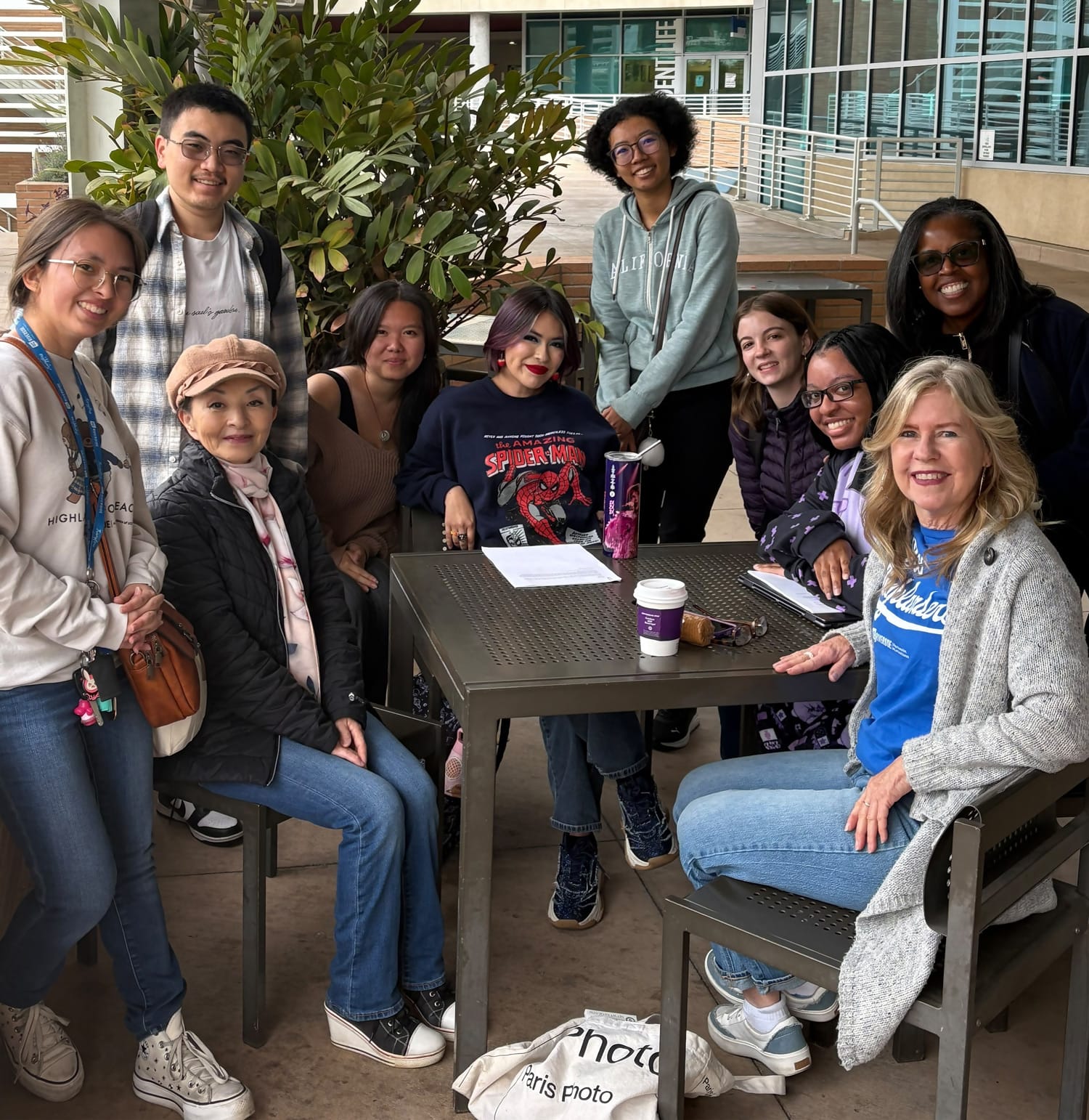
Even before she walked onto campus as a lecturer, UCR played an important part in Straight’s life.
“I used to take my little brothers and sisters there because it was safe — like a huge park,” she said.
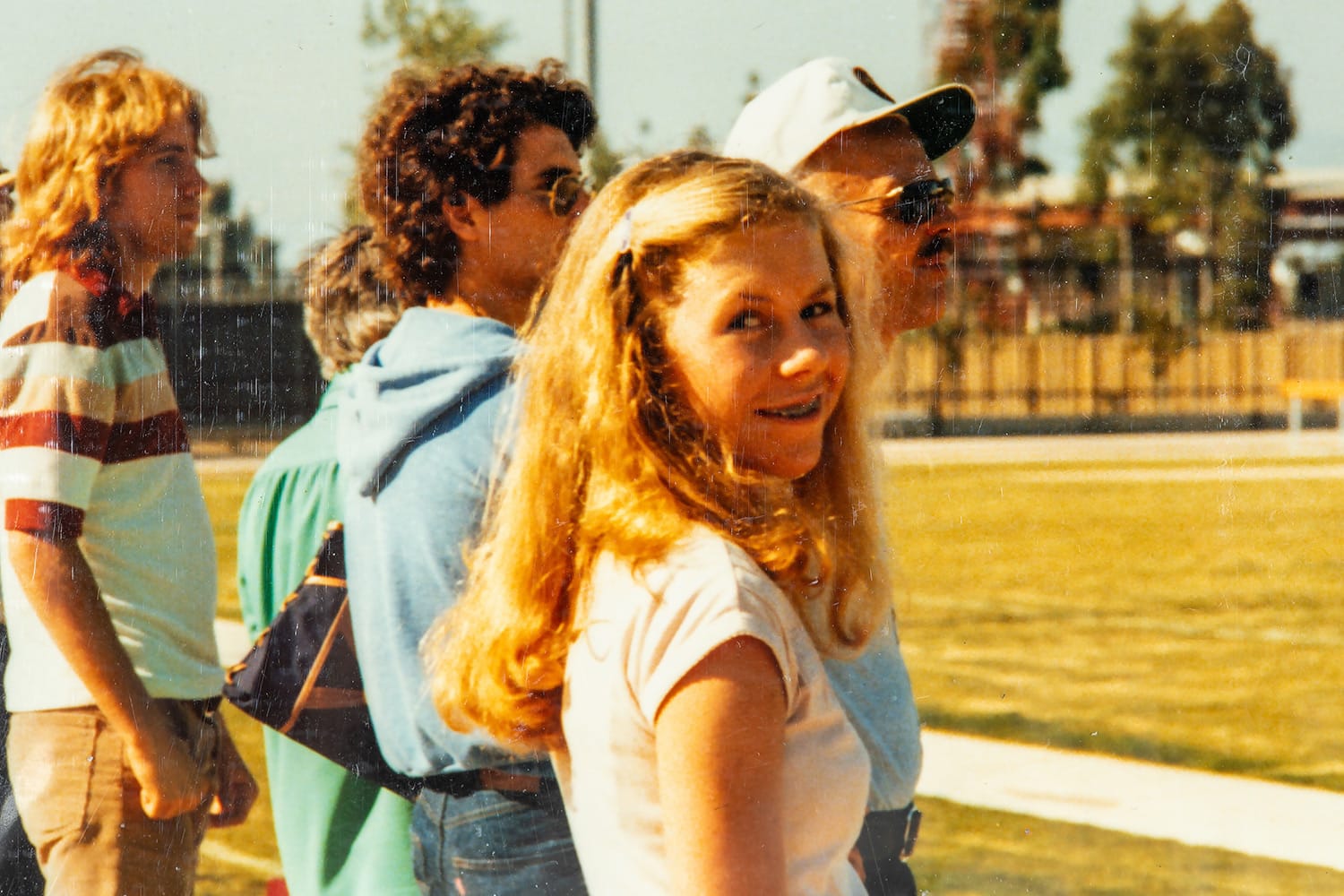
She would hit tennis balls against a wall on campus and watch her high school boys’ basketball team scrimmage at a gym there, she recalls in her memoir, “In the Country of Women.” After practices, she would meet Sims, a forward on the team, under a tree on campus.
“I walk past that tree every day at the university where I have taught now for 30 years,” she writes in her memoir. “I try not to tell my students.”
With a mother who raised foster children for nearly 10 years and a father who owned a laundromat, Straight was solidly working-class. She ate “a lot of hot dog casserole, tuna casserole, and potatoes” and wore “the same home-sewn T-shirts and shorts” as her siblings and foster siblings, she writes in the memoir.
A bookworm from an early age, she consumed whole shelves of literature at the Riverside Public Library and its bookmobile, recalling summer days spent reading in that air-conditioned bus. In her youth, she earned money by mowing lawns, cleaning homes, and, at 16, working at the Riverside Fox Theater, when it was still a movie house.
Straight’s novels are populated with characters based on the people she’s known in Riverside — migrant farmworkers, nurses, mechanics, housekeepers, teachers, former inmates, foster children, single parents, teenage mothers, drug addicts — representing a multitude of races and ethnicities that are not easily reduced. Instead, characters often possess complex family histories that reflect California’s centuries of migration and cultural mixing.
Like William Faulkner with Yoknapatawpha County or Thomas Hardy with Wessex, Straight returns repeatedly to Rio Seco, a fictionalized version of familiar terrain in her novels, building a layered literary geography where roads, neighborhoods, families, and local history accumulate meaning over decades.
“Susan put Riverside on the literary map,” Espinoza said. “It’s no easy feat to get agents and editors in New York to pay attention to Riverside and the Inland Empire, and she single-handedly did that, in ways we’re still seeing the benefits of.”
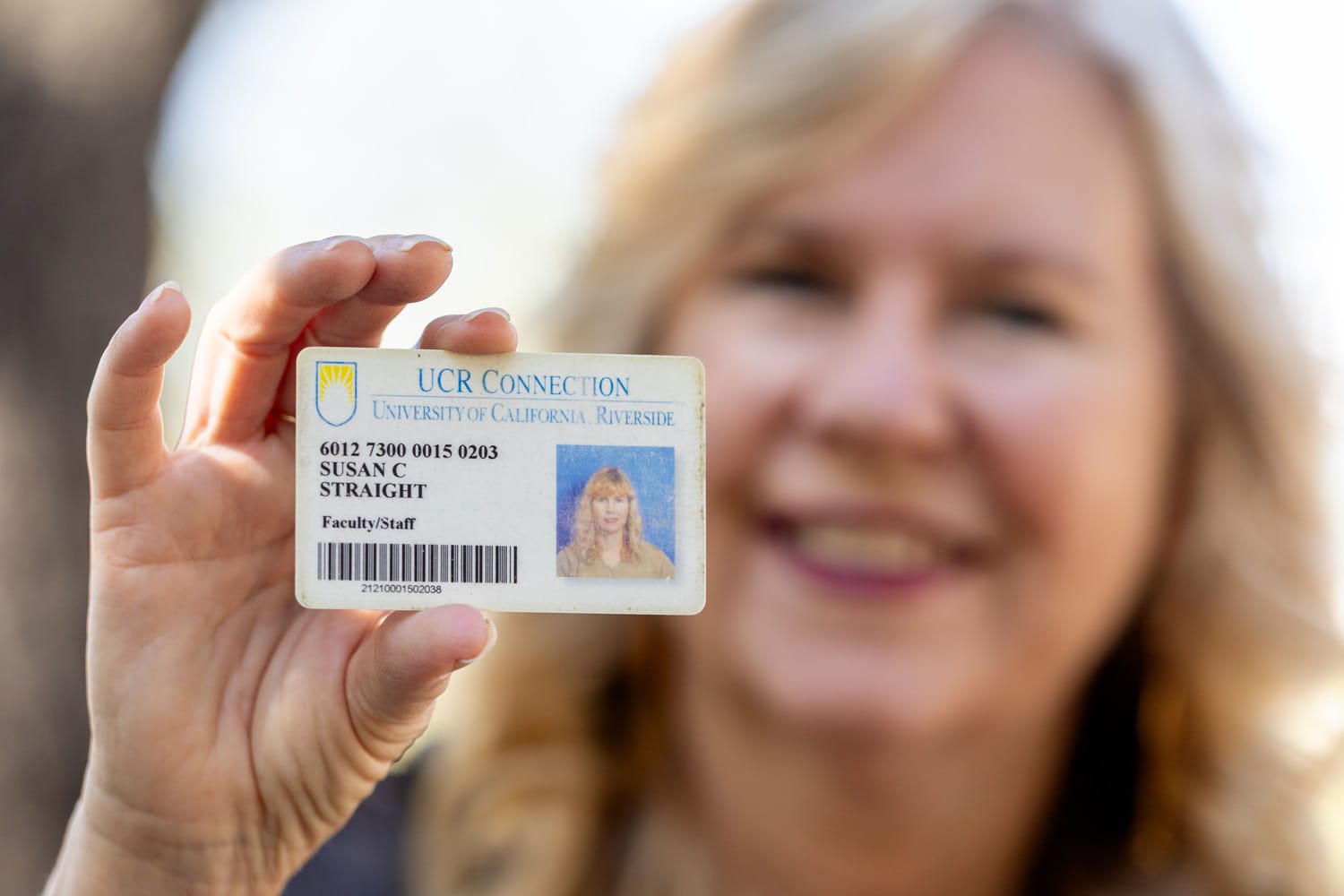
No Resting on Laurels
Straight has built a large body of work: 10 novels, a memoir, and hundreds of short stories and essays. Her work has been recognized with several major literary awards, including two California Book Awards Gold Medals, and has been shortlisted for the National Book Award, Kirkus Prize, Dayton Literary Peace Prize, and Los Angeles Times Book Prize. It has appeared on best- and notable-book lists in The New York Times, The Washington Post, NPR, Los Angeles Times, USA Today, and Publishers Weekly, among others.
She is a Guggenheim fellow and a recipient of the Robert Kirsch Award for lifetime achievement, presented annually by the Los Angeles Times. In 2021, Straight was named Woman of the Year for California’s 61st Assembly District in southwest Los Angeles County. For her body of work, she received the 2011 Gina Berriault Award, a national literary prize presented by San Francisco State University, and the 2007 Lannan Literary Award for Fiction. She is not slowing down.
Straight is at work on a new novel, “Honeybunch,” the third installment of a planned quintet that began with “Mecca” (2022) and was followed by “Sacrament” (2025).
Recently, she has been splitting her time between Riverside and Oakland, helping her middle daughter, an assistant curator of photography at the San Francisco Museum of Modern Art, care for her baby.
Over the Fourth of July weekend, she visited the Graton Resort & Casino, an Indian casino in Northern California, at the invitation of longtime friend and author Greg Sarris, who is chairman of the Federated Indians of Graton Rancheria as well as a UC Regent. She is writing an article about her experience there.
“I’ve never set foot in a casino in my life, even though I’ve lived in Southern California surrounded by them for decades,” Straight said. “It’s an enormous, beautiful facility — the second-highest-grossing casino in California. I toured the whole operation and learned how they run it.”
In mid-July, she set off on a weeklong trip to southern Iowa to report a story on an annual tractor ride that runs along scenic rural routes. Many of the approximately 200 tractors were vintage.
“There’s no politics in tractors,” she said. “A tractor is just a tractor.”
Except for teaching courses and leading workshops, Straight plans to remain actively engaged with UCR, advising students in the university honors program and collaborating with the chancellor’s office to bring high-profile speakers to campus.
González, her former student, is now a distinguished professor of English at Rutgers University-Newark. He recalled that in the years following his graduation, he would send Straight letters and postcards.
“As my world became larger, I began to feel smaller, my voice much quieter, and I was terrified of going silent or invisible again,” he said. “Susan was my constant reminder of a potential that had been recognized, and I didn’t want to disappoint her or myself.”
Later, during a visit to Southern California, González learned from Straight that she had received and read his missives.
“Each time I saw a new book of hers at the bookstore, I beamed with pride, thrilled that I was connected to her as a reader and former student,” he said. “And that she was my reader as well, from the early awkward attempts at poetry in her classroom, to my postcards, in which I reported, quite happily, that I was still at it, this writing thing, and that I hoped to make her proud of me someday.”
Creativity. Originality. Community.
Fiction, poetry, nonfiction, drama, the creative writing department at UCR offers writers meaningful opportunities to hone their craft. Support the next generation of storytellers by giving today donate.ucr.edu/fall2026.