
Asking the Big Questions
UCR undergraduates aren’t waiting for graduation to tackle our most pressing challenges
By Sarah Nightingale
W hat if agricultural waste could shield us against foodborne illness? Or AI could be trained to interpret our pets’ needs? These kinds of questions drive daily discovery at a leading public research university.
But discovery at UC Riverside isn’t restricted to faculty and graduate students. From the moment undergraduates set foot on campus, they are invited into labs, archives, and field sites to participate in faculty-led projects. Guided by world-class mentors, their original research helps us learn from the past, improve lives today, and prepare for the future.
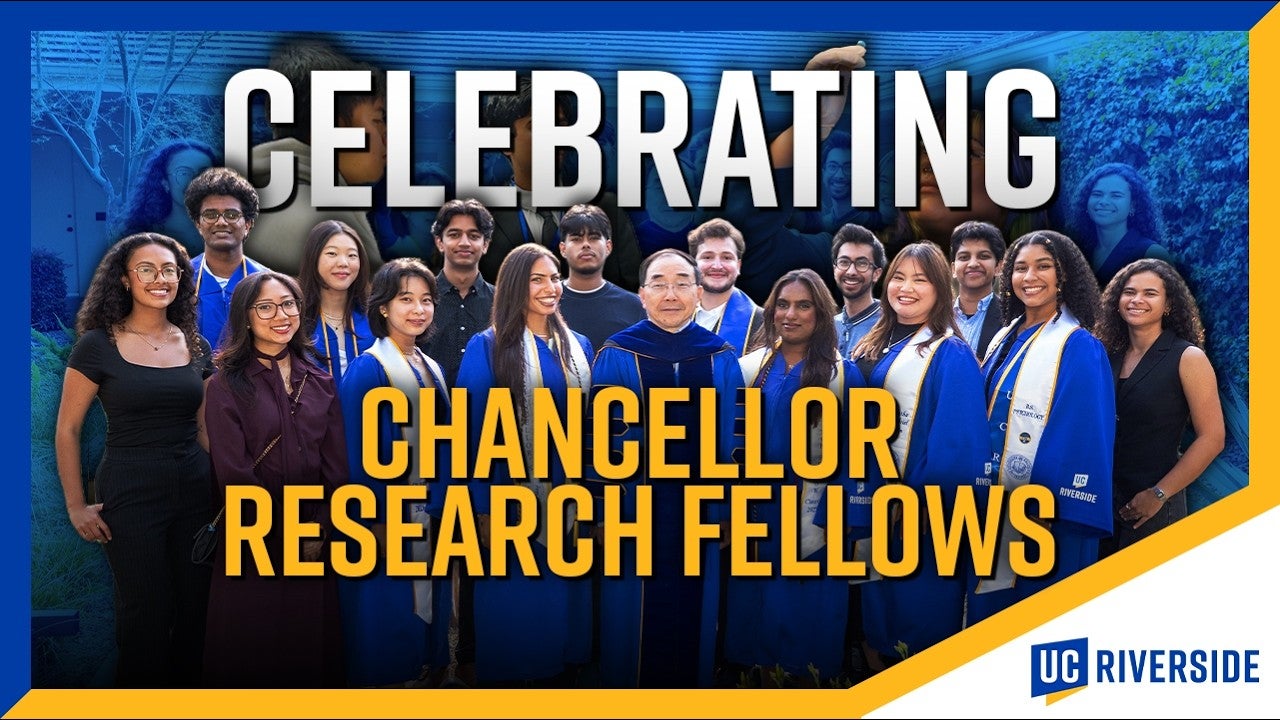
Part of the Division of Undergraduate Education, UCR’s Center for Undergraduate Research and Engaged Learning (CUREL) supports students with resources and platforms to pursue their ideas and showcase their work. Among them are initiatives like the annual Undergraduate Research and Creative Activities Symposium; a student-run Undergraduate Research Journal; and the highly competitive Chancellor’s Research Fellowship (CRF), a funded opportunity that has helped students garner prestigious national awards, including Fulbright Awards, the Barry Goldwater Scholarship, and the Marshall Scholarship.
“Over the past 15 years, the Chancellor’s Research Fellowship has brought together students from diverse academic disciplines who excel in research while contributing through leadership, mentorship, and service,” said CUREL director Gladis Herrera-Berkowitz. “Fellows lead research-readiness workshops and a peer mentorship program that cultivates future CRFs. With 204 alumni and growing, the fellowship’s impact extends beyond the undergraduate experience, preparing students to become innovators and leaders in their fields.”
The seven Chancellor’s Research Fellows featured below offer a cross-section of undergraduate research at UCR — yet they represent just a fraction of the extraordinary student-led discovery happening across campus. Read on to explore the big questions being tackled by UCR undergraduate scholars.
Can we make calculus accessible … and enjoyable?
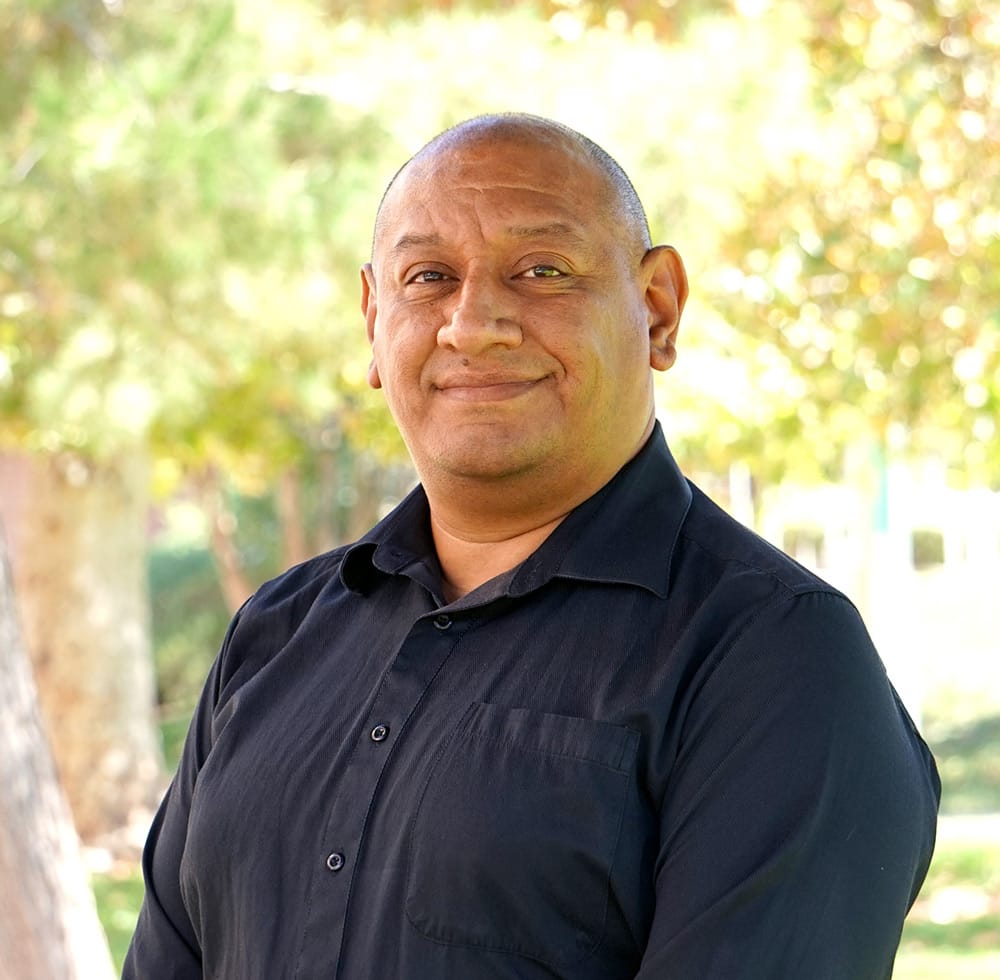
Ariel Galindo-Escobar | Neuroscience and Psychology
Faculty Mentor: Annie S. Ditta, associate professor of teaching in psychology
Returning to school after a two-decade break, Ariel Galindo-Escobar was surprised how intimidated he felt by a required calculus class. After all, he’d mastered complex ecosystem chemistry used in his passion project of aquarium building. That contrast sparked an idea: As a double-major in neuroscience and psychology, senior Galindo-Escobar is investigating whether embedding curiosity-building prompts into calculus video lectures can help students learn. Called “situational interest prompts,” these hooks are designed to stimulate engagement, ease anxiety, and boost retention — making abstract subjects more intuitive for all learners to tackle.
“The thing I love most about research is connecting with people — taking numbers that seem confusing, making them meaningful, and getting people inspired by what they learn.”
Do “water bears” hold the key to healthy aging?
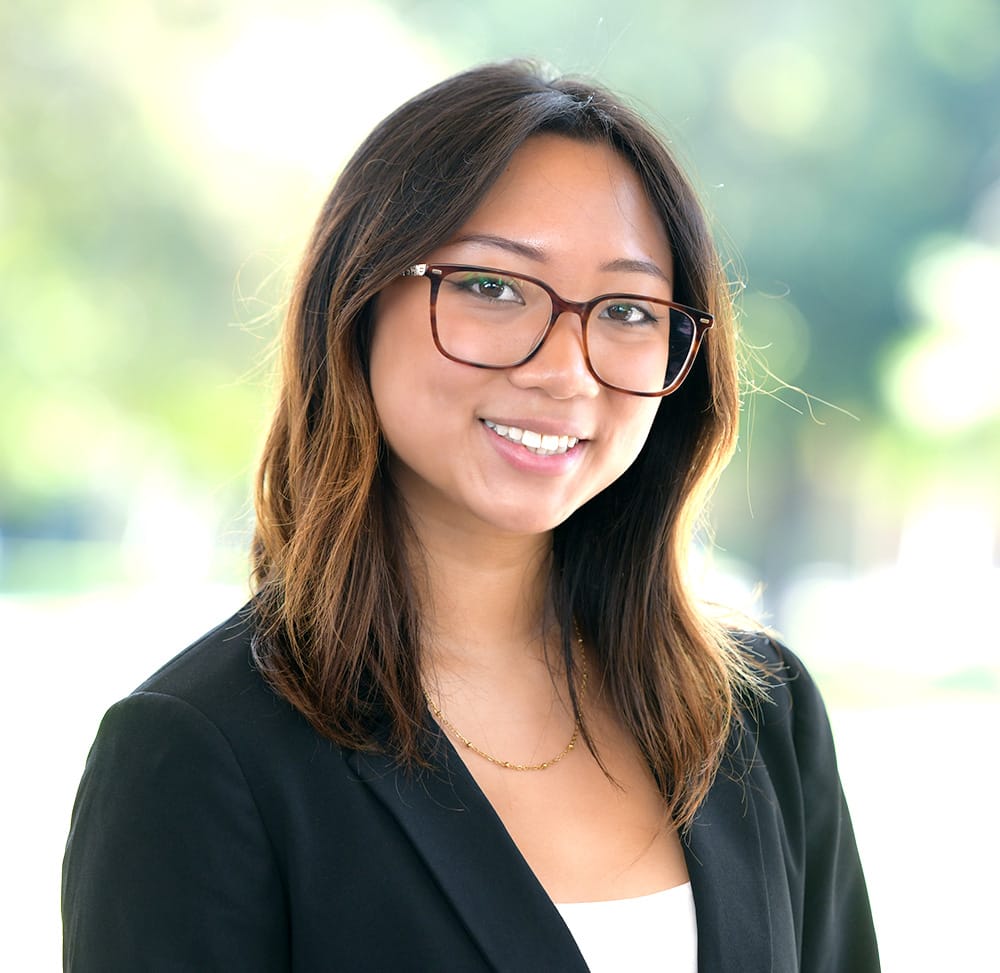
Keyanna-Milenia Pinzon | Bioengineering
Faculty Mentor: Joshua Morgan, associate professor of bioengineering
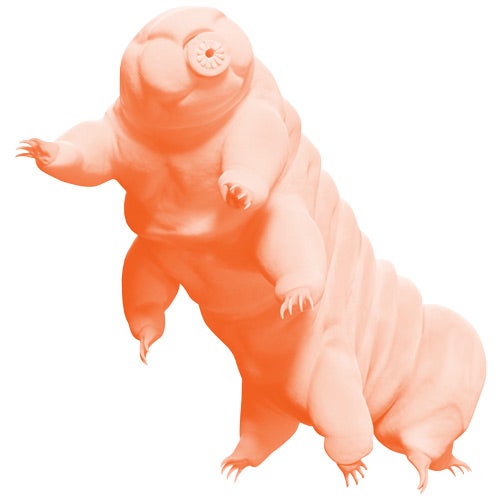
Famous for thriving in Earth’s most inhospitable places — from bubbling hot springs to icy mountain peaks —tardigrades, or “water bears,” are microscopic animals that rely on unique protective proteins to keep their cells intact under extreme stress. Could these proteins also shield human cells from age-related decay? Bioengineering senior Keyanna-Milenia Pinzon is introducing tardigrade-derived proteins into mammalian cells to explore if they protect brain cells against oxidative damage, a key driver of neurodegenerative diseases like Alzheimer’s and Parkinson’s. Her findings could help unlock treatments that protect our cells — and preserve our minds — as we age.
“My goal is to earn a Ph.D. and work in research and development, where I can continue advancing research in geriatric science.”
Can fruit peels transform how we protect our food?
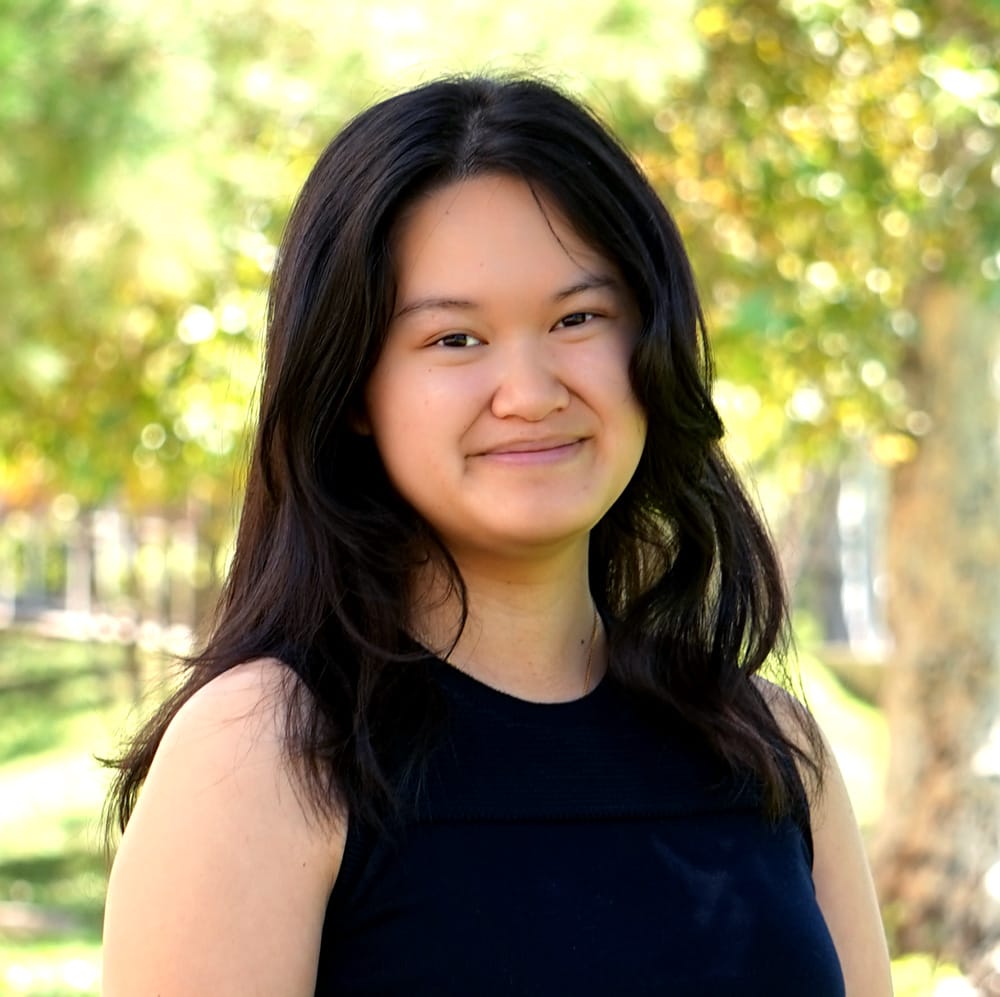
Lynnea Le | Biology
Faculty Mentor: Ahmed El-Moghazy, assistant professor of food safety
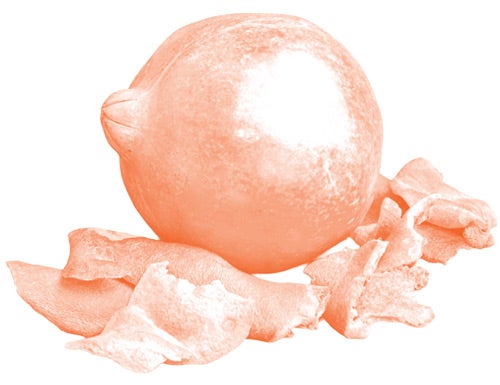
Biology senior Lynnea Le is using a surprising material to tackle foodborne illness: agricultural waste. Working in UCR’s 2-SAFE lab, Le is developing a biodegradable, antimicrobial food wrap made from discarded pomegranate skin. While pomegranate peels naturally possess antimicrobial properties, Le amplifies their strength by adding tiny amounts of metals like zinc, silver, and copper. Embedded in a gelatin film, her metal-based nanoparticles release reactive oxygen species under light to kill pathogens like E. coli and Salmonella on contact. The result is a flexible, protective coating for ready-to-eat foods like cooked chicken and fresh produce.
“Working in a food safety lab has shown me the critical role packaging plays in protecting the food that reaches our plates.”
Can we build computer chips that meet AI’s growing energy demands?
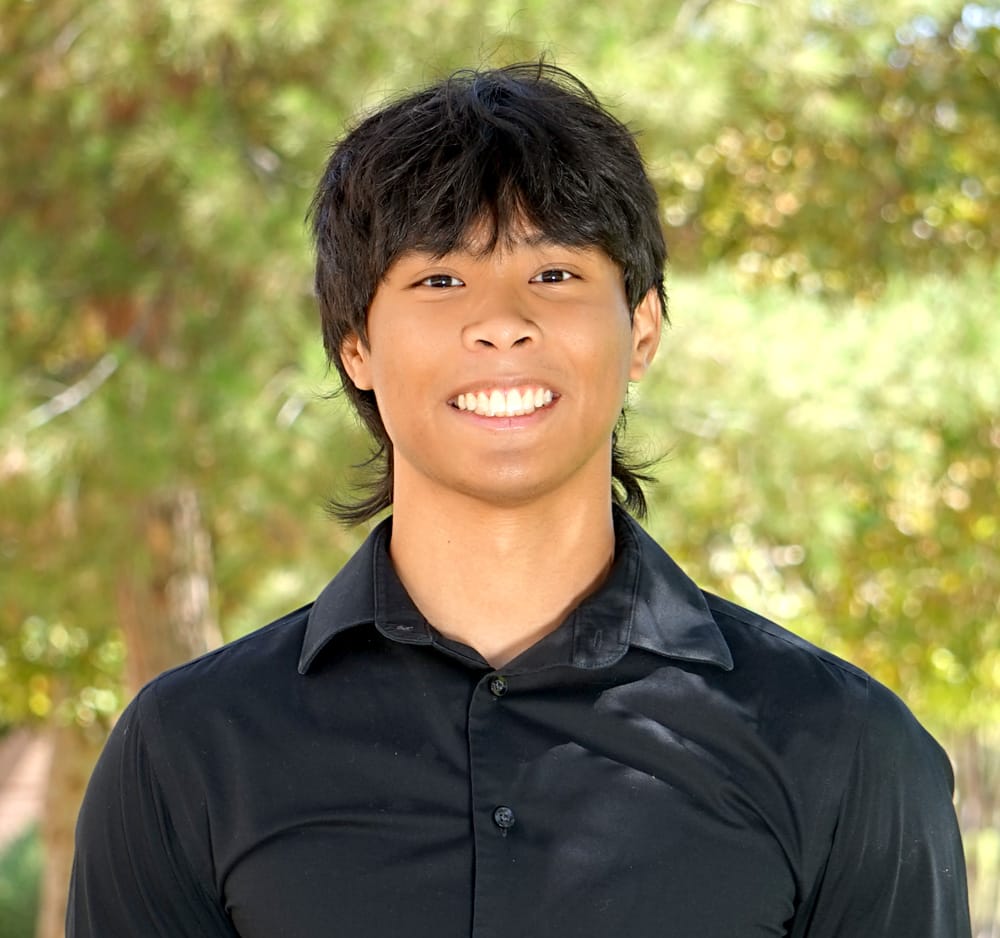
Steven Castaneda | Physics
Faculty Mentor: Igor Barsukov, associate professor of physics and astronomy
To process and store data, traditional microchips physically push electrons through wires — a method that consumes large amounts of energy and generates a lot of heat. Third-year physics major Steven Castaneda is exploring a cooler alternative: spintronics. Instead of moving electrons through circuits, spintronic devices use “spin waves” to transmit information like a stadium wave: individual particles stay put while energy ripples through the material. By studying these fundamental interactions, Castaneda is laying the groundwork for ultra-efficient microchips needed to keep pace with skyrocketing AI demands.
“From my first day in the lab, my mentor focused on teaching me career-ready skills used in industry.”
Can theater help us remember history’s forgotten footnotes?
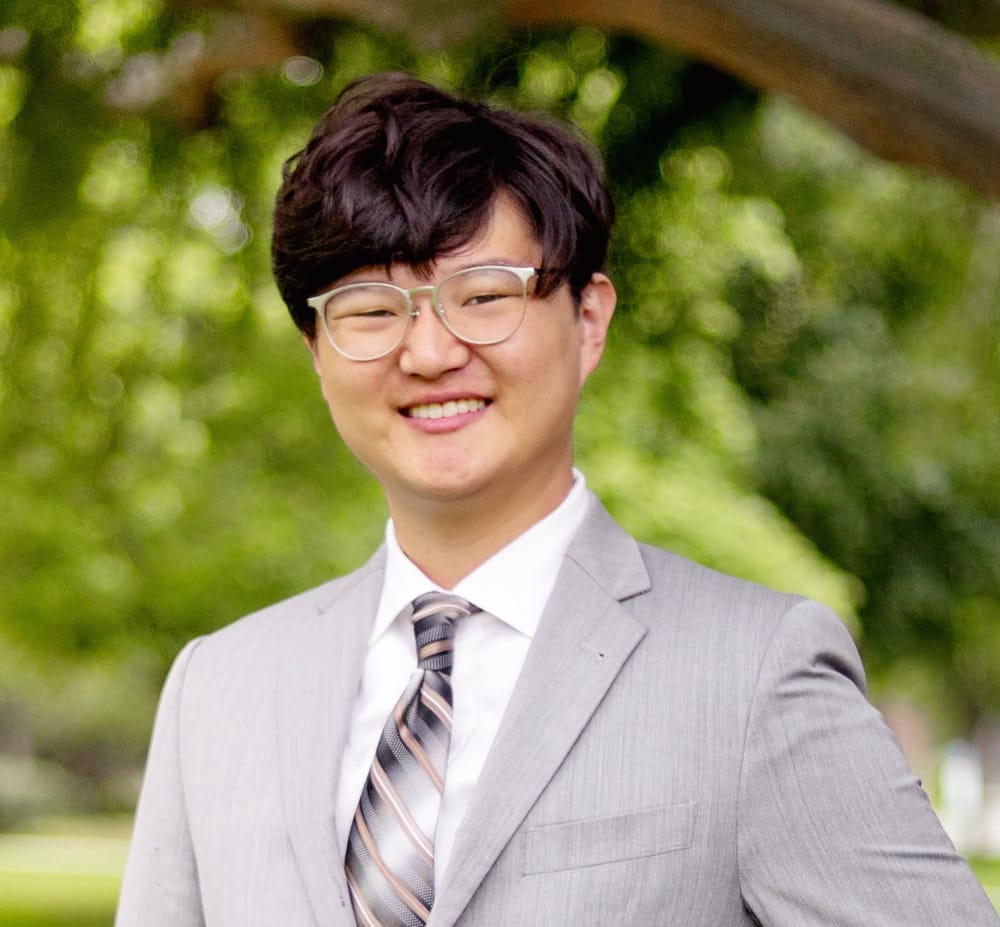
Ryan Lee | Biology and Theater
Faculty Mentor: Daphnie Sicre, assistant professor of theatre, film, and digital production
Fourth-year biology and theater double-major Ryan Lee is using storytelling as a powerful way to preserve history’s forgotten voices. For his original musical, “In the Eyes of the Butterfly,” Lee grounds his writing in rigorous research of historical events to unpack complex themes like trauma and displacement. Set in a war-torn refugee village, the musical compares observers of tragedy to butterflies — powerless and detached. By applying his analytical mindset to theater, Lee aims to convey real-world stories of human resilience accurately through a fantasy setting.
“Research has always fascinated me, mostly because I’ve always been a very curious person.”
What is your cat actually trying to tell you?
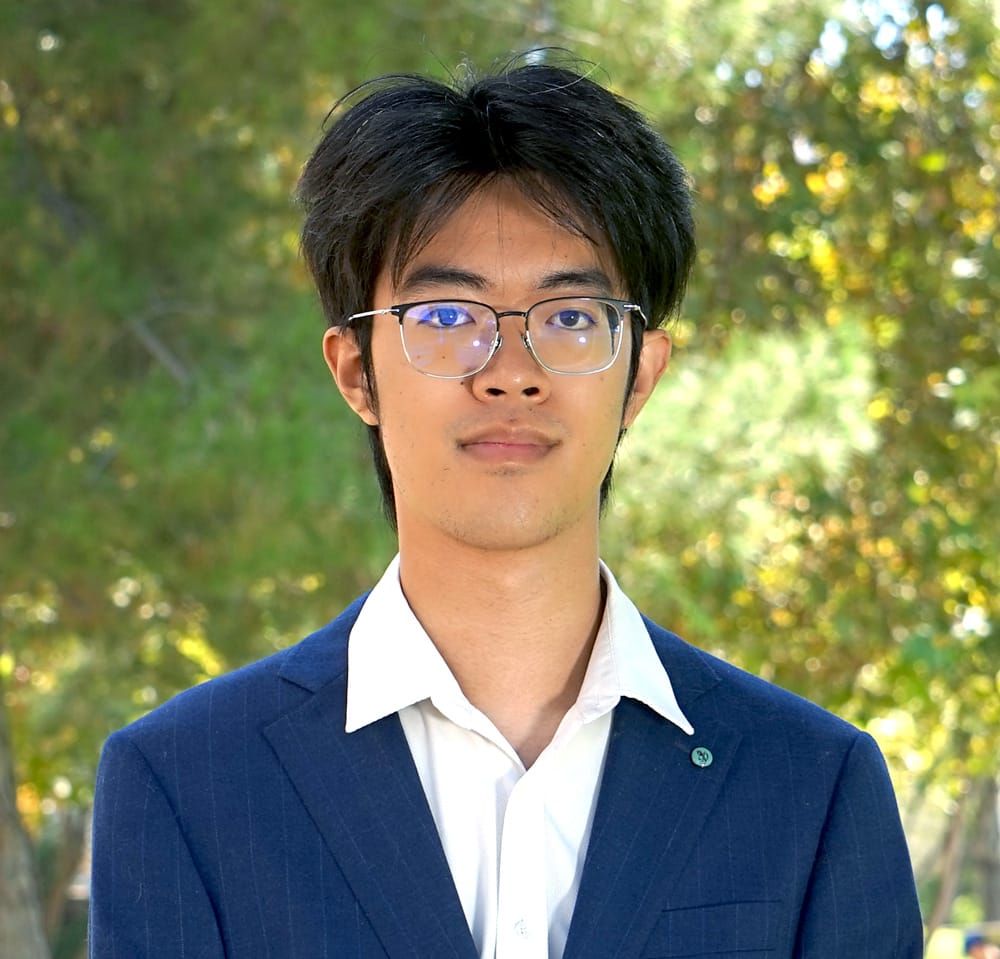
Wenqian Zhang | Computer engineering
Faculty Mentor: Christian Shelton, professor of computer science and engineering
With his parents in China, computer engineering senior Wenqian Zhang found a loyal companion in his cat, Yuanbao. Despite their close bond, Zhang struggled to infer meaning from his fluffy roommate’s sounds and actions. Those limitations in cross-species communication inspired a research queston: Could he train AI to decode nonverbal cues? By feeding video clips of Yuanbao into machine learning algorithms, Zhang is training AI systems to recognize whether the cat wants food, an open door, or simply an ear rub. Beyond decoding pet behavior, his research could help develop assistive technologies for nonverbal individuals and help pave the way for emotionally intelligent AI agents.
“I chose to study computer engineering because it combines computer science and electrical engineering, allowing me to use software to solve practical problems in the physical world.”

Can colonial history inform today’s strategies in power and advocacy?
Mya Wilson | Sociology & History
Faculty Mentor: Alexander Haskell, associate professor of history
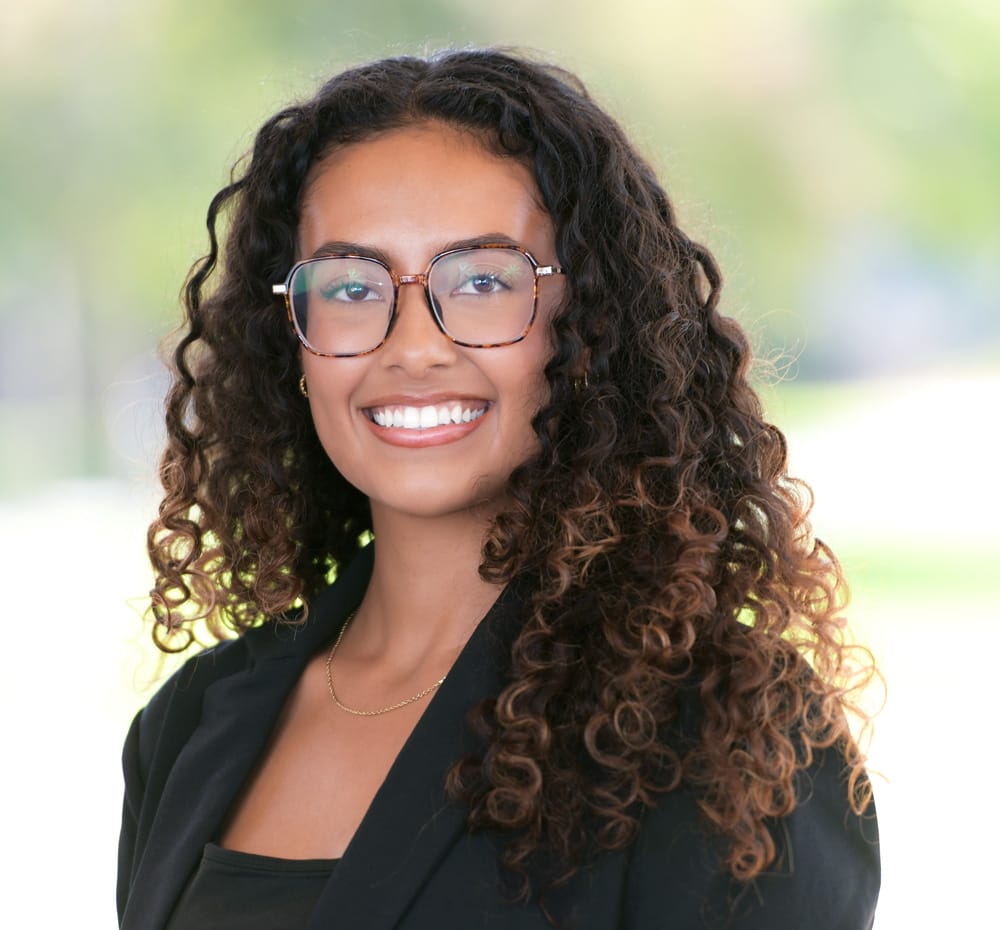
Senior Mya Wilson is investigating how the competing agendas of a 16th-century Spanish friar and an Indigenous nobleman converged around a long-dead ruler named Nezahualcoyotl. Friar Toribio de Benavente Motolinía used accounts of Nezahualcoyotl to bolster Spanish rule in America under King Charles V. Conversely, Fernando de Alva Ixtlilxochitl used memories of Nezahualcoyotl’s military and political success to protect his noble privilege in Tetzcoco, an Indigenous city-state. For Wilson, a double major in sociology and history, seeing how both men deployed pre-conquest history in Spanish colonial territory offers essential insights into power dynamics, agency, and strategic negotiation.
“I initially started this project to draw parallels to today, but I realized I was more interested in understanding how people in the 16th century made sense of their world within their own historical context.”
Undergraduate students at UCR make things happen, and make things better.
From the sciences to the arts, when you support undergraduate research at UCR you uplift the next generation as they tackle today’s problems with innovative ideas and creative solutions. Invest today at donate.ucr.edu/fall2026.