R VIEW
How University Innovations Power Our Lives
By Chancellor S. Jack Hu
Every person living in the United States benefits from what universities make possible.
Consider a common start to a working parent’s day.
The morning likely involves brushing their teeth with fluoride toothpaste and rinsing with water from public systems that draw roughly 36 billion gallons a day. Engineers, scientists, and public health experts make this simple hygiene act possible.
Breakfast might include fruit varieties developed through agricultural research. A smartphone built on innovations by computer scientists delivers news reported by journalists, perhaps about the latest economic report, using data compiled by economists and statisticians.
Then comes the trip to school, using roads, sidewalks, and bridges engineers designed. At school, college-educated teachers prepare children to develop essential skills in reading, mathematics, science, and art.
By 8:30 a.m., before the parent has even arrived at work, the family has benefited from universities in myriad ways. And these are just examples of early-morning routines.
Other contributions carry higher stakes. Physicians deliver babies, provide routine checkups, and treat serious illnesses and injuries. Police departments analyze crime trends, while fire departments use predictive models to anticipate hazards, all made possible by data science. Military operations rely on university-trained cybersecurity experts and research that helps protect critical communications networks and defense systems from cyberattacks.
At the turn of the millennium, the National Academy of Engineering identified 20 engineering achievements that transformed life in the 20th century. Among them were the water systems, highways, and computers mentioned above. Others included the electrical grids that power our homes and businesses, refrigeration that preserves food and medicine, and imaging technologies that allow doctors to see inside the human body.
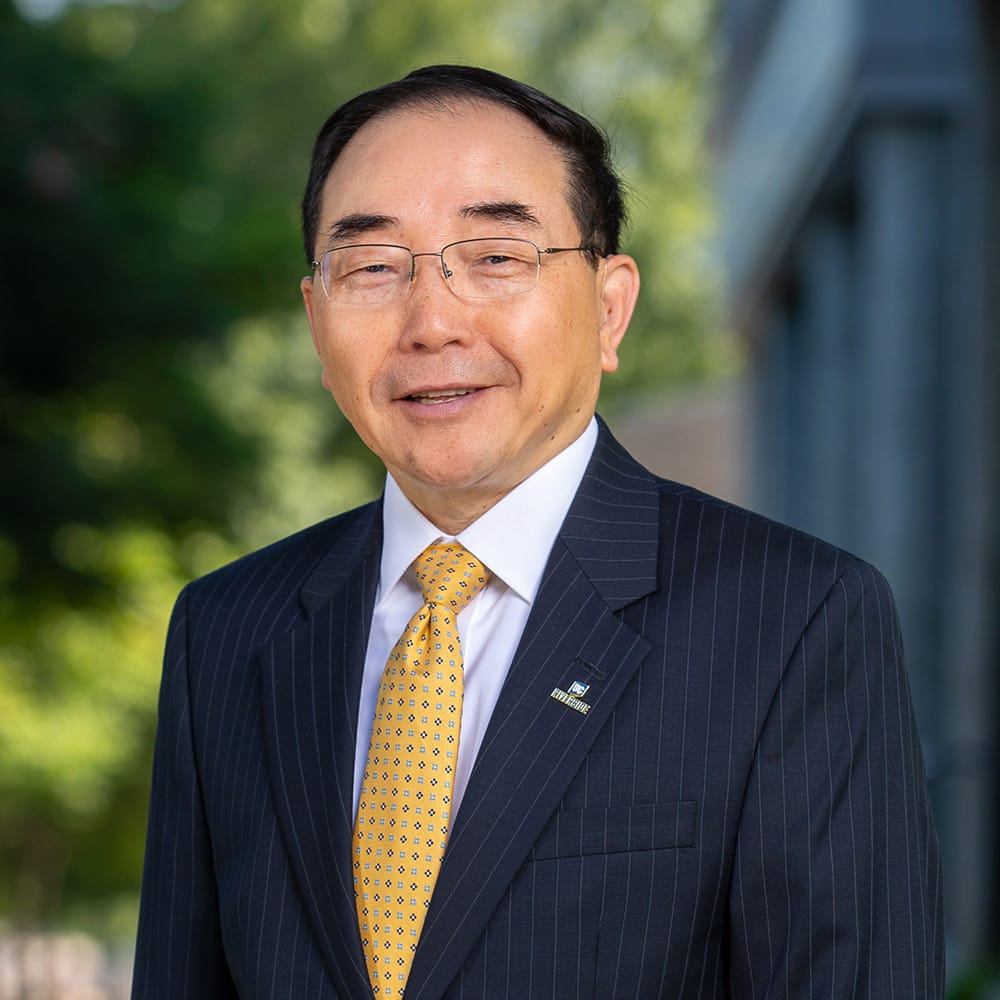
“Every person living in the United States benefits from what universities make possible.”
For most people, these connections between university research and daily life are largely invisible. We see the results without necessarily recognizing what went into making them possible. But when pointed out, it’s hard to ignore: the impact of universities is everywhere.
At UC Riverside, that work reaches from the neighborhoods surrounding our campus to matters of national security.
For example, researchers at our Center for Environmental Research and Technology, or CE-CERT, measured emissions from more than 10,000 trucks in a study of freight-related air pollution in Inland Southern California. Their findings identified route changes that could reduce pollution exposure in nearby neighborhoods, connecting university research to the health of families who may never set foot on our campus.
And earlier this year, UC Riverside signed a five-year education partnership agreement with the U.S. Naval Surface Warfare Center Corona Division, part of the Naval Sea Systems Command,
or NAVSEA. The naval center specializes in quality control, weapons systems design and testing, and technologies essential to military readiness.
This partnership is structured to expand joint research projects in data science, artificial intelligence, engineering, and metrology — the science of measurement — and to strengthen the regional pipeline of scientists, engineers, and technical specialists with national defense expertise. Building on a decade of collaboration, the agreement creates new opportunities for students and researchers to work with Navy experts on challenges related to military preparedness and advanced technology.
Whatever form the partnership takes, one thing is certain: the benefits of our work will extend to all Americans.
As conversations about the cost and value of a college degree continue, we should ask important questions about affordability, educational outcomes, and career preparation. According to the U.S. Bureau of Labor Statistics, workers with bachelor’s degrees had 63% higher median earnings and a 35% lower unemployment rate in 2025 than those with only high school diplomas.
And at UC Riverside, U.S. News & World Report has again ranked us No. 1 for social mobility among all U.S. universities. This marks the sixth time in eight years we’ve topped the ranking. We take seriously the responsibility of helping students earn degrees that can change their economic futures.
But those facts tell only part of the story.
According to the National Science Foundation, 48% of all basic research conducted in the United States takes place at colleges and universities. That research provides the foundation for discoveries that shape our health, safety, security, and quality of life.
At UCR, helping students cross the graduation stage will always be fundamental to our mission. But the full measure of our work extends far beyond the degrees we award.