Turning up the Heat
For a decade, the annual Heat festival lit up the UCR campus with some of the biggest names in music
By Imran Ghori
I t was described as UC Riverside’s biggest outdoor party — the place to go with your friends to see up-and-coming artists in hip-hop, rock, and dance music.
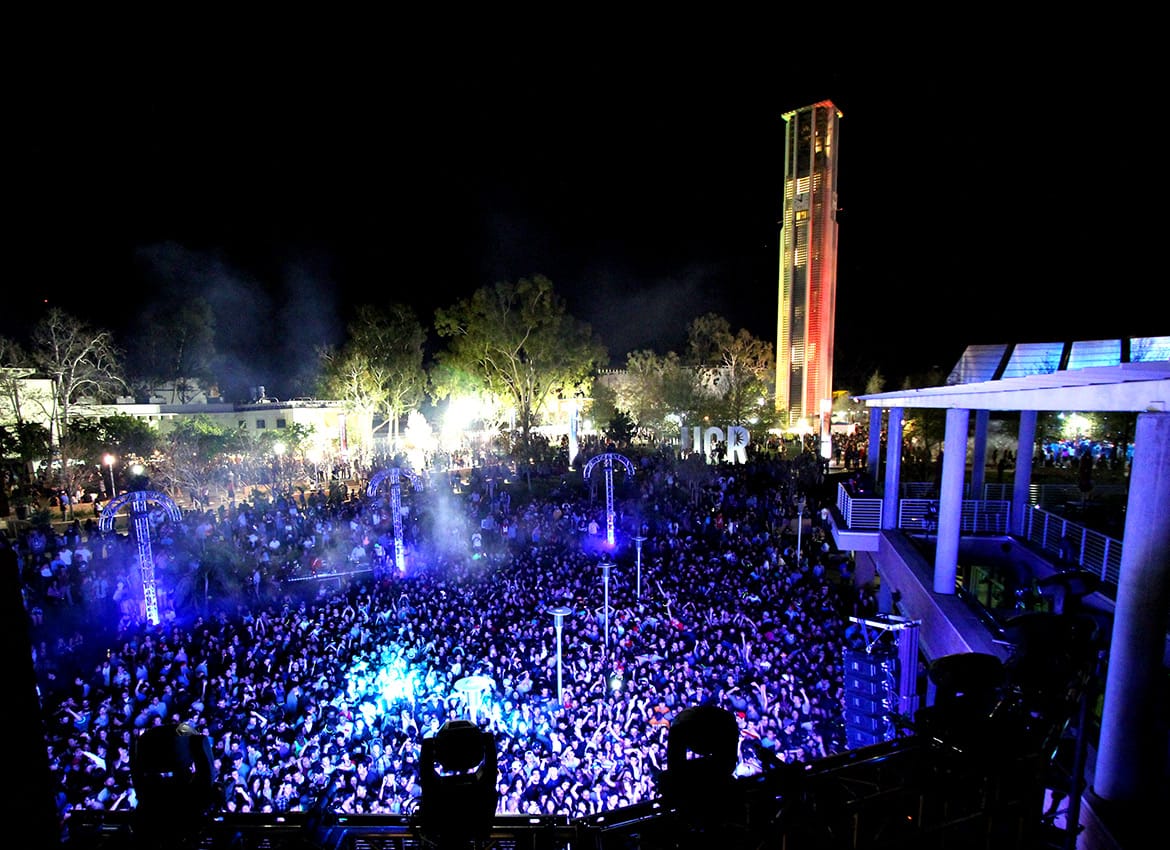
Every February, students would eagerly wait to hear the lineup for the Heat music festival, a largescale event held during winter quarter that transformed the center of campus into an outdoor concert venue with nightclub vibes and dance party energy.
During its decade-long run from 2007 to 2017, Heat brought performers such as 311, Moby, N.E.R.D, Taking Back Sunday, Post Malone, and SZA — often before they made it big — attracting thousands of students who now fondly remember it as alumni.
Many of the students who started and ran the festival have gone on to successful careers in entertainment, event planning, and marketing, including working at Heat’s inspiration, the Coachella Valley Music and Arts Festival.
A political science major who grew up in nearby Fontana, Gopi Sangha described himself as a “bona fide music nut” when he began attending UCR in 2004. Although he had not yet attended Coachella, he said he was “obsessed” with it, watching videos and researching it online.
“I wanted to bring that energy to campus,” he said. “We can mix up the genres, pit two stages against each other, and let the attendees choose what kind of programming they want to engage in. The basic idea was let’s bring dance music, indie rock music, and hip-hop — those three pillars — all under one experience.”
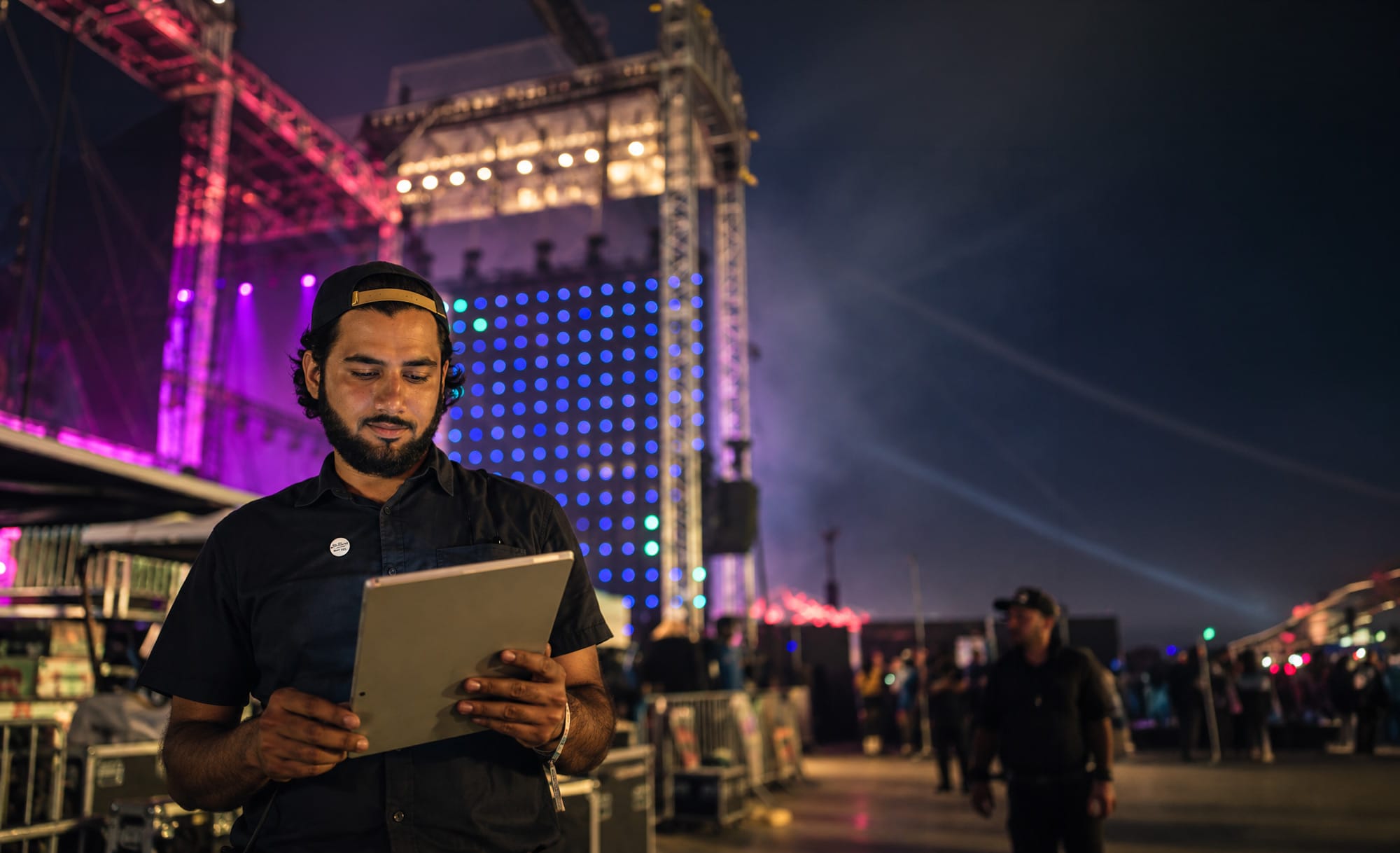
Sangha was given the opportunity to put on his own festival due to a confluence of events. Seeking to address perceptions of low morale among students and a lack of vibrancy on campus, university leaders held a series of workshops in 2006. Sangha was invited to attend due to his involvement with the popular student group Hip Hop Congress. He was later offered a position as a student event coordinator.
Sangha’s boss, Todd Wingate, suggested putting on a special event to provide a fun experience for students who were dealing with the ongoing construction of the new Highlander Union Building, or HUB, that was to open in fall 2008.
Wingate, who joined UCR in 1997 as director of cultural events and retired in 2016 as assistant dean of students, considered the perspectives of student workers like Sangha important in creating successful programs that were “in tune with what the students wanted their experience to be on campus,” he said.
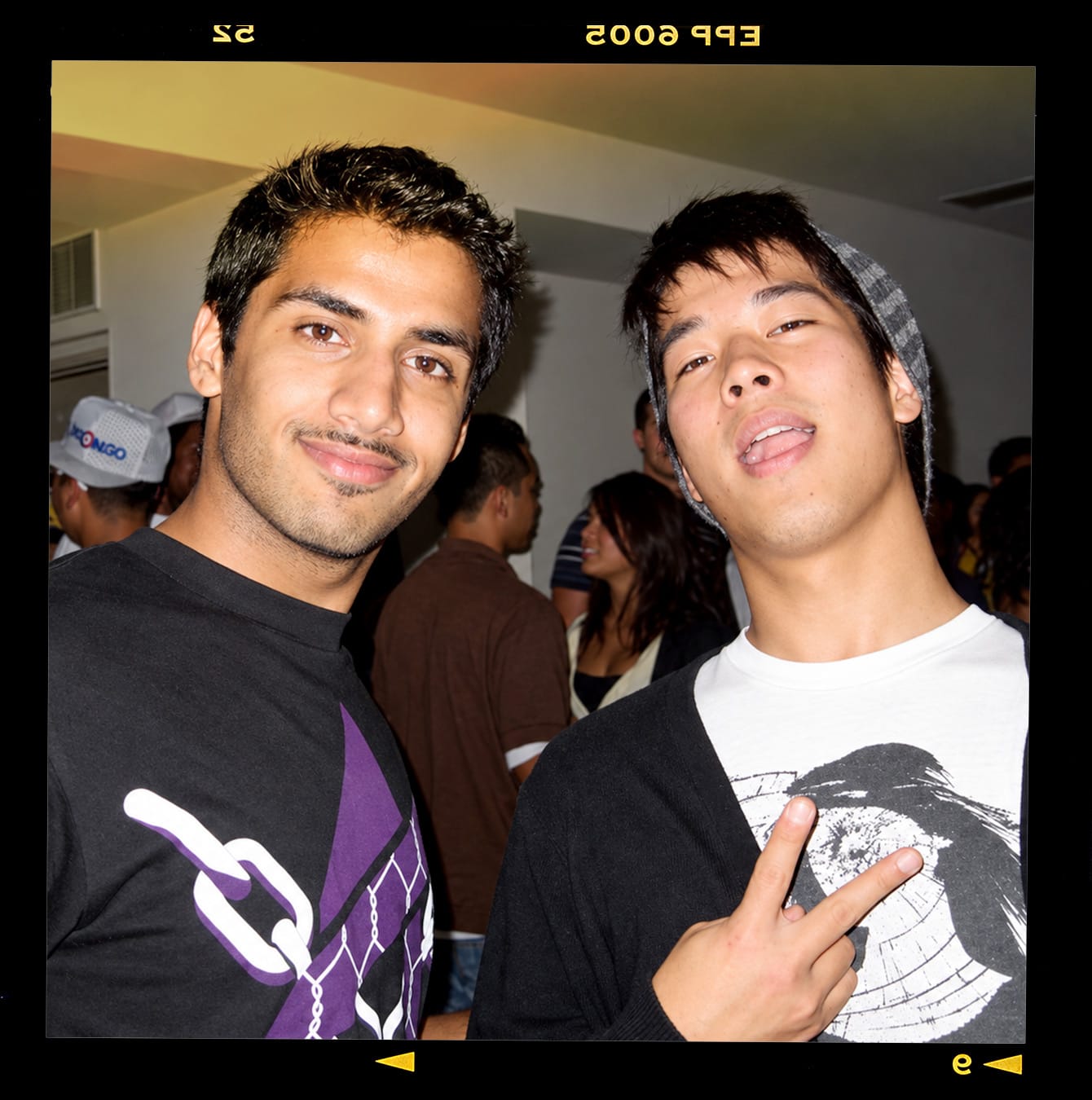
Sangha said he was encouraged by student life advisers to think big and submit proposals across budget tiers of $50,000, $100,000, and $150,000, making the top scale “look like it’s the greatest thing on Earth.” He returned with his idea for a Coachella-like music festival with multiple stages and a mix of genres. Wingate remembers taking it to the associate vice chancellor of student affairs.
“He looked at me and was like, ‘Are you serious?’” Wingate said.
But Wingate got the approval and Sangha began planning the festival — initially dubbed Winter Freeze — for late February, when UCR Homecoming historically occurred.
Victor Perry, a graphic designer who had joined UCR staff in January 2007, was brought in to create posters, flyers, and banners. Sangha showed him early conceptual art that featured icicles on a blue backdrop. Perry recalls thinking it “felt very cold,” noting that February is already one of the coldest months in Southern California. Instead, he suggested the opposite approach.
“Something hot and fire, like up-and-coming bands, that was kind of the impetus for the name,” he said. “Everyone went, ‘That sounds really good.’”
With the name cemented as the Heat festival, Perry began developing graphics and artwork to promote the event.
Sarah Scheideman, an organizer in Hip Hop Congress and a second-year transfer student, teamed up with Sangha as an event coordinator, helping with festival logistics and coordinating with other campus departments.
“It felt like we were breaking the rules even though we were abiding by them,” said Scheideman, who graduated from UCR in 2008. “We were doing something so new that had never been done before.”
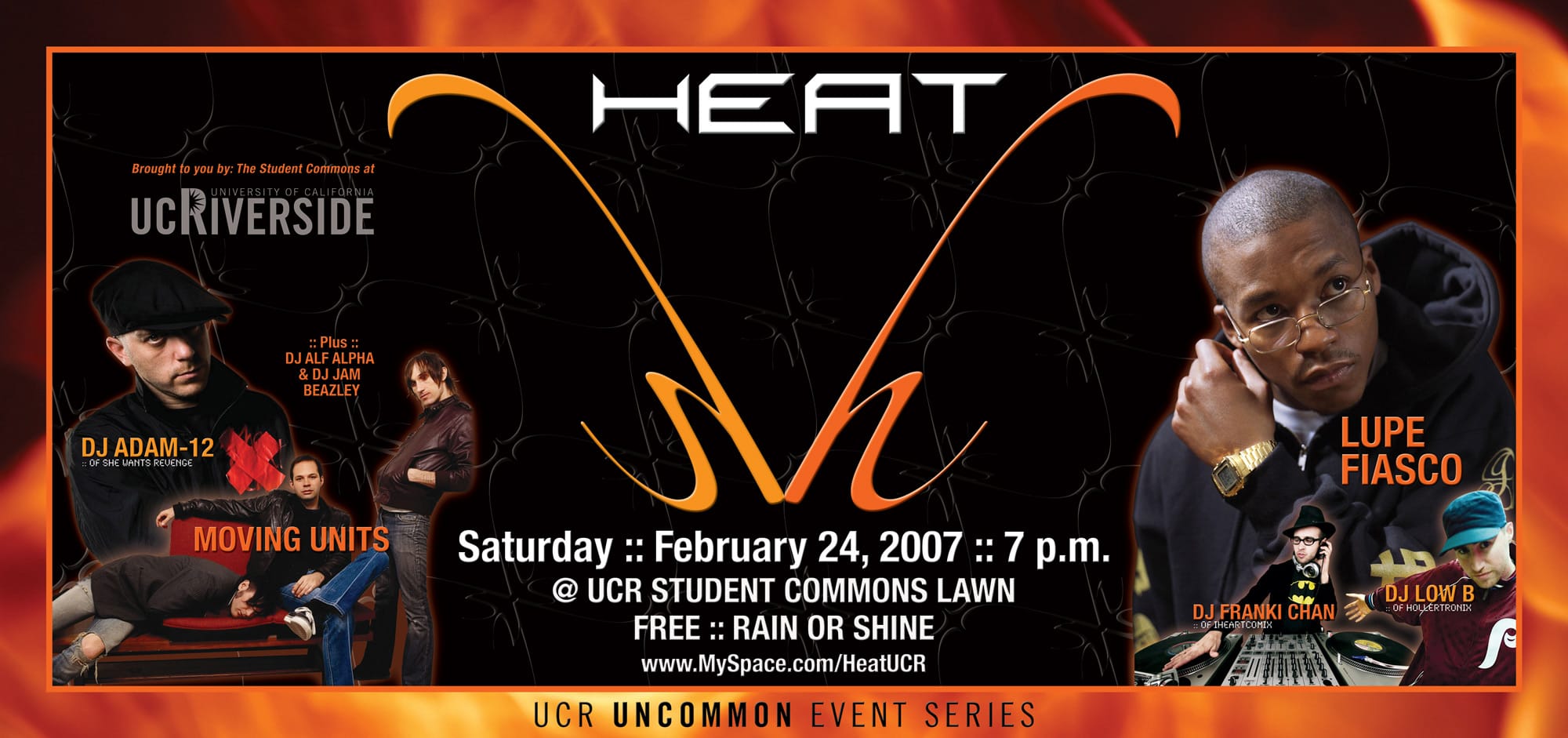
For the first year of Heat, they landed rapper Lupe Fiasco as the headliner. The artist had just released his Grammy-nominated debut album, and the awards ceremony was being held only weeks before the festival.
“He got this huge profile right before the show, and I think that really amplified the ‘heat’ on the show,” Sangha said.
The rest of the lineup featured indie rock band Moving Units and dance music artists DJ Low B, DJ Loy, and then-student Rafael Lopez, also known as DJ Alf Alpha, who has since become a regular at UCR events.
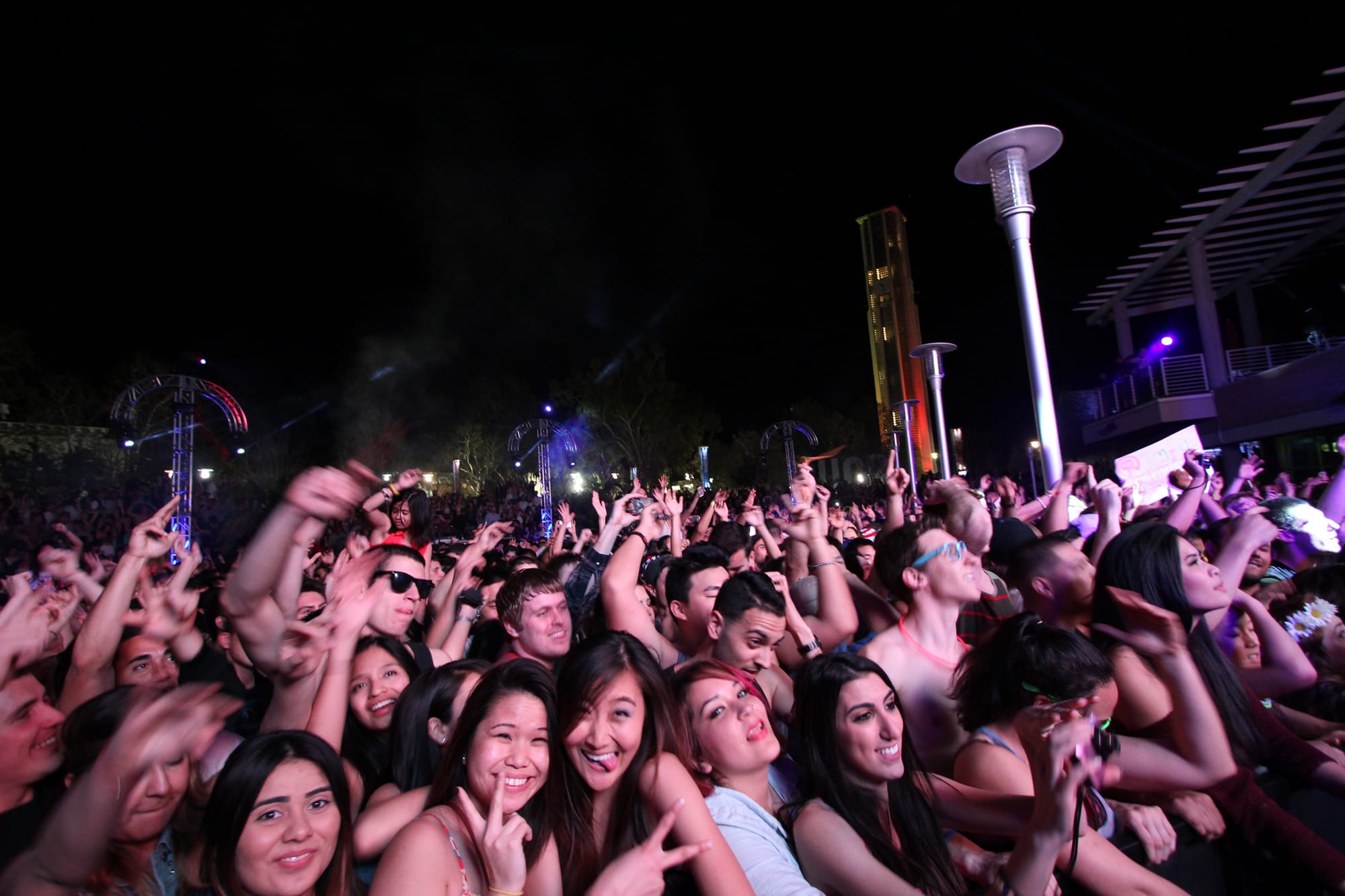
The team began promoting the festival two months in advance with banners and flyers around campus and posts on then-popular social media platform Myspace and Facebook, which was still in its early days. Since the event was free for students, organizers didn’t require tickets. Sangha figured a crowd of 2,500 to 3,000 would be a success. Instead, by the end of the night, about 7,000 to 8,000 students were packed into the center of campus.
“We were shocked at how many people came and the response,” Scheideman said. “That’s also when we were like, ‘Ok, we’re on to something here.’”
The festival, held near the bell tower, had two large tents and a giant sound system. A beer garden and food trucks were set up nearby. Moving Units played an energetic set with hard charging guitars and dance rhythms that revved up the crowd, Sangha said. Lupe Fiasco took the stage late, around midnight, with a dramatic entrance in a darkened atmosphere.
“He laid into this album that at that point all the students, everyone there, knew every song,” Sangha said. “It was electric.”
The festival surpassed their expectations, but it also came with a few unforeseen issues, like a shortage of portable toilets and lack of fencing and crowd control. Riverside police came to see what was going on and a police helicopter flew overhead, ready to land on campus, Wingate said. The organizers decided to cut Lupe Fiasco’s set a few songs short and he was quickly spirited away.
“I was pretty sure that was the end of my tenure at UCR,” Wingate said. “Instead, the next morning, I got an email from the vice chancellor congratulating me on starting a new UCR tradition. I thought, ‘Oh great, we have to do this again.’”
Learning from their first festival, the organizers spent more time on logistics for the second. Fencing would be installed and more portable toilets brought in. Heat would remain free for students, but tickets had to be collected in advance. The budget was also increased for security and production. Meanwhile, student anticipation built up.
“From my perspective, it was a sensation on campus,” Sangha said.
“Honestly, it’s all anyone could talk about. My friends, people around me, all year long were asking me what are we going to do for the next year.”
They responded with an even bigger Heat festival in 2008, with three full stages and a dozen artists including rapper Mos Def, a DJ set from Moby, and rock band 311 headlining.
Andrew Chun, who joined the festival team in 2008 and worked with Sangha in curating the music lineup and media relations, said they were given the ability to explore as many genres and subgenres as possible while discovering new artists.
“We loved the pride of getting in on the ground floor and finding artists that we knew were on the up and up,” said Chun, who graduated from UCR in 2009.
In subsequent years, performers included Kid Cudi, Porter Robinson, and SZA, who played in 2017 a few months before the release of her breakthrough debut album. The festival organizers credited good relationships with artist managers and talent bookers in securing many of the artists, as well as luck and timing.
“It felt like we were breaking the rules even though we were abiding by them. We were doing something so new that had never been done before.”
— Sarah Scheideman
Heat grew in reputation with music critics from the Los Angeles Times and The Press-Enterprise writing positively about the festival. Wingate said he would get calls from his counterparts at other universities asking how UCR had pulled it off. Artists also took notice. In a 2012 newspaper interview, guitarist Steven Chen of the rock band Airborne Toxic Event, who headlined that year, said they had a great time playing UCR.
“We play a lot of festivals, but I didn’t know universities had festivals like this,” he said. “It’s crazy, it’s like Lollapalooza here.”
Heat became an annual tradition that students looked forward to. In his regular walking rounds on festival day, Wingate’s favorite spot was the third-floor staircase landing overlooking the HUB plaza.
“Watching that lit up full of 5,000 to 7,000 people, where the whole ground is pulsating and everybody is just having a really good time on campus, that was gold,” he said.
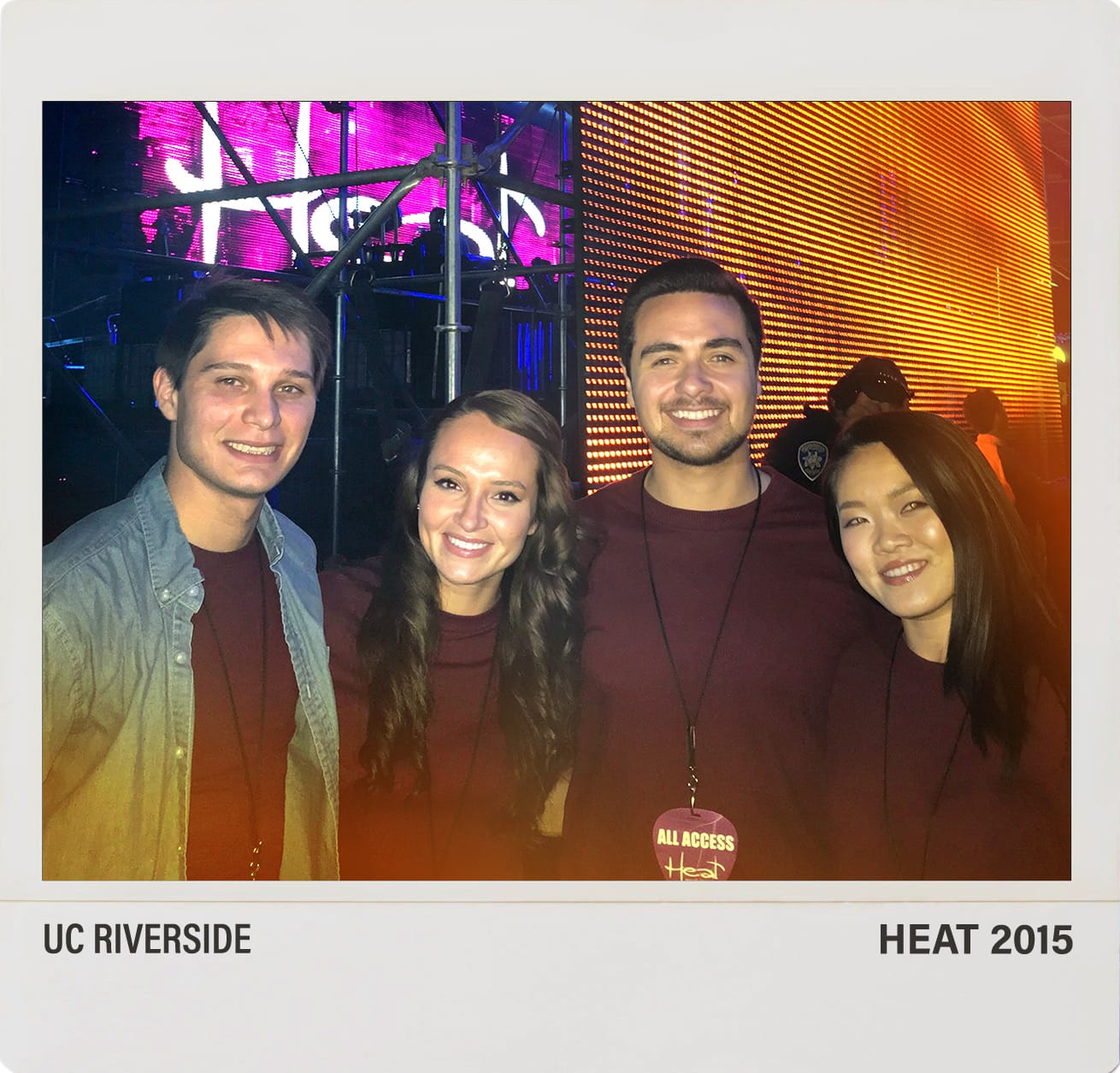
Vicky Garza, a friend of Sangha’s since middle school, joined the festival planning team in 2008 and remained on staff until 2015. She remembers friends at other colleges being surprised to hear about the caliber of artists playing at UCR.
“It was kind of nice that people didn’t expect our campus to be the kind where friends who are attending UCLA or Irvine want to sneak into,” said Garza, who graduated in 2009. “It’s like a high form of compliment because it was solely for Highlanders.”
The festival staff surveyed students every year to see which artists they would like to see at the next Heat festival, walking around with clipboards at fall orientation events.
Nic Alves, who became a program coordinator in 2013, said they’d sometimes get unrealistic requests like Beyoncé, but the student suggestions had a direct impact on the artists they reached out to and often booked. He said he felt inspired by looking at posters from previous years’ festivals displayed in the office.
“It seemed like the Heat festival was on the cusp of all these artists blowing up,” said Alves, who graduated in 2016.
The festival faced its first major setback in 2014 when it was forced to cancel due to rain and lightning storms. On the day of the event, student workers had been on campus preparing since early morning and many of the artists had arrived by afternoon. Alves remembers seeing headliner Childish Gambino eating pho at a restaurant at the nearby University Village.
Jerelsy Young, who had attended the previous year as a fan and was among the student coordinators that year, was excited to be part of the team putting it on.
“It was super devastating,” said Young, who graduated in 2016. “Everyone was working really hard.”
Organizers monitored weather reports throughout the day. By afternoon, students were lined up ready to enter the festival area when the campus got notice that severe weather would make it unsafe to proceed.

“The fire marshal told us that lightning was coming, and he wasn’t going to let us open the doors,” Wingate said.
Alves described it as “the best Heat festival that never happened.”
The festival returned in 2015 with a lineup that included Panic! at the Disco and Chance the Rapper. Young said it felt good to see it come to life, especially after the cancellation. She said activities like Heat set UCR apart in connecting people from diverse backgrounds.
“It’s nice to have those types of shared events where everyone can come together and they’re listening to one of their favorite artists,” she said.
But the next year, weather again led to its cancellation, this time months in advance due to predictions of a strong El Niño in 2016. When Heat returned in 2017 with Post Malone and SZA, it was for its last hurrah.

Brendan O’Brien, who became director of the HUB in November 2016, said the two previous cancellations and budget demands made it difficult to continue funding the festival. O’Brien said the student funds that paid for the festival were needed to make improvements to the HUB and Costo Hall, as well as saving for future expansions of those buildings.
“It was a difficult choice, but those funds have gone on to really improve the facilities and the programming spaces for students,” he said.
The HUB shifted to smaller events while the Associated Students Program Board that puts on the annual Block Party and Spring Splash concerts adopted some of Heat’s practices, including the stage set up and using a ticketing system for larger productions, O’Brien said.
For those who put on the Heat festival, its ending was bittersweet.
“I’m super proud that it lasted as long as it did, much longer than I ever thought it would, and many students have expressed what it meant to them,” Sangha said. “I know what it meant to me in finding myself in my career.”
Sangha went on to become a producer in the concert industry, working for Goldenvoice, the company that puts on Coachella, for almost a decade before starting his own event production company called Cusp Agency.
Scheideman runs her own art production company, which partners with Coachella on its art installations, while Garza left UCR in 2014 to join Goldenvoice where, as guest services manager, she continues to work at Coachella, Stagecoach, and other big music festivals.
“It’s very cool to see some of these old artists that used to be on our lineups for Heat, now they’re supporting or headlining at large music festivals,” Garza said.
Others like Alves, Young, and Chun work in marketing and higher education, crediting their experience organizing Heat with helping them succeed in their careers. Chun described working on Heat as one of his proudest moments as a student.
“I’m still very much in awe of what a few 20-year-olds could achieve together, along with a very supportive administration,” Chun said. “It’s such a core memory and something that I’ll always remember about my time at UC Riverside.”