Vanillin, a common flavoring chemical in e-cigarettes, may disrupt the normal development of embryos in pregnant women who vape, according to a UC Riverside-led study.
The finding, published today in Human Reproduction, explains how vaping may be linked to women having difficulty conceiving and to miscarriages.
The researchers investigated human embryonic stem cells — which are similar to those in human embryos at three weeks old — in a series of laboratory tests. They caution that, as their findings are from a laboratory study, they cannot decisively establish that the same effects would be seen in women and their embryos.
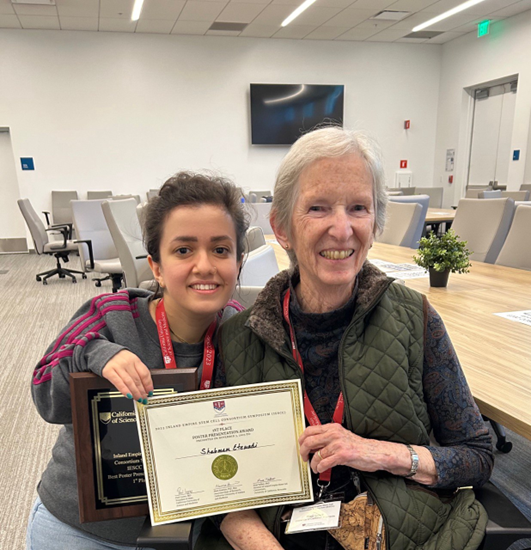
“There is little understanding of how vaping can affect developing embryos in pregnant women who use electronic cigarettes,” said Prue Talbot, a professor of the graduate division in the Department of Molecular Cell & Systems Biology at UCR, who led the study. “We undertook this study to determine if vanillin, a flavor chemical often used in e-cigarettes at high concentrations, could adversely affect the development of young embryos in humans.”
Talbot and her team wanted to understand how chemicals in vape aerosols may affect young human embryos and identify the type of harm that could occur.
“We focused on vanillin because it is frequently used in e-cigarette fluids, it is often used at high concentrations, and because we knew that embryonic cells had a channel called TRPV4 on their surfaces that would likely bind with vanillin,” Talbot said.
Talbot and coauthor Shabnam Etemadi, a stem cell biologist and computational scientist at UCR, exposed human embryonic stem cells in dishes in the laboratory to different concentrations of vanillin: nanomolar (low) concentrations, or micromolar (high) concentrations. They also exposed the stem cells to a TRPV4 antagonist (a substance that inhibits vanillin binding to TRPV4); an antibody that blocks the function of TRPV4; or vanillin combined with either the antagonist or the antibody.
Embryonic stem cells have the potential to differentiate into any type of cell. In normal embryonic development, they form three cell types: endoderm, ectoderm and mesoderm.
“We found that micromolar concentrations tended to kill the cells,” Talbot said. “Nanomolar concentrations caused cells to lose pluripotency, which is the ability to develop into all cell types. Vanillin also caused the stem cells to differentiate into endoderm, rather than ectoderm or mesoderm. The endoderm is an embryonic tissue that gives rise to the lining of the gut and respiratory tissues. These changes are potentially very serious and could prevent normal development of embryos.”
The researchers found the effect of vanillin on the stem cells was blocked by the TRPV4 antagonist, which identified the TRPV4 channel as the route by which vanillin adversely affected the cells.
“Our data predict that nanomolar concentrations of vanillin will reach the embryo in pregnant women who vape,” Talbot said. “At nanomolar concentrations, vanillin binds to a channel called TRPV4 on the surface of embryonic cells allowing a rapid influx of calcium, a signalling molecule. Calcium in turn activates downstream events that result in loss of pluripotency and differentiation of embryonic stem cells into endoderm.”
Talbot explained that in normal development, the embryonic stem cells would form three cell types: endoderm, ectoderm and mesoderm. In embryos lacking ectoderm, the nervous system would fail to develop, she said. In embryos lacking mesoderm, many tissues, such as muscle, would fail to develop.
“Women do not necessarily know the chemicals in vape products,” Talbot said, “Our findings suggest they should be cautious and advised by physicians not to vape during pregnancy, especially if they are having trouble conceiving or experience miscarriages. “Regulatory policies are generally based on data derived from adults or adult cells. However, the prenatal stages of development are usually the most sensitive to environmental chemicals.”
The researchers urge regulatory agencies to consider mandatory ingredient disclosure on packaging for e-cigarettes.
“When establishing policies for e-cigarette use and distribution, it would be advisable to consider if and how the products harm the unborn,” Talbot said.
The researchers have already investigated menthol flavoring in e-cigarettes and found that it was a contributor to respiratory disease in humans. They are now studying WS-23, a synthetic coolant often used in e-cigarette products, and examining the effects of menthol and WS-23 on differentiation of embryonic cells.
The researchers point out that their study does not predict the effect of cumulative exposure to vanillin over days, weeks, months, or years.
“The effect of long-term exposure could be higher,” Talbot said.
The research was supported by grants from the Tobacco-Related Disease Research Program and the California Institute of Regenerative Medicine, as well as UCR Yvonne Danielson Endowed Graduate and Dissertation Completion Fellowship Awards.
The title of the paper is “Nanomolar vanillin, an e-cigarette flavorant, appears to disrupt pluripotency and promote endodermal differentiation in human embryonic stem cells via TRPV4 activation.”
The above is a modified version of an Oxford University Press news release written by Emma Mason.