
Frequently located on hillsides and in canyons surrounded by wildlands, rich neighborhoods are more likely to catch fire. However, a UC Riverside study shows they are also likely to recover faster than lower-income areas.
Unlike most fire research focused on wildland blazes or single catastrophic events, the UCR study represents one of the most comprehensive looks at the unique dynamics of fires in cities.
Published in the journal NPJ Urban Sustainability, the study examined 141 fires across the U.S. going back to 1984. Combining these records with population, development, climate, and demographic data offered a more in-depth understanding of the lead-up to and aftermath of fires.
The results show that risk of fire in cities is not distributed randomly. “These urban fires consistently occur in suburban, high-income, owner-occupied development,” said UCR postdoctoral researcher in urban ecology and study author Dion Kucera. “That hasn’t changed in more than 40 years.”
According to the study, neighborhoods with substantially higher median incomes had about 30% higher odds of fire exposure.
One of the study's most critical findings for city planners is what precedes these fires. It’s not long-term drought, but rather a short, intense drying of the environment in the six months prior. “That suggests three- to six-month moisture measures may be more important for city managers trying to identify periods of heightened risk, rather than longer-term drought assessments,” Kucera said.
Once a neighborhood burns, recovery can be slow. The researchers measured whether vegetation and surface temperatures returned to their pre-fire ranges during the following five years. For most places, they did not.
About 78% of severely burned areas failed to return to their pre-fire temperature range within five years, while 73% failed to recover their previous level of greenness. In general, burned urban areas became hotter and less green, with the effects persisting for years.
Income emerged as an important factor in recovery as well. Higher-income neighborhoods tended to recover their pre-fire temperatures more quickly and experienced smaller losses in vegetation.
The results suggest that understanding urban fire requires looking at the social characteristics of the places that burn. With these factors in mind, the researchers found important regional differences. Nationally, neighborhoods with higher proportions of white residents had lower odds of experiencing fire. In California and other dry parts of the West, however, that relationship was reversed, with white as well as Black populations experiencing greater odds of exposure.
The study also found that urban fires behave differently from fires in wildlands. While wildland fires have been growing both larger and more frequent, the number of fires reaching urban areas did not show a clear increase over the study period.
There was, however, evidence that the amount of urban land burned is increasing. The trend was heavily influenced by especially destructive fire years, suggesting that extreme years may be driving greater losses even without an increase in the overall number of fires.
These findings could have implications for how communities prepare for fire and how insurers assess risk, though the study did not examine insurance markets directly. Kucera said additional research should explore those questions.
More broadly, he argues that scientists need to stop treating fires that enter developed areas as simply extensions of wildland fire. Cities have their own patterns of exposure and recovery, shaped by where people build, who lives there, and the resources they have available.
“The urban fire problem isn’t just structured by climate like it is in wildlands,” Kucera said. “Adapting to the growing intensity of urban fires requires looking beyond the forest and into the social fabric of our cities.”
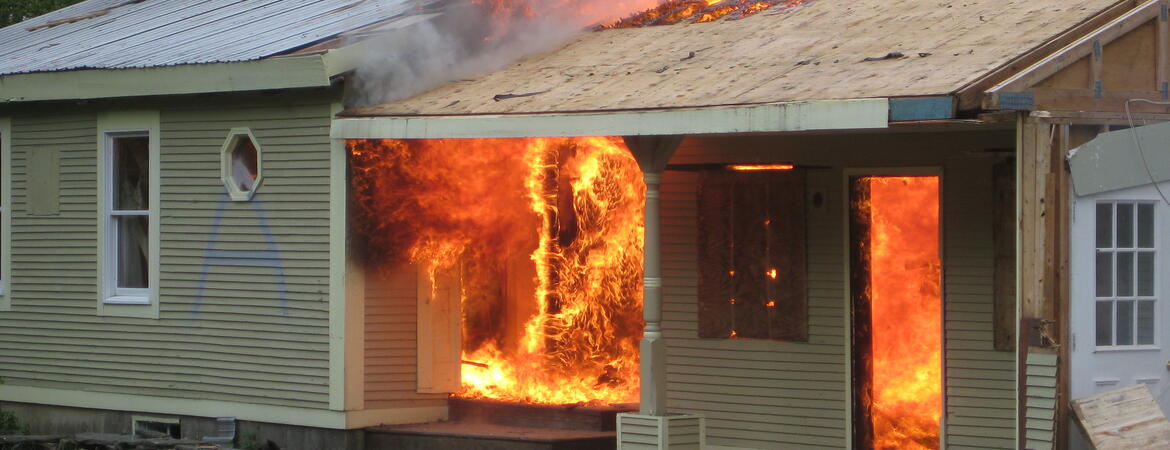
(Cover image of burning house: sf-dvs)