
When the COVID-19 pandemic shut down clinics and forced face-to-face interactions behind masks, autism diagnoses for many children came to a halt.
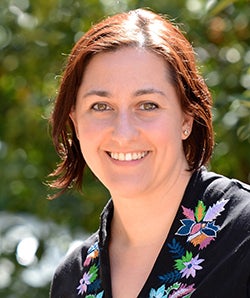
For Katherine Meltzoff, a professor of education at UC Riverside, the disruption exposed a critical gap and an opportunity.
“We were trying to figure out how to adapt autism diagnostics to be done virtually,” Meltzoff said.
The result is a set of telehealth tools described in a paper published in the Journal of Autism and Developmental Disorders that are designed to help clinicians diagnose autism remotely, especially for children who are older or have developed verbal communication skills.
Meltzoff explained that there are already a number of validated virtual autism assessment tools for children aged 3 and below, and for those with minimal spoken language, but not for those who are older and have more verbal speech.
“Telehealth seems to work really well for the kids that have more obvious symptoms and that are younger,” said Meltzoo, the lead author
Meltzoff's research tested whether these virtual assessments could match the accuracy of traditional, in-person evaluations, offering a potential solution to long-standing barriers in autism diagnosis.
Autism spectrum disorder is not diagnosed through a single medical test. Clinicians observe how a child communicates, interacts socially, and responds to the world, while also reviewing developmental history.
“We diagnose it behaviorally, so we’re looking at behaviors that the child displays,” Meltzoff explained.
During the first months of the COVID-19 pandemic, autism assessments came to a halt due to the widespread ‘shelter at home’ guidelines.
As restrictions began to ease, assessments remained challenging because facemasks worn by the clinicians and family members hid facial expressions, which are a large part of the social communication and behaviors under evaluation.
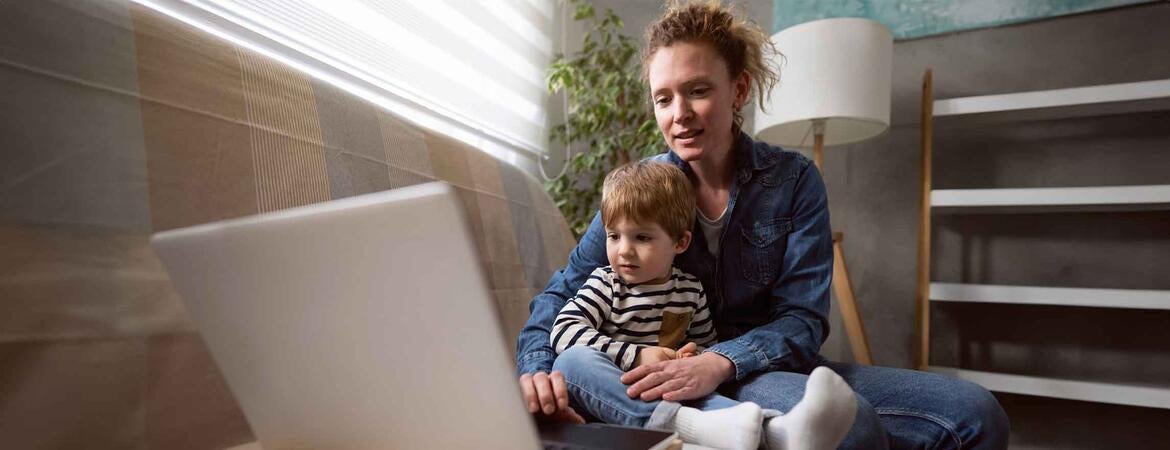
In traditional clinical settings, those observations happen during carefully structured, in-person sessions. For her study, Meltzoff recreated those interactions online. Using video conferencing tools, clinicians guided parents through activities — such as calling a child’s name or engaging in play — while observing how the child responded. For older children, clinicians interacted directly with them through conversation and structured tasks.
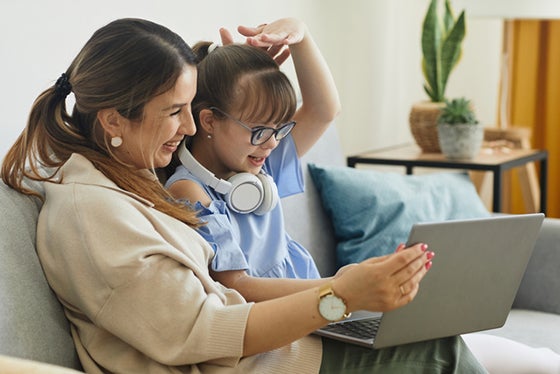
To test accuracy, Meltzoff and her team recruited 39 children seeking autism evaluations through a university-based clinic. Each child underwent two separate assessments — one in-person and one via telehealth — conducted by different clinical teams who were unaware of each other’s conclusions.
The results were promising. One of the tools developed for children whose speech is limited to short phrases showed particularly high accuracy, while another designed for more verbally fluent children was effective in many cases but less consistent.
The study also found that parents were largely satisfied with telehealth assessments, suggesting the approach is both feasible and acceptable for families.
The need for alternatives to in-person diagnosis is significant, Meltzoff said.
“A lot of people live two hours from an autism clinic,” she said. “Getting your kid two hours to a clinic, then doing an appointment and two hours home just isn’t really feasible.”
The approach is especially important for families in rural areas or those with limited financial resources. For some, transportation costs or lack of access to reliable transit can make in-person visits difficult.
Additionally, a formal autism diagnosis is often required to access essential services. While schools can provide some support without a clinical diagnosis, insurance coverage for therapies typically depends on one. Those services include speech therapy, occupational therapy, and one-on-one behavioral interventions — all of which can be critical for helping children develop communication and life skills.
Still, Meltzoff cautions that telehealth is not a one-size-fits-all solution. Children with more subtle symptoms or co-occurring conditions such as attention deficit and hyperactivity disorder (ADHD) may still require in-person evaluations for accurate diagnosis.
The paper's title is "A Telehealth Diagnostic Tool for Autistic Children With Phrased and Fluent Speech: Comparison to In-person Diagnosis." In addition to Metzoff's, its co-authors are Cameron Alexander, Amy Hoffman, and Jan Blacher, all with UCR's School of Education.
“I don’t want to oversell it,” Meltzoff said. “It worked for most kids, but more complex cases — the ones that are already difficult even when done in-person — can be harder to evaluate remotely.”
Even with those limitations, the study validates new tools for children with a wider range of communication abilities.
“How accurate is telehealth?” Meltzoff asked rhetorically. “We found it’s pretty good.”