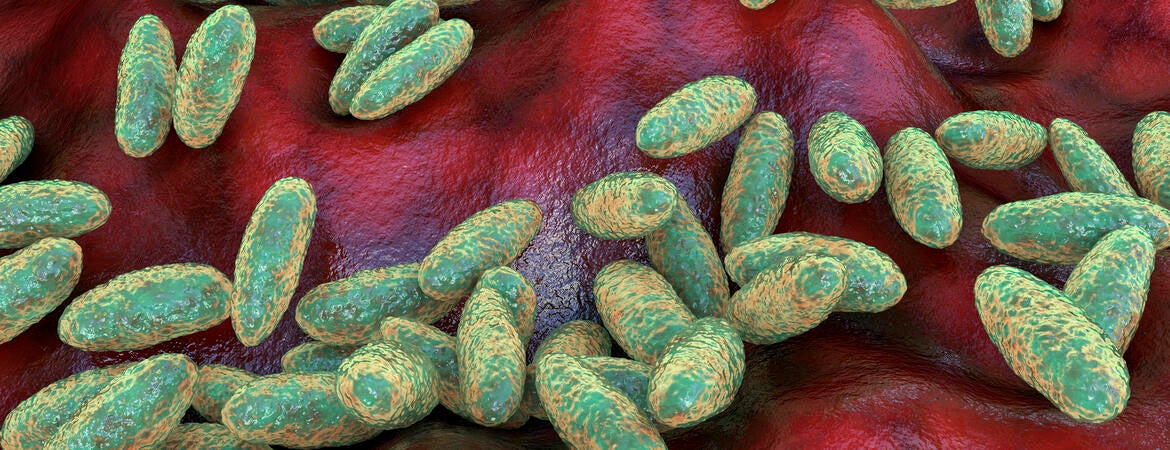

The reported death of 28-year-old laboratory technician Darya Shipilova at the Irkutsk Research Anti-Plague Institute in Shelekhov, Siberia, Russia, has raised questions about a possible exposure to pneumonic plague and prompted calls for greater transparency. Yersinia pestis is a Gram-negative, rod-shaped bacterium that causes plague.
Scott Pegan, a professor of biomedical sciences in the UC Riverside School of Medicine, answers questions on this topic in the Q&A below. Pegan’s research focuses on emerging infectious diseases, viral-host immune interactions, and the development of antiviral therapies and vaccines, particularly for coronaviruses and Crimean-Congo hemorrhagic fever virus.
Q: What occurred during the recent incident at the Irkutsk Research Anti-Plague Institute?
A: On October 2, 2026, a laboratory leak occurred at the Irkutsk Research Anti-Plague Institute of Siberia and the Far East in Shelekhov, resulting in the death of 28-year-old laboratory technician Darya Shipilova.
Q: Why do nations continue to research Yersinia pestis?
A: Nations such as Russia, the United States, and others maintain research on Yersinia pestis to develop defensive mitigation strategies and therapeutics against a pathogen that is viewed globally as a potential biological threat agent and is still endemic to many countries to include the United States and Russia. Although offensive biowarfare development is outlawed by international treaty under the Biological Weapons Convention (BWC) in all but four countries, defensive research remains essential to prepare for biosecurity risks and naturally occurring outbreaks.
Q: What forms of disease does Yersinia pestis cause?
A: Yersinia pestis manifests in three primary clinical forms: bubonic plague (characterized by painful, swollen lymph nodes), septicemic plague (a severe bloodstream infection), and pneumonic plague (an infection of the lungs). Given the limited reports regarding the Russian incident, it appears that Darya Shipilova suffered from the pneumonic form.
Q: How is plague transmitted, and why does it not spread rapidly in modern populations?
A: In nature, Yersinia pestis is maintained in a sylvatic cycle among wild rodents and fleas, transmitting to humans via flea bites, contact with infected bodily fluids, or respiratory droplets. It does not spread rapidly because person-to-person transmission is strictly limited to close respiratory contact with symptomatic pneumonic plague cases; bubonic and septicemic forms cannot spread directly between humans. Regarding this recent case in Russia, the limited reporting suggests that Darya Shipilova was infected when the Yersinia pestis was aerosolized when a test tube containing the bacteria broke. Whether this resulted from a transmission within the proper containment facilities or outside of them is still unknown. The reporting that numerous individuals are being quarantined due to the recent incident suggests the officials overseeing the incident are concerned about who may also have been exposed to the initial leak incidence, or interacted with the infected individual.
Q: What biosafety measures are required when working with live unattenuated (unaltered) Yersinia pestis in the US and other developed countries?
A: In the United States and other developed nations, live unattenuated Yersinia pestis is classified as a high-consequence pathogen (designated as a Tier 1 Select Agent in the U.S.), strictly mandating Biosafety Level 3 (BSL-3) containment. All manipulation of viable cultures must take place inside certified biological safety cabinets within controlled negative-pressure laboratories featuring HEPA air filtration and multi-door access controls. Personnel must undergo security background checks and specialized training, wear personal protective equipment including fit-tested respirators (N95s or PAPRs), protective gowns, and gloves, and adhere to strict occupational health monitoring, including immediate access to post-exposure antibiotic prophylaxis. For the outbreak that recently occurred in Russia, there is limited information whether these policies and procedures were adequately followed.
Q: What is the historical context of plague, and how is it managed today?
A: Plague has caused major global pandemics throughout history, and the last major urban plague epidemic in the U.S. occurred in Los Angeles between 1924 and 1925. While the bacterium persists in wild rodent reservoirs in certain parts of the world, modern human cases remain rare and can be effectively contained and managed through standard medical care and public health intervention.
Q: Is there an effective treatment for Yersinia pestis?
A: Yes, effective treatments for Yersinia pestis exist and are readily available. Because plague is a bacterial infection, it can be successfully cured with standard, widely accessible antibiotics, provided medical care is initiated promptly following exposure or the onset of symptoms.
Header image credit: Dr_Microbe/iStock/Getty Images Plus.