Pivot to PoTential
UCR’s new chancellor champions hard work and the ability to pivot from problems to possibilities
By John Warren | Photos by Stan Lim
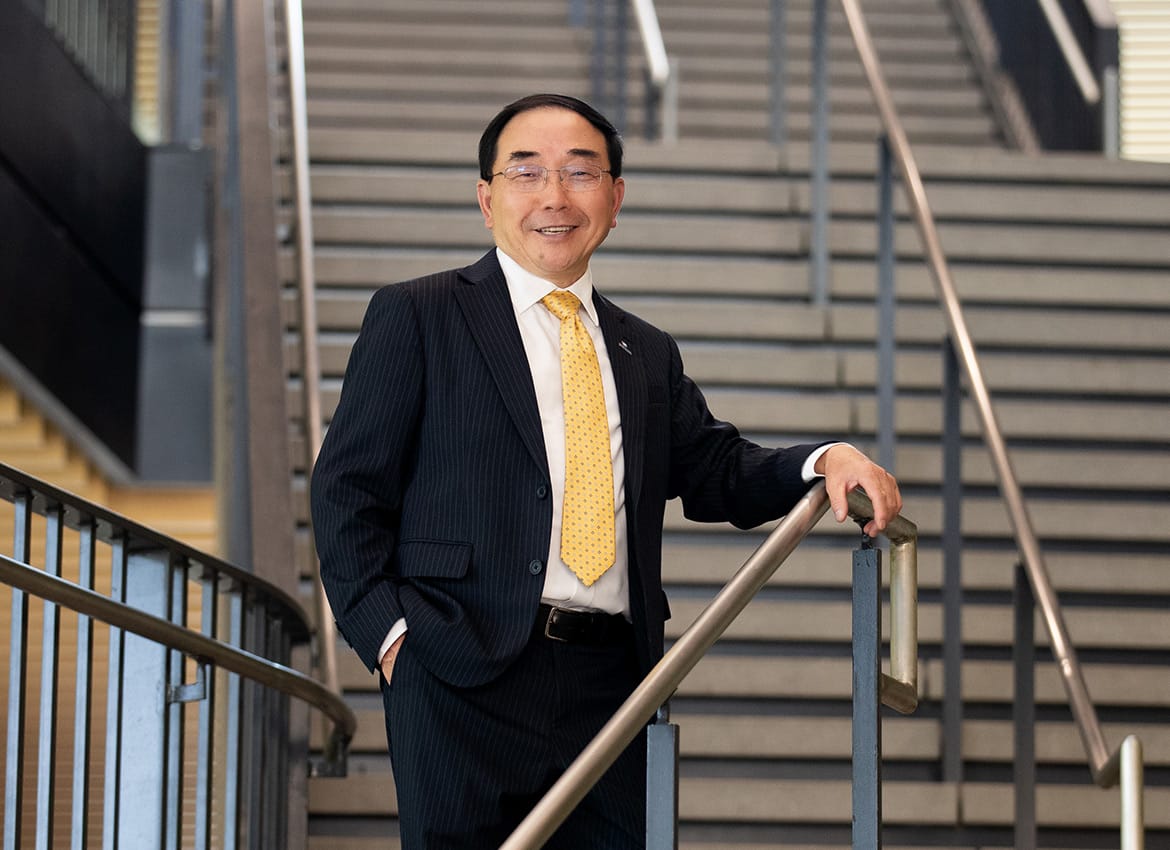
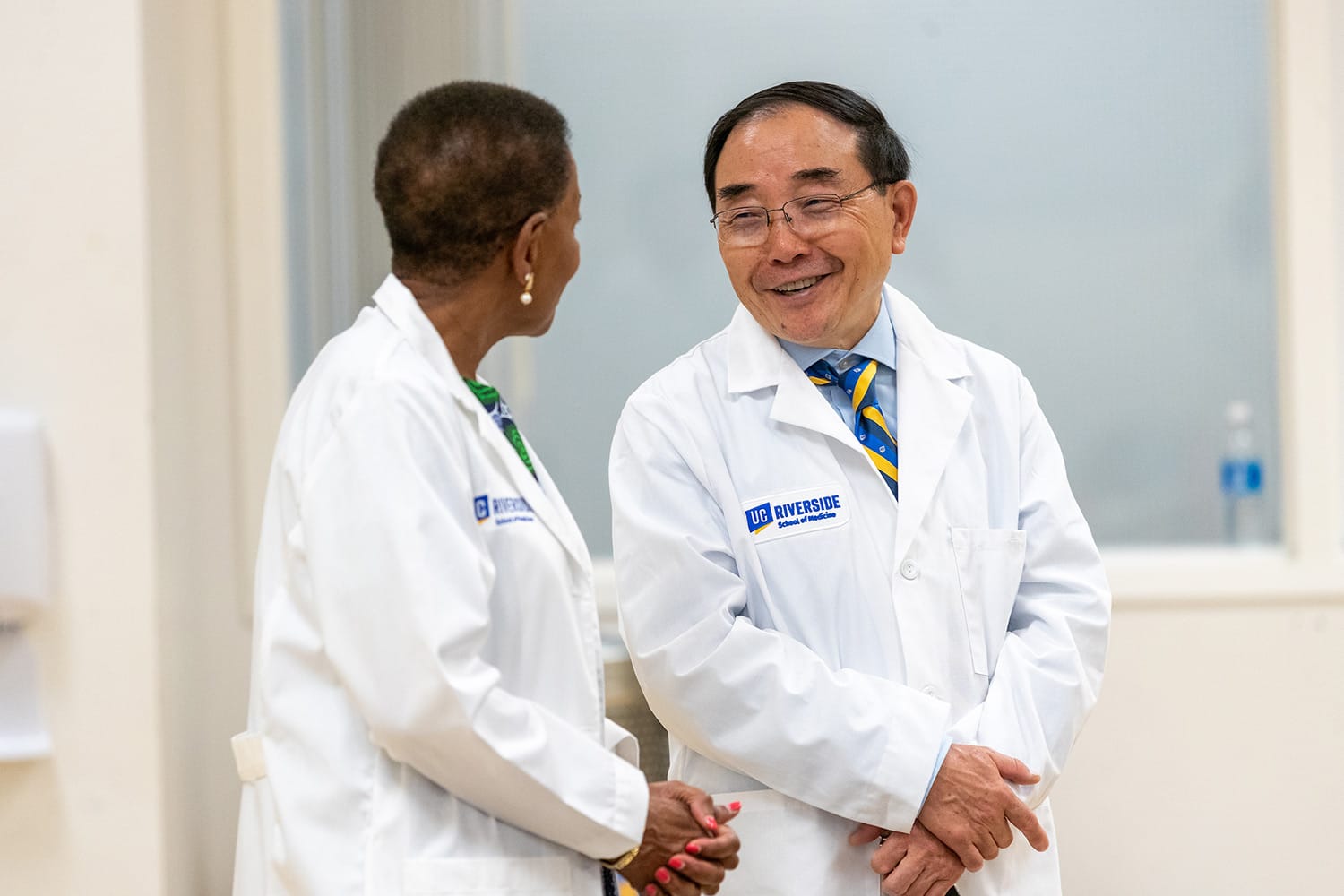
W hen Chancellor S. Jack Hu talks about the virtue of hard work, he carries a distinct frame of reference.
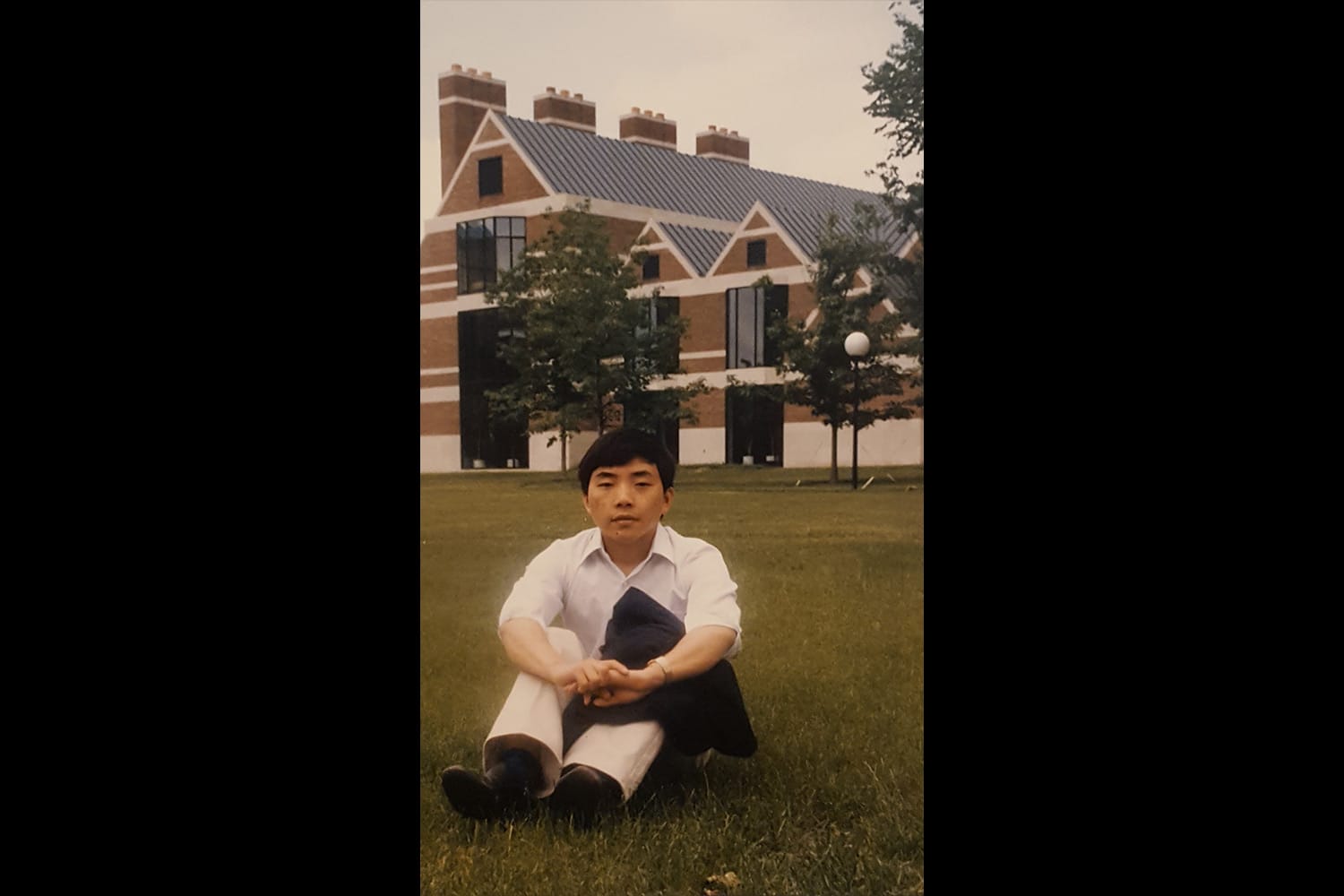
He was born Shixin Jīnqiáo Hu in the Hunan province of China and grew up during a historically tumultuous period, the Cultural Revolution. His grandmother chose his middle name, Jīnqiáo — “golden bridge” — after consulting a fortune teller who warned that the boy would spend his life crossing rivers, lakes, and oceans. The name was meant as protection, a kind of blessing for the long journey ahead.
His family were rice farmers in Hunan, a region with a humid, subtropical climate. Beginning in the 1950s and until the late ’70s, Chinese farmers operated as part of collectives. Decisions on farming methods and the price of crops were effectively centralized within the regional government, as was landownership.
He fondly recalls working as a middle schooler in an orange grove carved from a mountainside. Later work in the rice paddies in the blistering late summer sun was less pleasant, the water in the fields so hot it burned his legs.
Hu readily acknowledges the influence of his Chinese heritage and his family’s emphasis on education. But he does not want the walk-away from his life story to be “came from poor, rural China and made something of himself.”
“It’s not important where I came from,” he says of his childhood. “What’s important is resilience, hard work, and embracing new opportunities.”
The value of hard work is a consistent message from Hu, as is pivoting from one subject to another he considers more forward-looking.
When a reporter recently asked Hu about the Trump administration’s attack on university research funding, he stressed the importance of the 80-year partnership between the federal government and American universities. Then he pivoted to the need to diversify funding. The university should pursue foundation, corporation, and philanthropic funding, he said; that’s a good strategy no matter what the federal funding environment.
If he finds himself discussing the sciences at length, he pivots and emphasizes his interest in and support for the arts and humanities; his wife, Jun Du, is a trained pianist.
“As a chancellor, you want to have curiosity in every discipline,” he said.
A Big-Picture Guy
Hu is a mechanical engineer by training, with a scholarly resume that spans more than three decades and includes nearly 200 peer-reviewed papers, 10 U.S. patents, election to the National Academy of Engineering, and over $46 million in research funding from the Department of Energy, the National Science Foundation, and industry giants such as General Motors.
Hu leads UC Riverside in advancing student success and research excellence as well as expanding health care and public engagement. But when you ask him what will cause him to lose sleep as the university’s new chancellor, his answer may surprise you: “Feeding the people.” That is, making sure UCR has the necessary resources to support the entire university community, including basic needs.
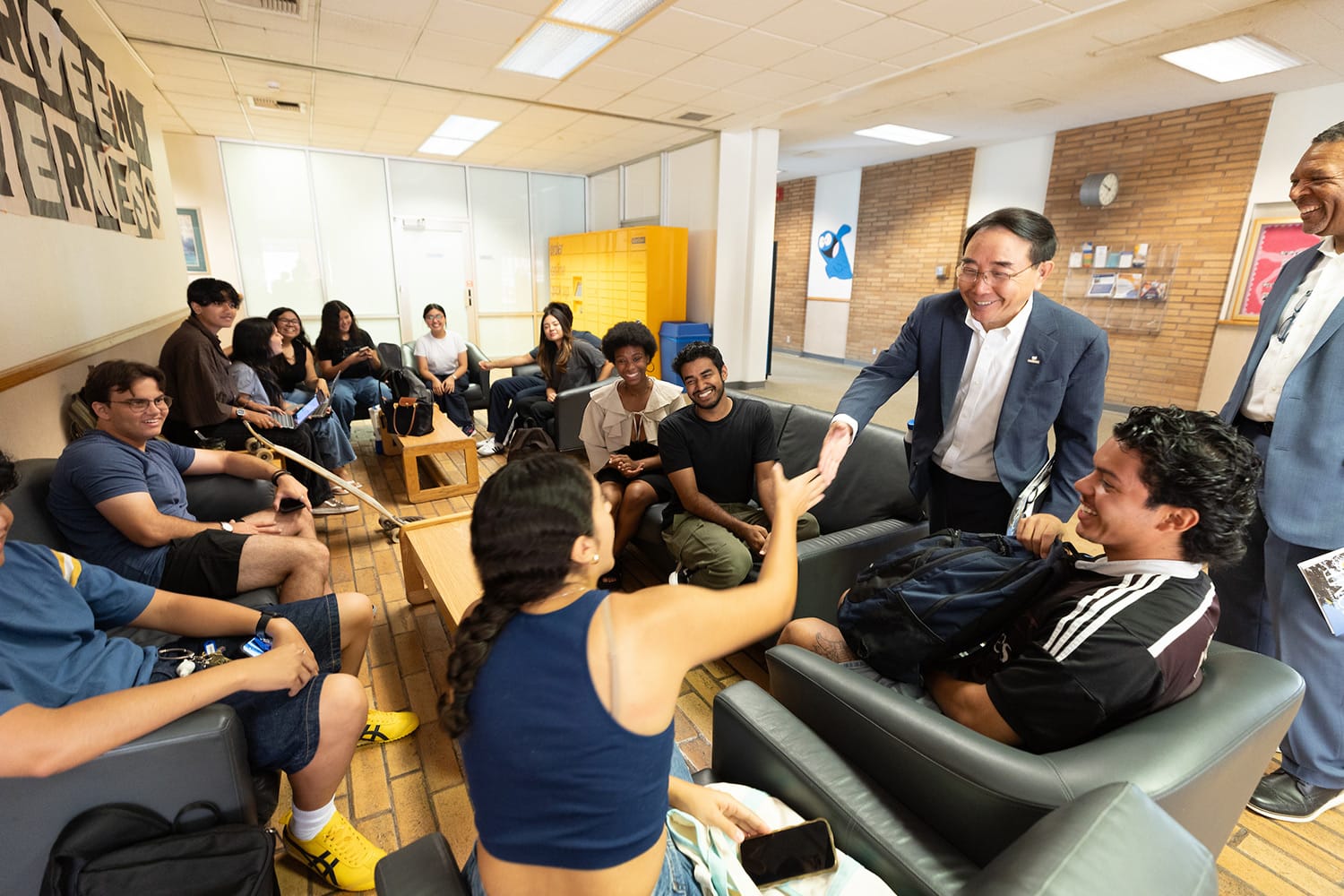
“A key part of my job is empowering and supporting our faculty, staff, and students. If you hire or recruit someone to UCR and they succeed, that’s where the satisfaction of the job comes in,” he said, noting he wants to be a people-centered chancellor. “Be altruistic — take joy in the success of others.”
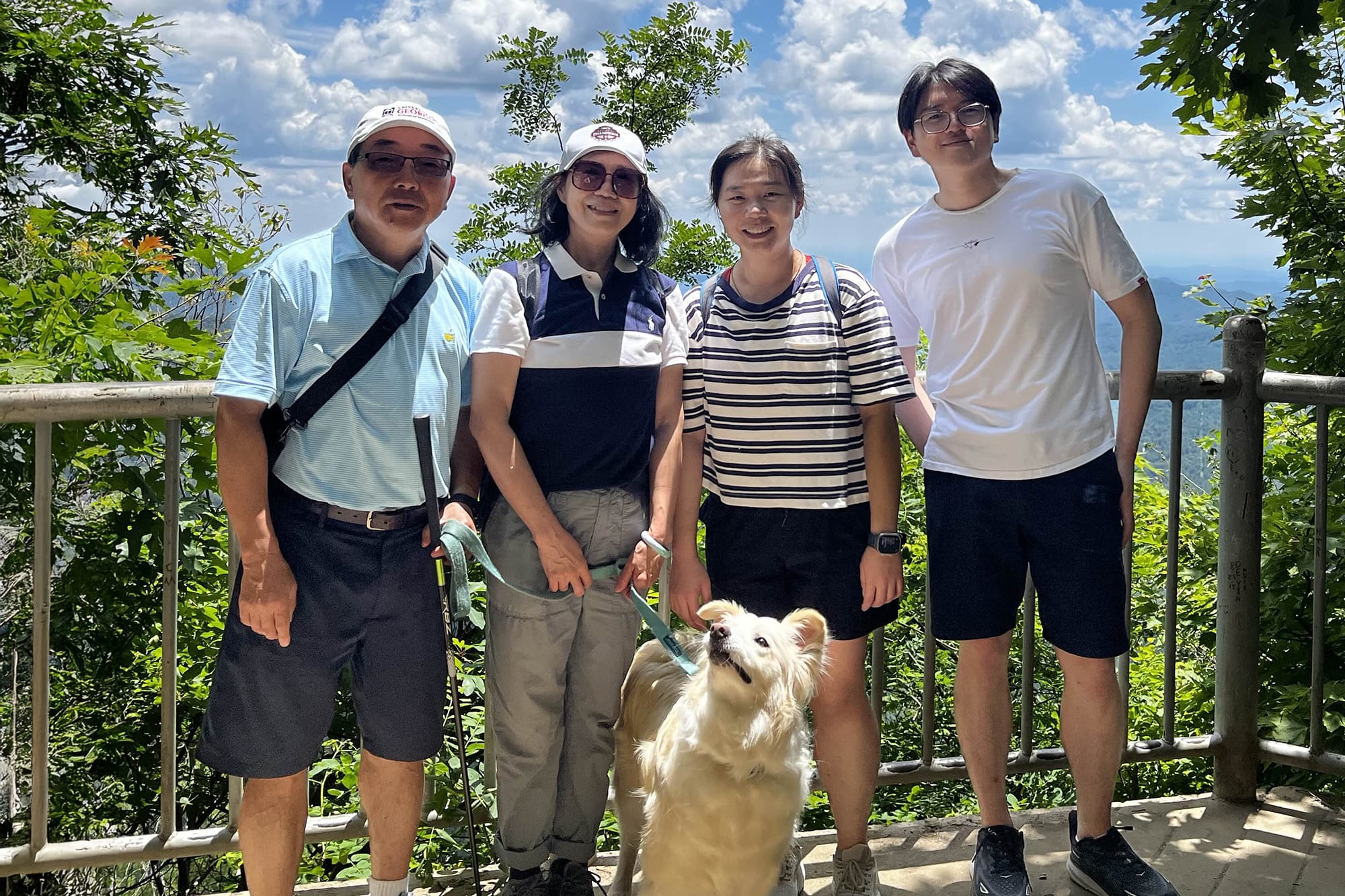
That answer does not surprise his daughter, Anna Hu.
“That’s very like him; my dad has always been a big-picture guy,” Anna said. “For things to work, he knows that the people running the school have to be comfortable or everything would fall apart.”
Anna said his answer is also a product of big-picture introspection, since her father became chancellor of UCR in July after years leading research and academic enterprises.
“He’s been thinking a lot about these things since transitioning from provost to a bigger role at UCR where he has to deal with the big-picture issues,” said Anna, a third-year doctoral student at the University of Georgia, where Hu served for six years as provost.
The Long Journey Out
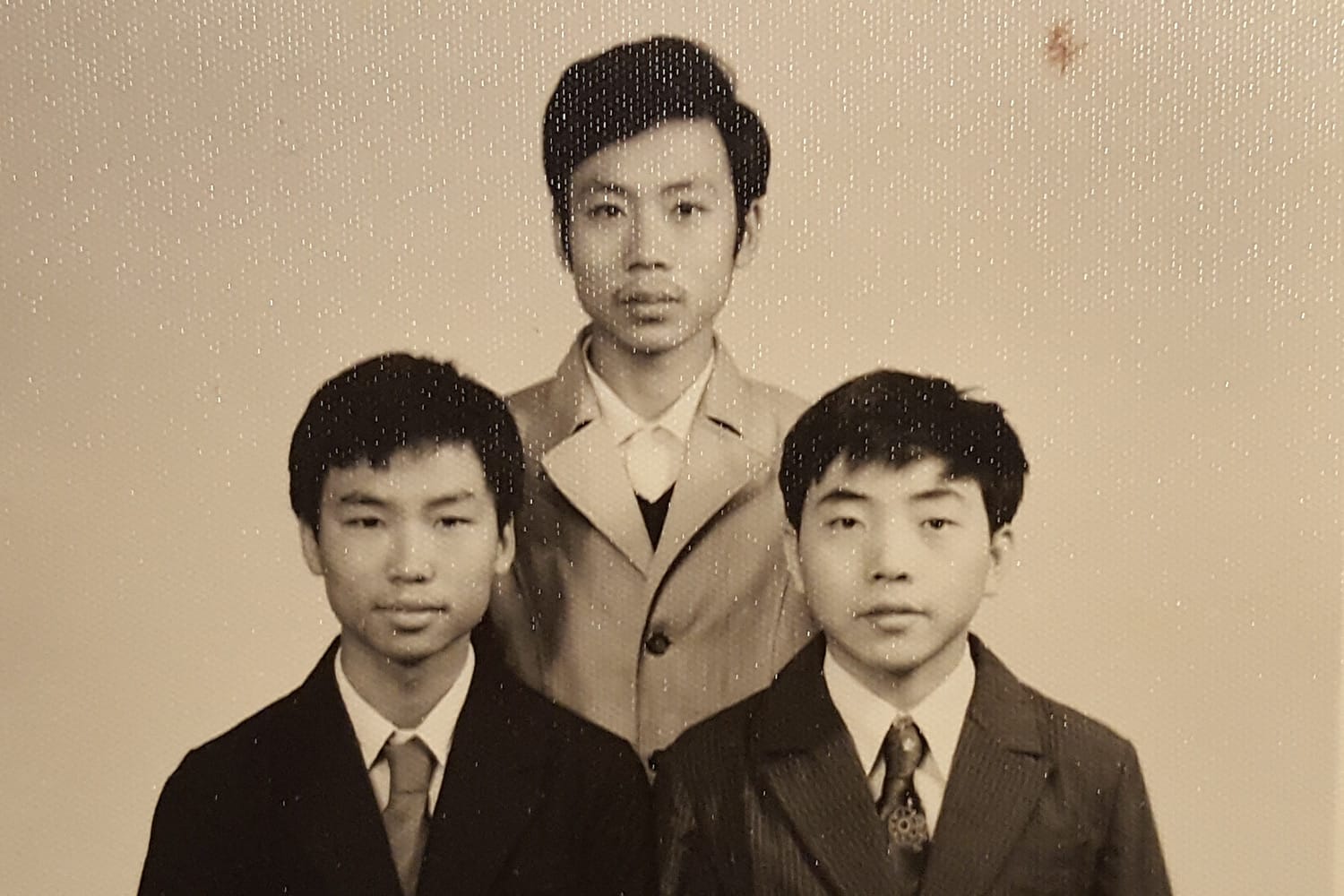
In 1977, the Chinese government resumed formal college admissions and reinstated the nationwide college entrance exams that were interrupted during the Cultural Revolution. In 1979, Hu took the exam and then enrolled in Tianjin University and graduated in 1983. Being allowed to go to college was life-changing, he said.
When he moved to Michigan in the early 1980s for graduate school, the only thing that would fit in Hu’s one suitcase was the bulky winter coat he knew he would need in Ann Arbor. He stayed there for 34 years, completing his master’s degree and doctorate in mechanical engineering at the University of Michigan (UM). It was during this time while doing research in the General Motors assembly plant that he adopted the name “Jack,” borrowing from the hard consonant sounds from “Jīnqiáo,” or “J.Q.”
“It’s not important where I came from. What’s important is resilience, hard work, and embracing new opportunities.”
— Chancellor S. Jack Hu
Hu later became a professor at UM, and, ultimately, vice president for research. His specialty is in the fields of assembly systems, materials joining, and quality control. In 2015, under Hu’s leadership, the university launched “MCity” as a public-private partnership to support innovation and testing of connected and automated vehicles.
In 2019, he took a position at the University of Georgia (UGA) as senior vice president for academic affairs and provost, where he led the institution’s academic mission across 19 schools, with leadership oversight for instruction, research, public service, and information technology.
At UGA, he invested in electric mobility-related research projects, working with several automobile companies with manufacturing facilities in the state and hosting regular summits that convened leaders of government, academia, and industry. Other investments he cultivated included precision agriculture, Parkinson’s research, and artificial intelligence.
A Proven Formula
Funded research is one measure by which an R1 university’s success is gauged. When Hu arrived in Athens, Georgia, in 2019, UGA’s research expenses were $477.5 million. In 2024, the last year measured, the institution’s figure was $628.2 million.
In 2024, UM spent $2.04 billion on research. For 2023, the most recent year in which national figures were released by the National Science Foundation Higher Education Research and Development report, the university was No. 4 in the nation.
UCR’s $200 million in research expenditures has grown by more than $70 million in the past 10 years. The campus was accepted into the Association of American Universities — a consortium of the nation’s top research universities — in 2023.
The key to growing a research enterprise is faculty leadership and multidisciplinary collaboration, Hu said. His reasoning is easy to follow.
“Many challenges cannot be solved by a single discipline alone,” Hu said. “You need collaborations to develop solutions.”
First comes “pre-seed” funding. He calls it “coffee money.” Give potential collaborators the resources to get together and talk about how they can bring their expertise together to solve challenges.
“Once they form the team, they then can compete for the next level of seed funding,” Hu said.
For example, they would compete for $100,000 in seed funding as a team. If they are awarded the $100,000, they then spend it over the next 18 months to flesh out their concept, conduct initial research, and get it ready to seek large-scale external grants.
The idea blossomed at UM while Hu led research across its three campuses. A multidisciplinary approach coined “MCubed” involved convening three or more faculty members from two disciplines. The initiative led to 222 “cubes,” or collaborations, involving 25 campus units and 300 faculty members.
“Many challenges cannot be solved by a single discipline alone. You need collaborations to develop solutions.”
— Chancellor S. Jack Hu
He replicated the approach at UGA, where faculty members were given $500 in “pre-seed” money each, and encouraged to join with five or six others. Once organized, they would compete for the next level of seed grants of up to $150,000, producing a proof of concept to pitch.
A success he points to is the UGA Center for Cognitive Aging and Research, which began with $7,000 in pre-seed money. That led to a presidential seed grant, which in turn resulted in a multimillion-dollar federal grant awarded by the Centers for Disease Control and Prevention.
Working with UCR’s vice chancellor for research, innovation, and economic development, Hu envisions awarding $3,000 to teams of five faculty or more across disciplines, then funding up to $100,000 for “medium-sized seed grants” through internal competition that will lead to proposals for significant external funding, including from corporations or foundations.
“That’s a model I would like to try here,” he said.
Lessons in Leadership
Those who have worked with Hu have some takeaways for those who will work with him.
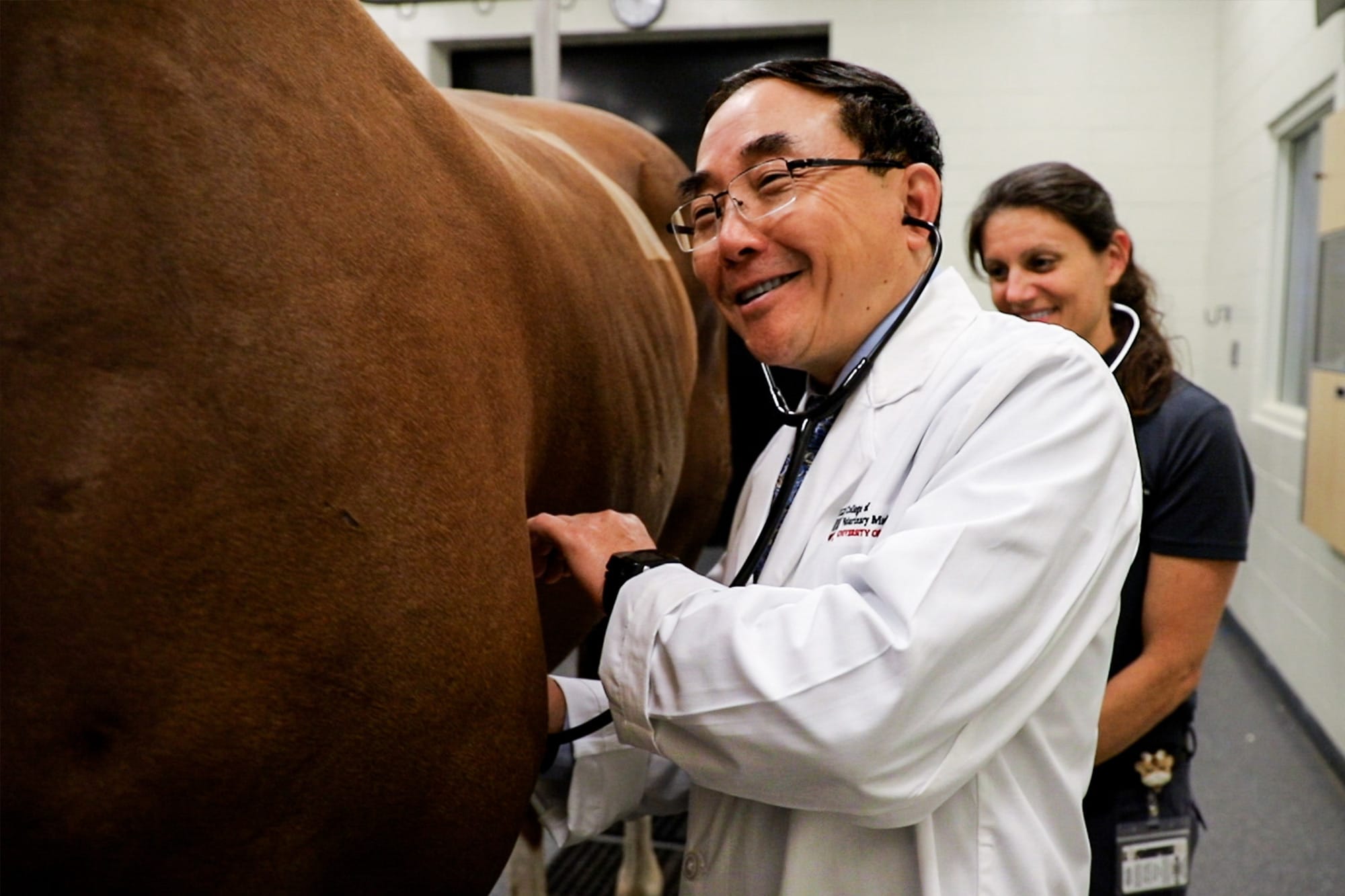
When the COVID-19 pandemic hit UGA while Hu was serving as provost, he assembled and led a team of resident experts who leveraged then-cutting-edge nasopharyngeal swabs and accurate PCR methodology to establish a quick-turnaround, walk-up testing lab. He also helped ensure there were additional personnel dedicated to the effort, adequate testing supplies, and robotic capabilities for testing.
In fall 2020, classes at the UGA campus of 39,000 students were able to resume in various modalities, including in-person, even as many universities shifted to virtual learning. Much of the credit was given to a testing protocol developed by the multidisciplinary group that Hu created.
“A lot of people had a lot of apprehension and having a leader who steps forward is a big deal,” said Lisa Nolan, dean of the UGA College of Veterinary Medicine.
“There was no playbook for that,” said Mike Raeber, general counsel at UGA. “Jack was vital in bringing calm, steady leadership.”
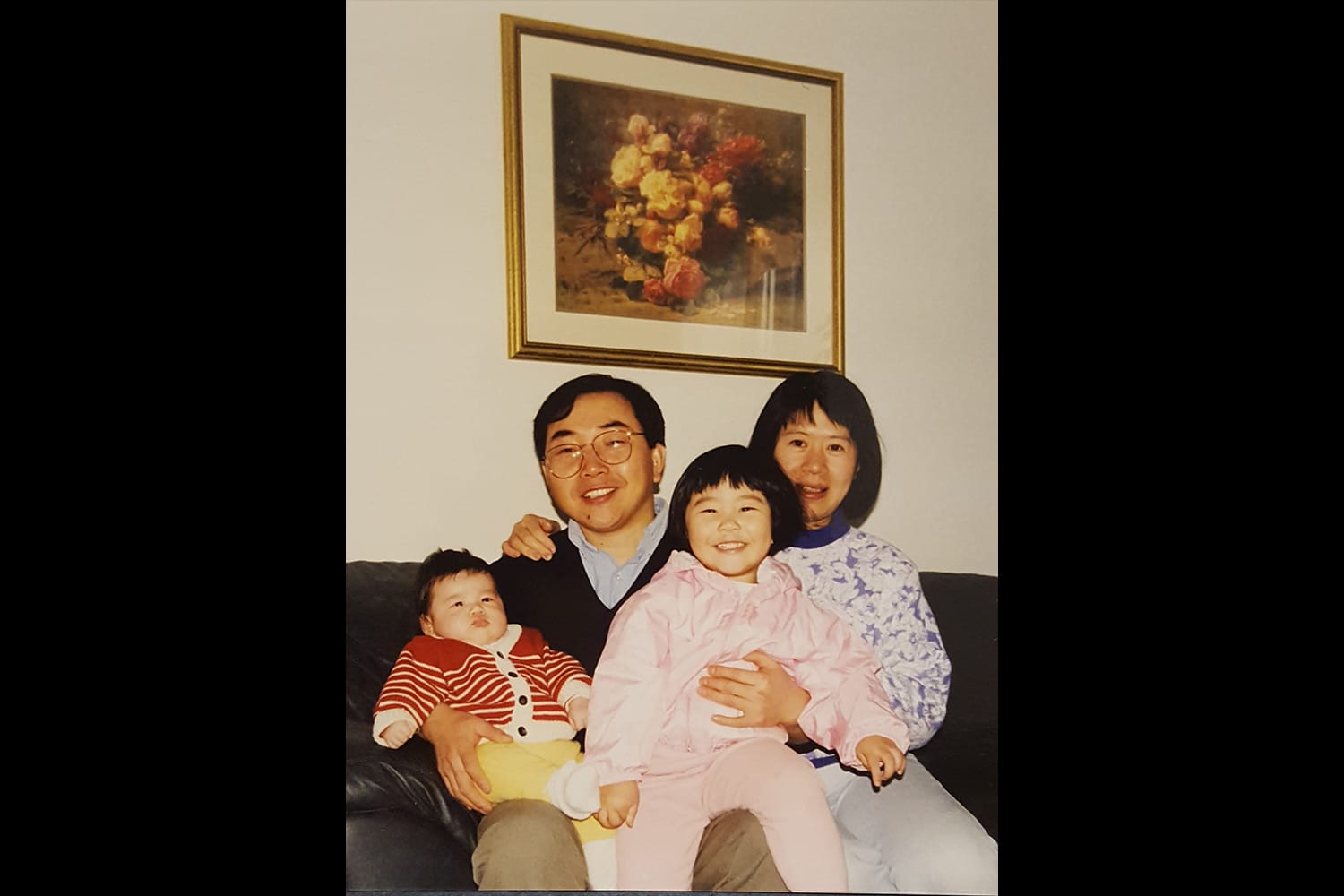
Raeber compares Hu’s style as a leader to the way he plays golf, a hobby Hu picked up by chance nearly 28 years ago. Hu, his wife, and their young daughter had traveled to attend an international conference, but he returned home to Michigan by himself, while his family stayed with grandparents. A collaborator from an Ann Arbor company suggested Hu take up golf to combat the lonely weekends. He tries to break 90 with his score, an admirable goal for an occasional weekend duffer.
“He is a very consistent, steady golfer — reliable,” said Raeber, who golfed with Hu several years ago at a charity event. “Hits it down the middle every time.”
The Chancellor and his Chevrolet
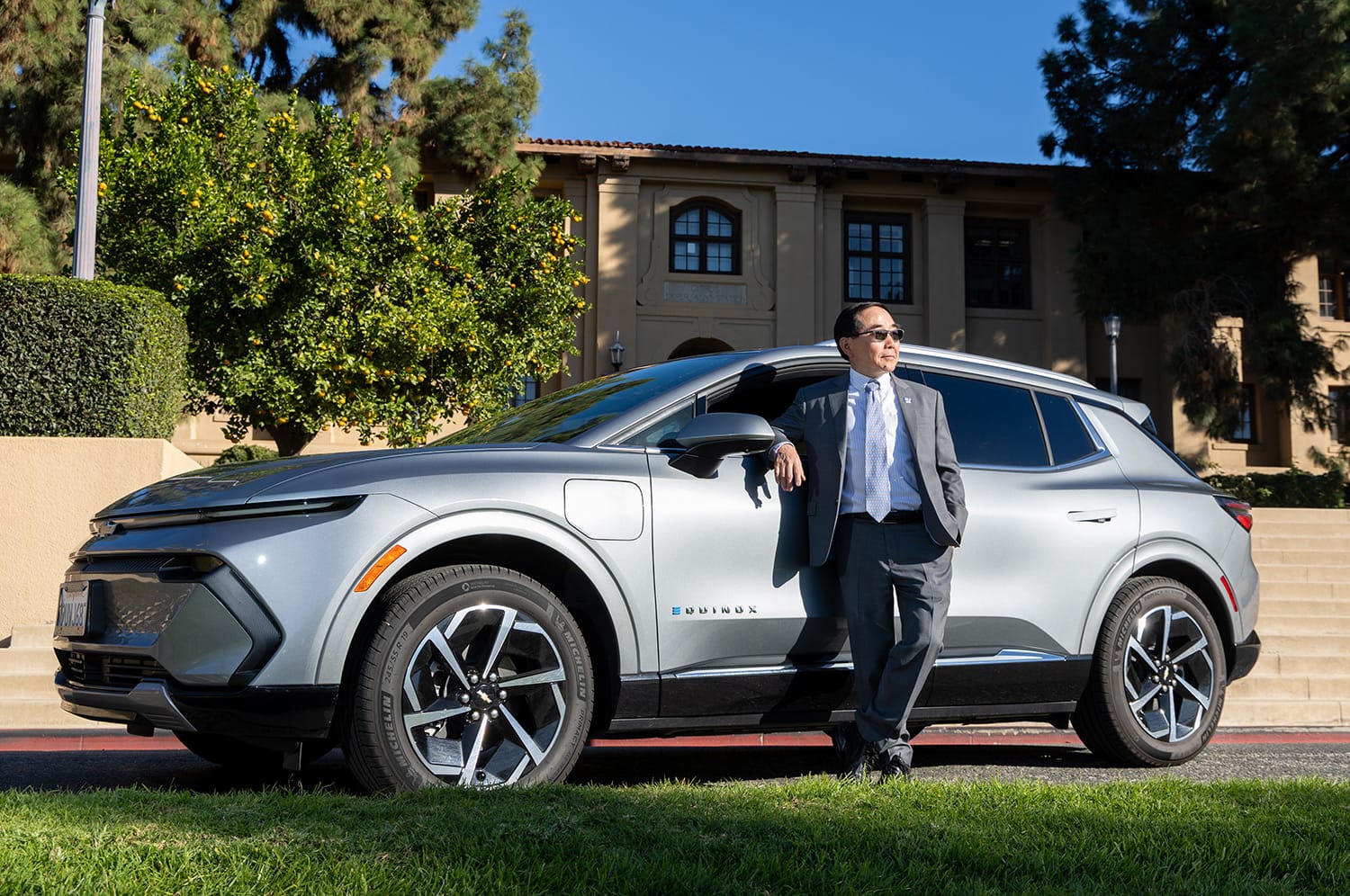
When he moved to California, Jack Hu gave his old car to his son, Albert, 26, who remains in Atlanta. His new car doesn’t stand out in UCR’s parking lot. It’s an electric Chevy.
He has a better reason to buy a Chevrolet than most. He ran the General Motors Collaborative Research Lab at University of Michigan for 21 years; he personally worked on the battery manufacturing technology, and a former student is now the head engineer of General Motor’s big trucks division.
The car is an all-electric SUV, an Equinox, on the sporty side, and he likes the acceleration. But it’s the base model, smallish, gray, two-wheel-drive — “You don’t need a four-wheel-drive in California.” It was four months before he found the radio, he confesses.
He dresses nattily and customizes his suits online. He doesn’t mind the word frugal.
“Treat the university’s resources as you would your own,” he said. “Minimize waste, invest strategically.”