R VIEW
Powering the engine of prosperity
By Chancellor S. Jack Hu
UC Riverside is more than a university. It is an engine of innovation and economic development.
Public research universities are anchors of economic stability for their regions. They shape industries, strengthen communities, and drive the economy itself. One of the ways the United States became a global leader was through sustained investment in the public research institutions that fuel discovery, develop a skilled workforce, and translate ideas into progress. At a time when the value of higher education has been questioned and investment in scientific discovery is under threat, we must remember what is at stake.
My background in engineering gives me a particular appreciation for an internal combustion engine as a metaphor to explain the system that drives innovation and economic growth. Ideas and talent provide the fuel. Investment and leadership spark progress. An open exchange of perspectives — across disciplines, industries, and borders — is the oxygen that keeps that system moving. Through rigor, testing, and refinement, raw ideas are strengthened. Within our innovation ecosystem, those ideas take shape, supported by the infrastructure that connects research, education, and industry.
The private sector plays a vital role in bringing new ideas to market at speed. Corporations are essential partners in scaling solutions and delivering impact. But many of the most important breakthroughs begin earlier — sometimes long before a clear path to commercialization exists. Fundamental research, early experimentation, and high-risk inquiry are critical to progress, yet they do not always align with near-term profits. That is where federal funding and public research universities play a unique role.
The result is not just discovery but progress you can see and measure. Over the past five years, we have increased federally funded research expenditures by nearly 50%, reflecting growing national impact. Today, more than 30 research centers across our campus are advancing discovery with real-world applications.
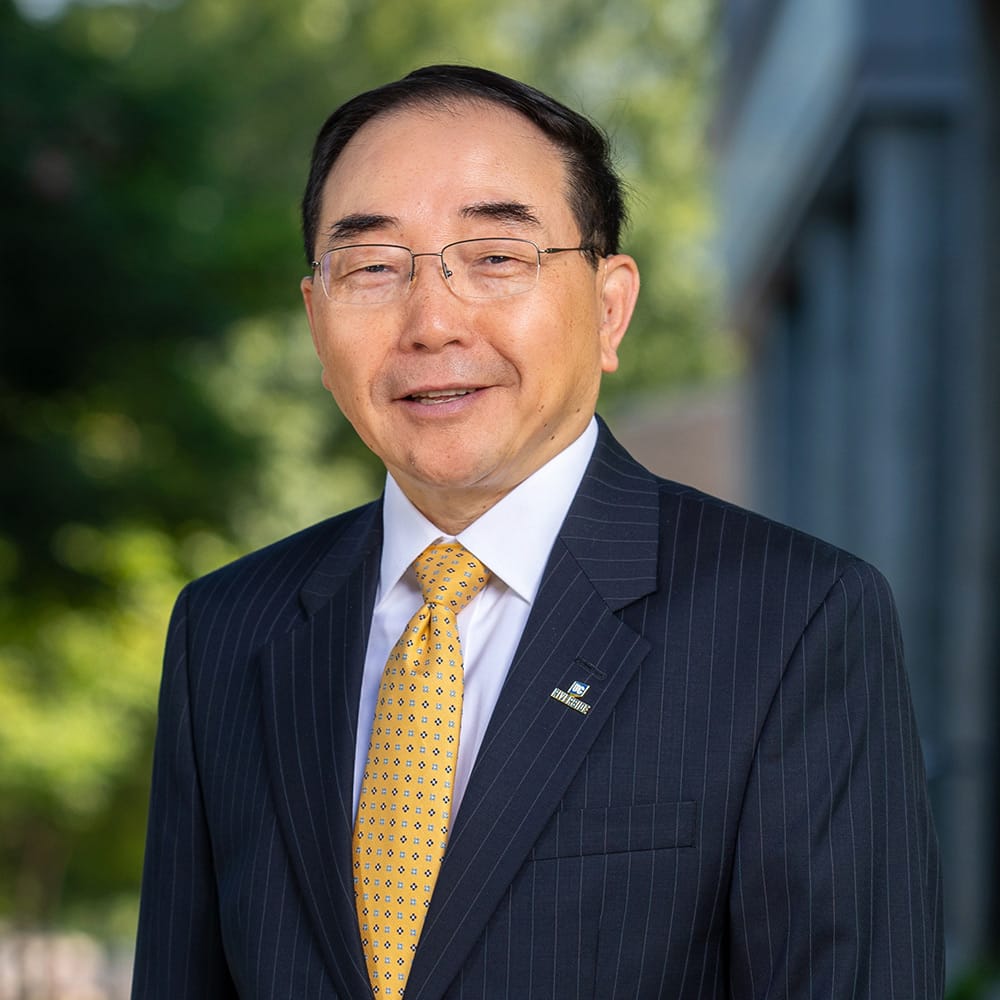
“Together, we power progress on our campus, across our region, and throughout the economy.”
Through initiatives like SoCal OASIS, we are building infrastructure to connect researchers, students, industry, and community partners. Our goal is to accelerate solutions that support environmental, economic, and social sustainability. We are also continuing to expand our research and clinical footprint through UCR Health, which strengthens our capacity for health science discovery while caring for patients today.
Since 2016, UC Riverside has supported more than 620 startups, helping create or retain 2,000 jobs while engaging over 4,000 students. Our efforts generated $160 million in capital investment. Through a structured pathway for commercialization, we are turning ideas and research into companies.
Our economic impact takes many forms. The UCR-developed “Tango” mandarin accounts for nearly one-third of California’s mandarin production, generating $272 million in revenue during the 2024-2025 season alone.
Through our innovation ecosystem, companies like FarmSense are translating research into tools that help farmers monitor pests in real time, improving yields and efficiency.
And our alumni are extending that momentum with the founding of ventures like Edge Sound Research, which is transforming how audiences experience live sports and entertainment through immersive audio technology.
Our economic impact also depends on the people we prepare to drive it. This year, Sreenidhi Surineni became UC Riverside’s first Marshall Scholar — one of just 43 students selected nationwide. A neuroscience major, he studies Alzheimer’s disease and technologies to improve patient care. Through nonprofit work, he brings STEM education to underserved communities. His work exemplifies what is possible when research and opportunity come together.
Inchara Jagadeesh, a physics and astronomy major, was recently named a Goldwater Scholar, one of the nation’s top honors for undergraduate researchers in STEM. She plans to pursue a Ph.D. in cosmology to study the formation and evolution of the universe through advanced instrumentation as part of a global research initiative.
None of this work happens in isolation. It depends on strong partnerships with alumni, donors, policymakers, and community leaders — people like you, the readers of UCR Magazine — who believe in the power of a public research university.
We invite you to partner with us: mentor students, support research, invest in innovation, and help us build new connections. Our collaborations turn ideas into action. And, together, we power progress on our campus, across our region, and throughout the economy.