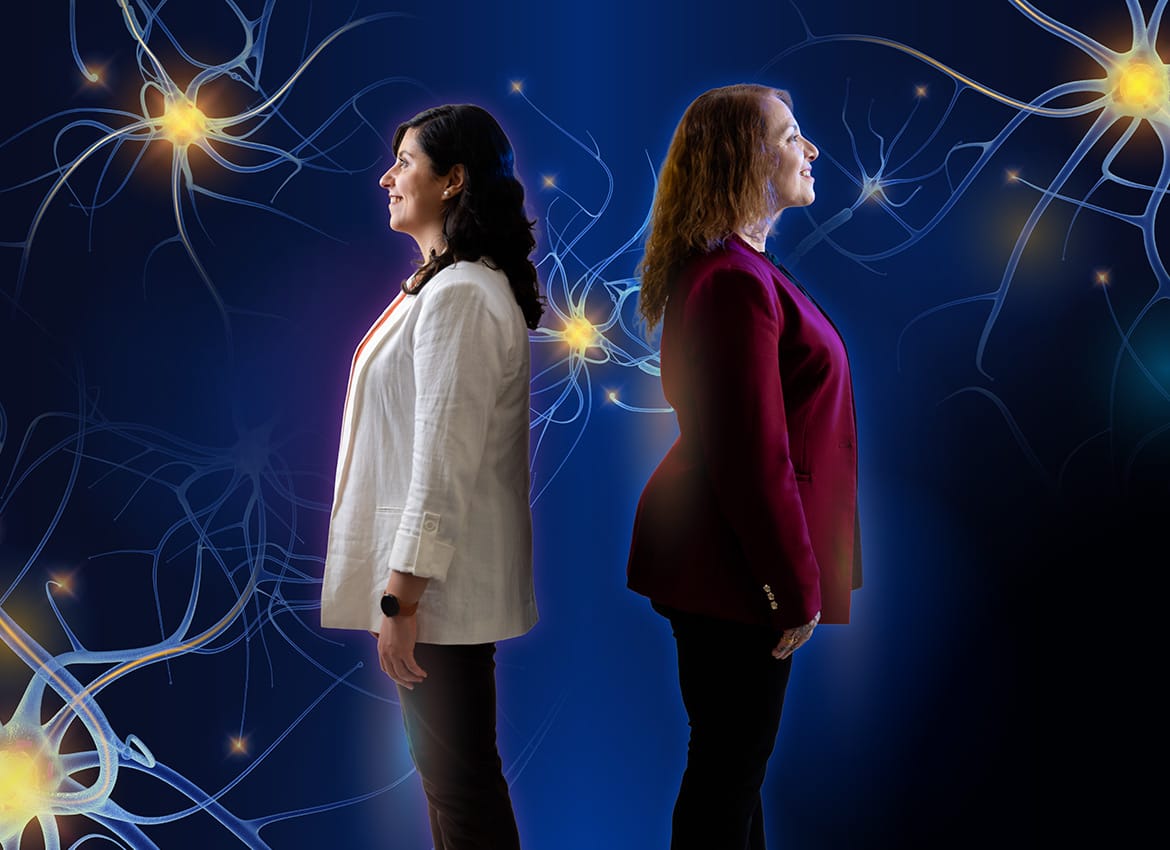
Taming the Self-Eating Dragon
A physician and a biomedical researcher are working to advance treatment and reverse the damage caused by multiple sclerosis
By Iqbal Pittalwala | Photos by Stan Lim
F or someone living with multiple sclerosis (MS), each day calls for resolve, flexibility, and the quiet celebration of small victories that often go unseen. Morning stiffness or numbness can turn simple tasks into exhausting challenges, while afternoon energy may come in brief, unpredictable windows. By evening, fatigue and pain can take over, and sleep might seem impossible due to insomnia or bring little relief.
According to the National Multiple Sclerosis Society (NMSS), an estimated 2.9 million people worldwide live with MS, with nearly 1 million of them residing in the United States. Treatments focus on managing symptoms, slowing disease progression, and reducing relapses. While there currently is no cure, two UC Riverside researchers, Dr. Mahsa Khayat-Khoei and Seema Tiwari-Woodruff, have been studying MS to advance treatment options, aiming to bring more relief to those living with the disease and develop therapies that hold potential for repairing — and reversing — the damage it causes.
Understanding MS
MS is a chronic and unpredictable disease of the central nervous system thought to be an autoimmune disorder. Symptoms may include fatigue, memory difficulties, mobility issues, mood changes, numbness, pain, tingling, and vision impairment, among others. While it can appear at any time in life, the peak age for diagnosis is between 20 and 40, and it occurs three to four times more often in women than in men. The disease is different for each person and is currently divided into four types. Comprising about 85% of diagnoses, the most common type is Relapsing-Remitting MS (RRMS) and is characterized by flare-ups lasting days or weeks flanked by remission periods lasting a year to 18 months.
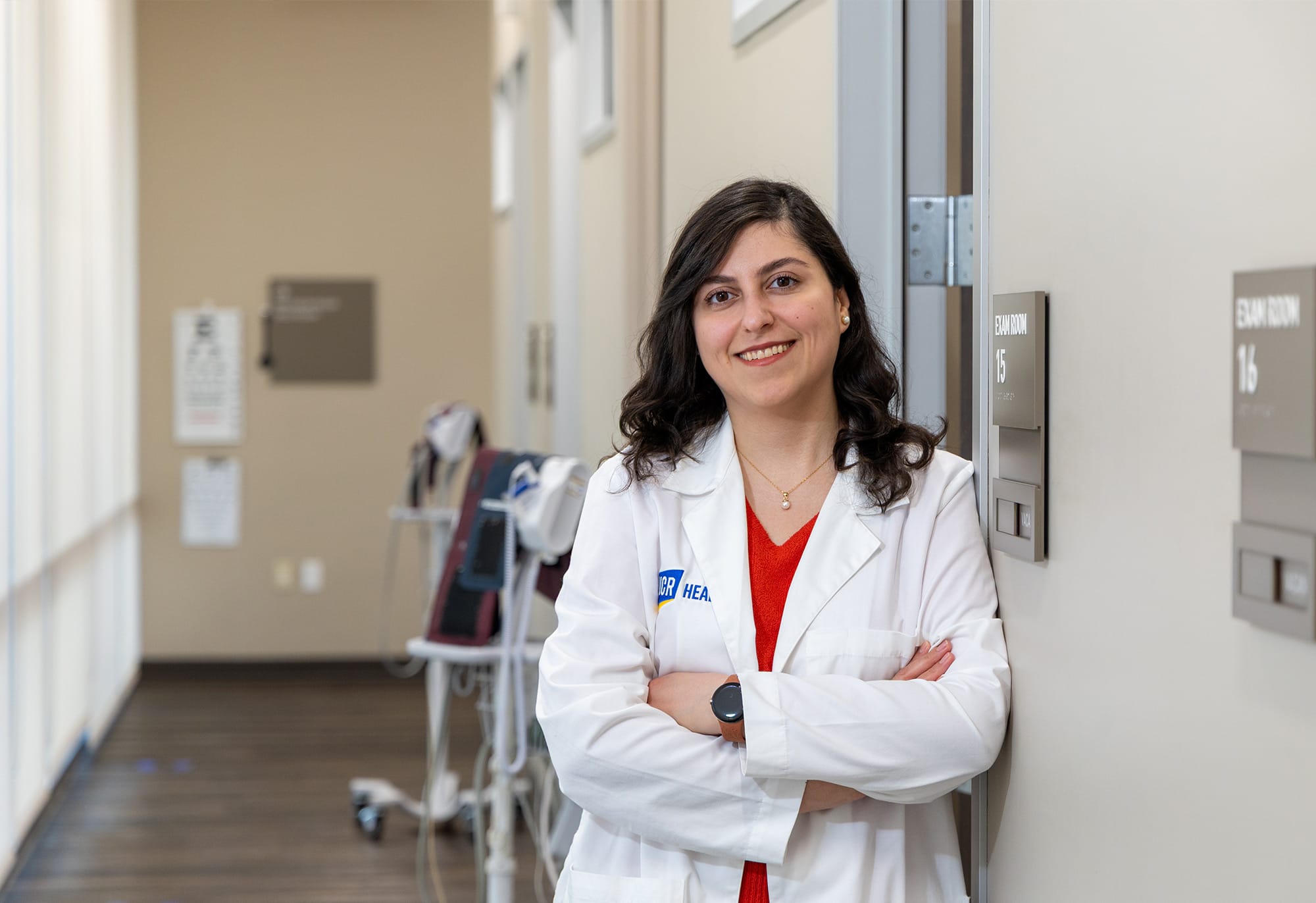
As a clinician-scientist with UCR Health, Khayat-Khoei contributes to both the clinical and research components of the School of Medicine’s MS research initiatives. She explained that in MS, the body’s immune system mistakenly attacks the brain and spinal cord.
“These are made up of nerve fibers, or axons, that carry signals throughout the body,” she said. “The axons are wrapped in a protective covering called myelin — like insulation around an electrical wire. In MS, the immune system damages this insulation. Signals then cannot travel efficiently. It’s that breakdown in communication that leads to the symptoms we see in MS patients.”
Tiwari-Woodruff, a professor of biomedical sciences in the School of Medicine, likened an axon without myelin to a garden hose with holes.
“The signal simply leaks out where myelin is missing,” she said. “That leakiness is what slows reaction time, disrupts vision, and alters memory in MS. If we can restore the insulation, we have a good chance to restore function.”
Tiwari-Woodruff said the symptoms of MS are determined by the location of the damage in the brain or spinal cord and the bodily functions that are impacted. MS has “multiple” in its name because its symptoms vary widely, she said. No two cases are identical.
“Each individual with MS experiences a unique combination of challenges,” she said. “The disease involves three core processes: immune attack on myelin, myelin damage, and eventual axonal degeneration. Effective treatment would need to target all three, yet no single therapy currently does.”
The Road to MS Research
For Khayat-Khoei, who grew up in Iran, science has always been central. Her father was a chemist and her mother a biologist, making scientific thinking a part of daily life and exposing her to research and discovery in childhood.
“I still remember peering through my first microscope at cells from inside my mouth,” she said. “That tiny glimpse of life sparked a curiosity that has guided every step of my journey — from studying stem cells and their role in cancer and regeneration to exploring the complexities of the human brain.”
Khayat-Khoei’s formal research experience began in Tehran at a specialized high school for exceptional students. A project on animal conditioning that required training rats to pull a specific lever for food fueled her interest in neurology and behavior.
After attending medical school in Iran, Khayat-Khoei moved to the U.S. in 2012 to continue her research at the MD Anderson Cancer Center in Houston. She later earned an MBA to better understand the managerial and financial aspects of the healthcare system. Khayat-Khoei joined UCR in October 2025 as an assistant professor of clinical neurology, establishing her own research program to serve patients in the Inland Empire.
“Research is rarely a straight line. It requires persistence, hard work, and being comfortable with setbacks.”
— Mahsa Khayat-Khoei
Tiwari-Woodruff was also drawn to the sciences early in life. Originally from India, her father was a botany professor and her parents hoped she would study medicine. Instead, she found herself drawn to the pursuit of scientific discovery. She earned a master’s degree in marine microbiology before moving to the U.S. for a second master’s, this time in biochemistry, and a doctorate in physiology from Southern Illinois University.
In her postdoctoral work at UCLA, Tiwari-Woodruff explored the structure and function of potassium channels. Embedded in our cell membranes, these channels enable potassium ions to flow in and out of cells, generating the electrical signals used in nerve signal transmission, muscle contraction, and other cellular functions. She also studied the role of potassium channels in oligodendrocytes, the cells that produce myelin, and became captivated by the complexity of MS.
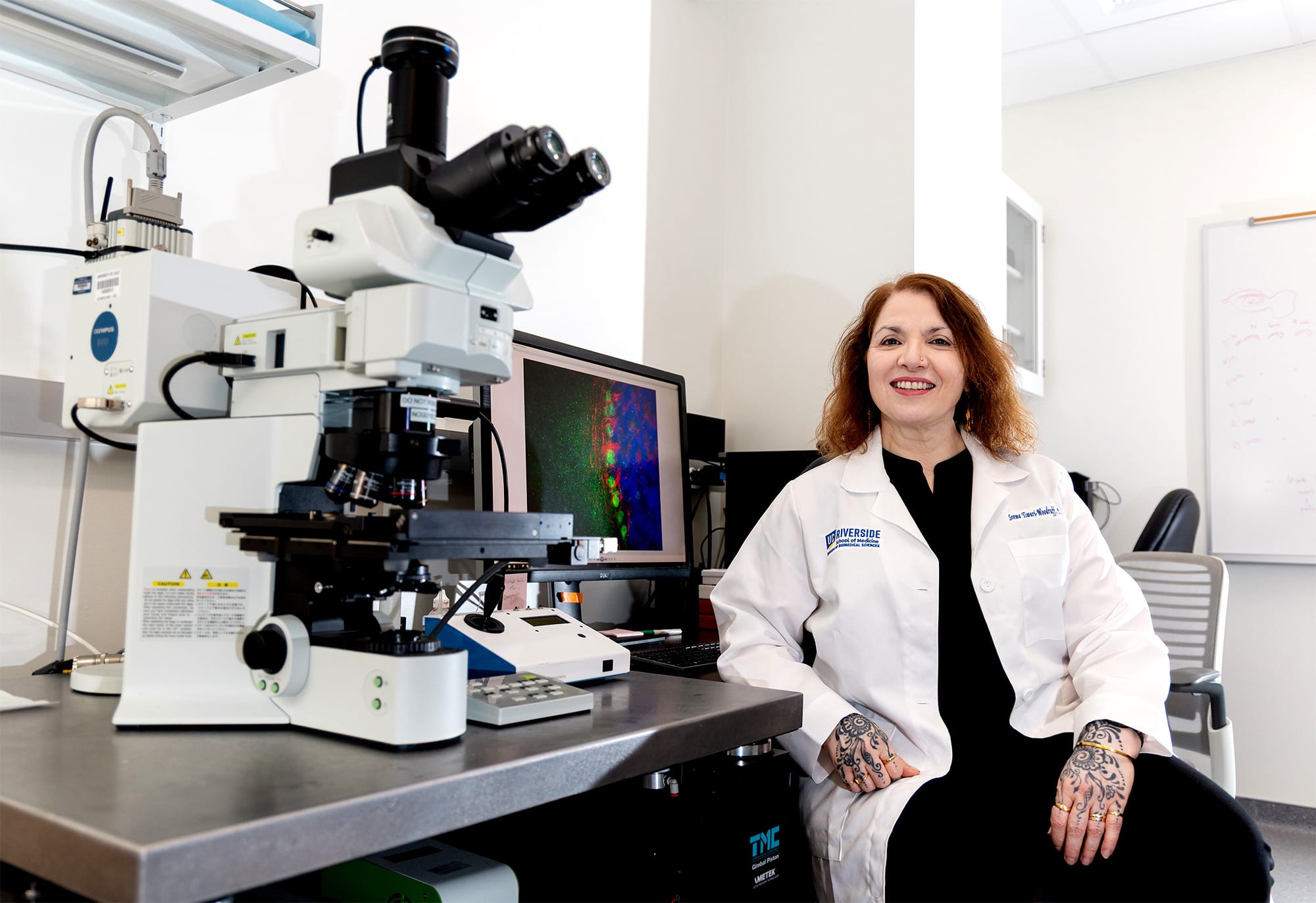
Since joining UCR in 2014, Tiwari-Woodruff has focused her research on how MS leads to oligodendrocyte loss and disrupts axon myelination. She is also investigating how repairing myelin can restore axon function.
“Ion channels may seem like tiny molecular gates, but they control the electrical signals our cells use to communicate, from the brain to the heart,” she said. “In healthy myelinated axons, their arrangement allows signals to travel extremely fast. When myelin is damaged, these channels become disorganized, impairing signal transmission and contributing to MS symptoms.”
Tiwari-Woodruff regularly gives public talks on the disease to promote its understanding among patients and caregivers. After one such talk, two young women with MS told her they could no longer drive because of visual impairment, despite looking completely healthy.
“That crystallized why MS research matters,” Tiwari-Woodruff said. “The disease is often invisible, but its impact is profound. Meeting the two women served as a reminder of how urgent this work is. We are not just advancing science. We are trying to preserve futures.”
Advancing Patient Care
Encouragingly, treatments for people with MS have advanced significantly over the past few decades. Khayat-Khoei, who regularly sees patients at UCR Health, remembers when treatment options were limited.
“In the early 1990s, you had to be in a lottery system to get on MS treatment. Now more than 25 therapies are available, ranging from daily pills to periodic infusions,” she said of the various FDA-approved therapies currently offered. “Early targeted treatment can significantly slow disease progression. Most patients can then lead active, fulfilling lives.”
Khayat-Khoei’s advice to newly diagnosed MS patients is not to panic, consult a neurologist promptly, and approach online information with caution.
“With timely treatment and follow-up, most people with MS can work, exercise, and age normally,” she said. “Life doesn’t have to stop.”
Khayat-Khoei also recommends patients with MS join support groups.
“Connecting with others who are living with the disease can reduce isolation,” she said. “It’s a good way to also exchange practical advice. Organizations like NMSS offer educational materials and host events such as MS walks that bring communities together. I encourage all my MS patients to visit their websites.”
Khayat-Khoei also finds fulfillment in bridging patient care with laboratory research. Her work uses human stem cell-derived neurons to study MS progression, with a focus on how immune cells disrupt communication between brain cells.
“Research is rarely a straight line,” she said. “It requires persistence, hard work, and being comfortable with setbacks. But when a discovery in the lab translates into better care for a patient, it is incredibly rewarding.”
Khayat-Khoei explained that repeated attacks on the myelin can leave scars, which can result in one of two patterns: relapsing MS, where symptoms improve after days or weeks but then return, or progressive MS, where recovery is less complete, with symptoms worsening over time.
By studying the innate immune system, the body’s first response against pathogens, Khayat-Khoei hopes to intervene early, before irreversible damage occurs. In October 2025, she received a Career Development Award from the American Academy of Neurology to support her research on monocytes. While these white blood cells normally play a role in fighting infection, their over-activation may be responsible for the nerve damage seen in MS. Her goal is to better understand what’s driving the disease, which can then help identify better treatment targets for MS and other immune-related neurodegenerative disease, such as Alzheimer’s.
Khayat-Khoei said the rapid pace of MS research keeps her optimistic. She is encouraged by the development of therapies that are increasingly precise and better tolerated by patients.
“New emerging therapies are changing the MS conversation entirely,” she said. “Lifestyle choices matter as much as medicine: regular exercise, maintaining vitamin D levels, and managing stress are small steps with potentially big impacts. Most exciting about the future of MS care is personalized medicine. With artificial intelligence and new biomarkers, we hope to move beyond trial and error in the near future and toward treatments tailored to each patient’s unique biology.”
Tiwari-Woodruff agrees personalized care could reshape MS treatment. By reprograming patient cells into stem cells called induced pluripotent stems cells, researchers can study in the lab how individual MS cases arise, which cell types are affected, and which therapies might be most effective.
“We could then test therapies directly on those patient-derived cells to identify the most effective treatment with the fewest side effects, before prescribing a single drug,” she said. “Already, research groups are trying to do just this.”
Reversing the Damage
Research in Tiwari-Woodruff’s lab not only seeks to mitigate the symptoms of MS, but to repair the damage caused by it. Her team studies postmortem MS brain tissue alongside animal and cellular models to better understand the disease’s underlying biology. Tiwari-Woodruff sees lab discoveries as vital steps toward MS therapies. Her research examines brain regions tied to coordination, vision, and cognition; mitochondrial function; causes of seizure; and how adaptive immunity, the body’s second line of defense, can misfire and trigger autoimmunity.
“Pregnancy is one of the most extraordinary examples of immune adaptation,” she said. “Many women with MS experience symptom improvement during pregnancy, when the hormone estriol rises and dampens inflammatory immune responses.”
This remarkable tolerance offers a clue: if pregnancy hormones can calm the immune system, perhaps they can be used to treat MS. The fetus in the womb is genetically half foreign, yet the maternal immune system does not attack it, instead adjusting to tolerate its presence. This natural adaptation provides researchers clues for how hormones such as estriol may be therapeutically harnessed.
“The immune system is built to defend us from anything it sees as foreign, but that strength becomes a liability in organ transplantation, stem cell therapy, and autoimmune disease,” Tiwari-Woodruff said. “In MS, the body’s defenses turn inward — what I call a ‘self-eating dragon’ — attacking the very tissues they are meant to protect.”
Tiwari-Woodruff is a founding member of Cadenza Bio, a biotechnology company developing synthetic compounds that activate estrogen receptor beta, a nuclear receptor that has emerged as a promising therapeutic target for MS due to its role in immune modulation and remyelination.
Along with her University of Illinois Urbana-Champaign collaborators, she is now investigating dual-target compounds that simultaneously enhance remyelination and protect the axon. These compounds are being screened in mouse- and human-derived oligodendrocytes and neurons before being tested as therapeutic agents in mouse models of MS.
“In MS, the body’s defenses turn inward — what I call a ‘self-eating dragon’ — attacking the very tissues they are meant to protect.”
— Seema Tiwari-Woodruff
Tiwari-Woodruff is confident a cure for MS will eventually be found, an optimism that reflects the resilience she sees in people living with the disease. MS patients, she said, are often well informed about their condition and adept at balancing treatment, careers, family, and long-term goals with perseverance and independence. Khayat-Khoei also sees this resilience in the patients she treats.
“MS patients are some of the most engaged, motivated, and proactive people I’ve ever worked with,” Khayat-Khoei said. “They want to understand their disease. They follow recommendations. They do everything they can to stay well.”
Help Provide Hope for MS Patients and Families
Support the UCR researchers working toward solutions for MS patients by making a gift to the Multiple Sclerosis Program Support Fund or the MS Cure Research Fund at donate.ucr.edu/spring2026.