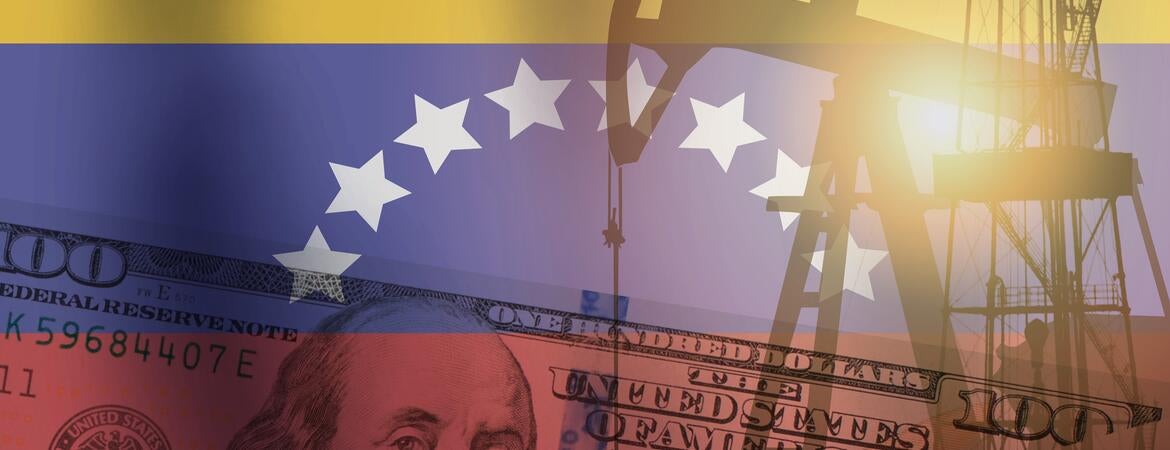

With Venezuela in the thrall of U.S. oil demands and Cuba confronting massive fuel shortages due to an American blockade, the two countries face a more uncertain future than at any time since becoming close allies at the start of the 21st century.
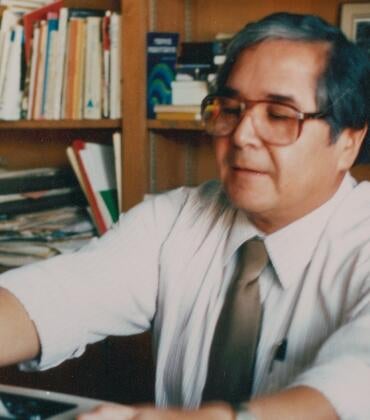
We turned to David Pion-Berlin, a distinguished professor emeritus of political science at UC Riverside, to learn more about the challenges confronting Venezuela as an American vassal state and the Cuban government’s vulnerability to collapse — with or without U.S. military intervention.
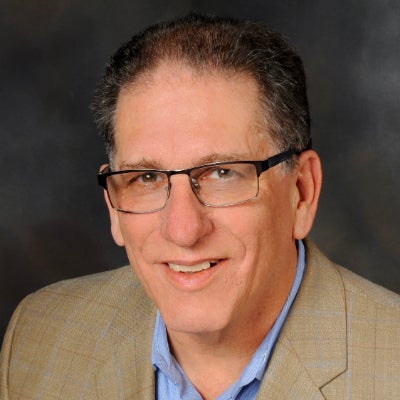
As a leading expert on Latin American civil-military relations, defense, and security, Pion-Berlin is well positioned to address the forces convulsing the two nations. He received the 2019 Alfred Stepan Lifetime Achievement Award in Defense, Public Security, and Democracy from the Latin American Studies Association and has authored eight books, including “Soldiers, Politicians and Civilians: Reforming Civil-Military Relations in Democratic Latin America” (with Rafael Martínez, Cambridge University Press, 2017), “Military Missions in Democratic Latin America” (Palgrave Macmillan, 2016), and “Transforming Latin America: The International and Domestic Origins of Change” (with Craig Arceneaux, University of Pittsburgh Press, 2005).
He is also the co-editor of “Research Handbook on Civil-Military Relations” (Edward Elgar Publishing, 2024) and “Organización de la defensa y control civil de las Fuerzas Armadas en América Latina” (Ediciones Jorge Baudino, 2013), and the author of more than 80 journal articles and book chapters.
This Q&A has been edited for clarity and length.
Q: Since U.S. special forces captured Venezuela’s president, Nicolás Maduro, President Donald Trump has signaled possible military action against Cuba. How likely is it that U.S. forces would invade the country?
Pion-Berlin: First, I’d say Cuba is more at the top of [Secretary of State] Marco Rubio’s list for aggressive intervention than of Trump’s. Rubio is the son of Cuban immigrants and despises the regime. Ousting the communist government has been a central theme of his political career.
That said, I don’t think there’s a likelihood of a U.S. invasion of Cuba — at least anytime soon.
Q: Why is that the case?
Pion-Berlin: Cuba is better prepared than Venezuela to defend against an attack. Its military is well-trained, hardened, dug in; it’s been up against the threat posed by the United States since the 1960s. So, it’s unlikely Trump could repeat in Cuba what he achieved in Venezuela — that is, a relatively bloodless coup. If the U.S. mounted a full-scale invasion, it might be able to prevail, but it wouldn’t be a low-cost operation. It wouldn’t be quick, and a lot of blood would be spilled. Trump does not appear to have an appetite for sustained military engagement.
Q: Could the embargo on Venezuelan oil to Cuba weaken the regime enough to make it vulnerable to a civil insurgency?
Pion-Berlin: The embargo is hurting the economy a lot — no question — and could prompt an internal revolt of some sort. But it’s important to remember that the military is powerful vis-à-vis civil society. Unlike the general population, members of the Revolutionary Armed Forces are well taken care of and can provide for their families. For example, they own hotels, they own airlines, they’re given access to foreign exchange. They have an incentive to fight for the regime.
Q: Despite having spoken out against Venezuela’s regime in the past — he’s called Maduro a “criminal dictator” and criticized the government as repressive — Trump seems intent on keeping the Chavista leadership in place. Are you surprised?
Pion-Berlin: No, not at all, because here’s the crux of the matter: He’s interested in a stable Venezuela that can deliver oil proceeds. He doesn’t care about re-democratization. To take over Venezuela’s oil industry and open it for business, Trump needs security and stability. The Maduro regime, now minus Maduro, is the only entity that can deliver that.
Earlier this week, Trump made some vague remarks about involving the opposition leader María Corina Machado in Venezuelan politics. But she would face fierce resistance from the Venezuelan leadership, who want her imprisoned. And she can’t simply fire up the public, who are very weary of going out into the streets to demonstrate. Many have lost their lives or been imprisoned. The safest bet for Trump is to deal with the current people in power because they control the guns; they can suppress uprisings.
Q: How much sway does the Venezuelan military have in the country’s politics?
Pion-Berlin: An enormous amount. Going back to Hugo Chávez, who was elected Venezuela’s president in 1999, members of the security forces have siphoned off billions of dollars from the oil industry to line their pockets. One estimate puts the figure at $300 billion. These are the people who protected Maduro, who was a vastly unpopular leader. Without their support, he would have been gone in a flash.
So, here is the interesting question: If the U.S. wants to reinvigorate the oil industry, which will cost tens of billions of dollars, the last thing they can permit is the continued siphoning off of revenues. But then what do you do about keeping the security forces content? You can’t resort to boosting wages with the defense budget, because that means counting on tax revenues in an economy that’s in free fall with estimates of inflation running between 175% and 300%.
Q: Do rank-and-file soldiers benefit from this fraud?
Pion-Berlin: I’m not sure how far it trickles down, but definitely the top brass benefits. And the officer corps is very top-heavy. There are something like 2,000 generals and admirals in the Venezuelan armed forces compared to about 830 such officers in the U.S. military, and ours has 10-times more personnel.
Many Venezuelan officers have plush government appointments and control all kinds of political positions. Where’s the money going to come from to keep these guys happy?
Q: What would it take for oil companies to do business in Venezuela?
Pion-Berlin: As it stands, they’re very reluctant to invest there. They believe there’s a lot of insecurity. A new regime could come to power that violates contracts it’s made with the companies, or unrest could create security concerns, or the oil infrastructure itself could be targeted by guerillas.
It’s possible the U.S. could pocket some of the revenues from current sales of Venezuelan oil and essentially pay the oil companies to begin operating there. The companies need incentives. It could end up costing the federal government many billions of dollars to keep a U.S. oil enterprise afloat in Venezuela. Somebody’s got to pay for that. The U.S. taxpayer could end up on the hook. It happened for the wars in Iraq and Afghanistan.
Q: Could Venezuela return to democratic governance sometime in the future — say, the next 10 or 20 years?
Pion-Berlin: Well, I’m not going to make any kind of prediction for the long term. It’s difficult enough to say what will be happening in Venezuela in five years. The current regime has stayed in power by lining its pockets through oil graft and using brutal repression against the population. So, something would have to give on those fronts — there would have to be some pressure to discard the status quo. But right now, I have a hard time seeing where that pressure would come from.
(Header image: iStock/Getty Images Plus/JNemchinova)