
A spirited new multimedia exhibition at the Smithsonian Institution tells the story of salsa with the help of a UC Riverside associate professor of music.
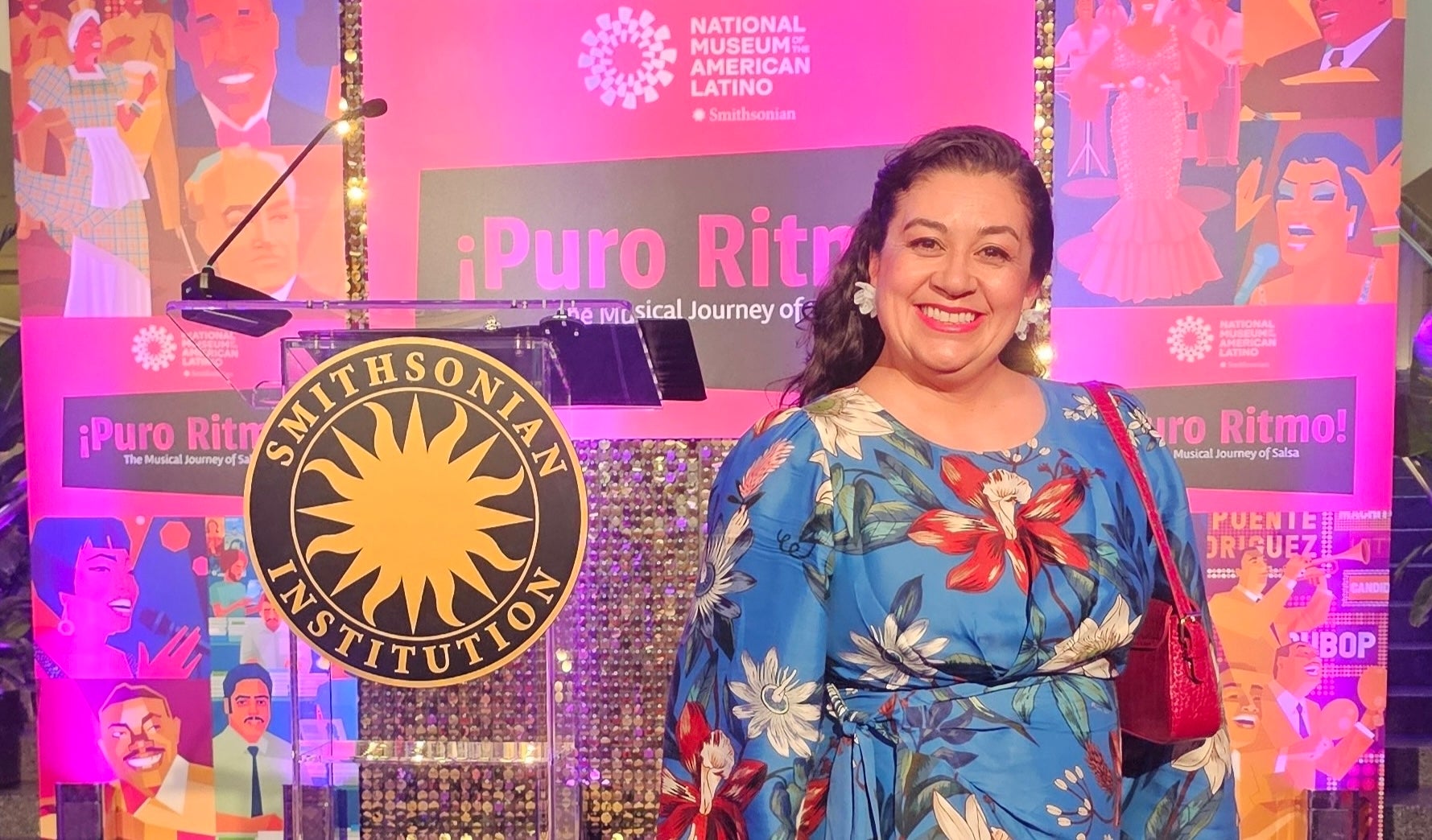
Xóchitl Chávez contributed research and writing about the genre’s history, luminaries, and cultural influence to the curation of “¡Puro Ritmo! The Musical Journey of Salsa,” which opened April 18 and runs through 2028 in the Molina Family Latino Gallery of the Smithsonian’s National Museum of American History in Washington, D.C.

The exhibition explores salsa as a dynamic cultural and musical force in the United States, tracing its journey from the dance halls of Havana to the clubs of New York City and Los Angeles. The National Museum of the American Latino mounted the show. Chávez served on the scholarly research and digital content curatorial development team.
“In many ways, this project has allowed me to bring together everything I do as a scholar, blending my training as a cultural anthropologist and ethnomusicologist with community engagement and public programming, all in one meaningful endeavor,” Chávez said.
It’s not her first collaboration with the Smithsonian. As a graduate student, Chávez worked at its Center for Folklife and Cultural Heritage and later completed a postdoctoral fellowship there. She also has served as a program coordinator, writer, and adviser for other Smithsonian programs and projects, including the recent exhibition “¡Presente! A Latino History of the United States”
Interviewing Sheila E. and other artists
As part of a team of cinematographers and content developers for “¡Puro Ritmo!,” Chávez interviewed Sheila E., the acclaimed percussionist, and Nora Suzuki, a Tokyo-born singer and bandleader, among other artists, at a studio in Burbank, just north of Los Angeles.
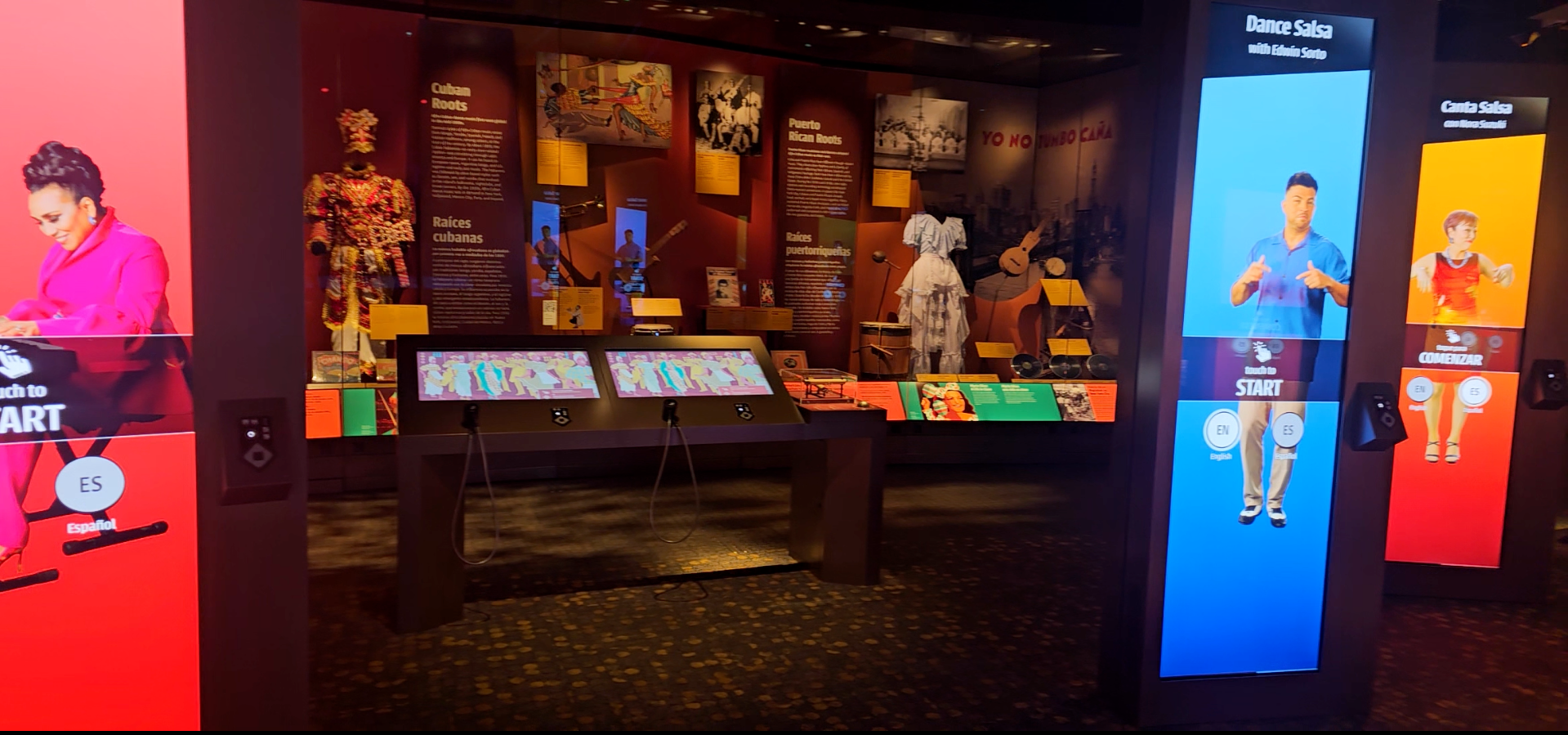
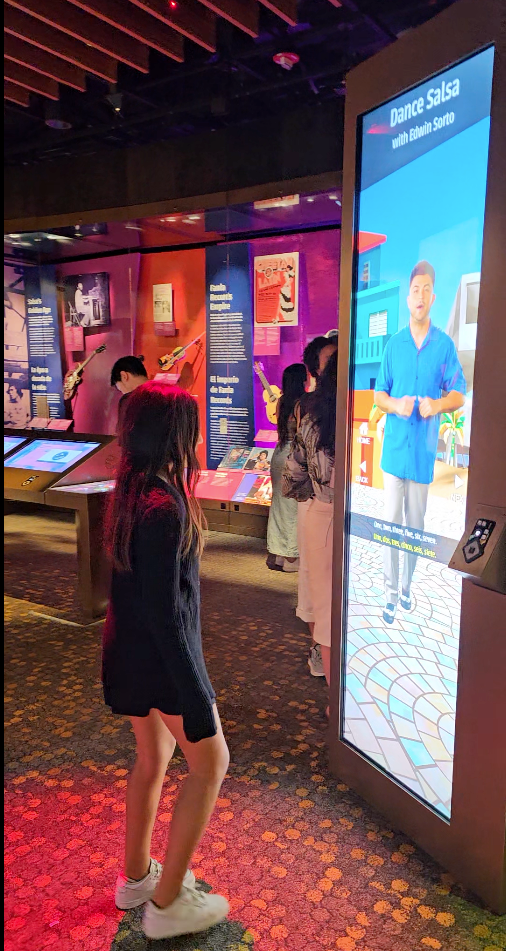
Information gathered from those interviews went into developing interactive displays featured on large touch-screen monitors in the Molina gallery, where life-size digital versions of the artists invite visitors to learn about their craft: for example, salsa drumming with Sheila E., dancing with Edwin Sorto, and singing with Suzuki.
Suzuki performs in Spanish, English, and Japanese. “Her band has been credited with carrying salsa to listeners far beyond its Caribbean and Latin American homelands,” Chávez said. “Her career is widely cited as an example of how the genre moves across cultural and linguistic borders.”
Chávez also conducted extensive research on salsa’s signature rhythm, the clave (KLAH-veh). There are several types of claves, but the most popular — and the one used in salsa — is the son clave, played over a two-measure, eight-count musical phrase, with two beats in the first measure and three in the next (or vice versa).
Its syncopated, repeating pattern is rooted in the musical traditions of West and Central Africa. Enslaved Africans introduced these rhythmic concepts to Cuba, Chávez said.
“They carried the rhythms and their music with them in their bodies, as part of their memory,” she said.
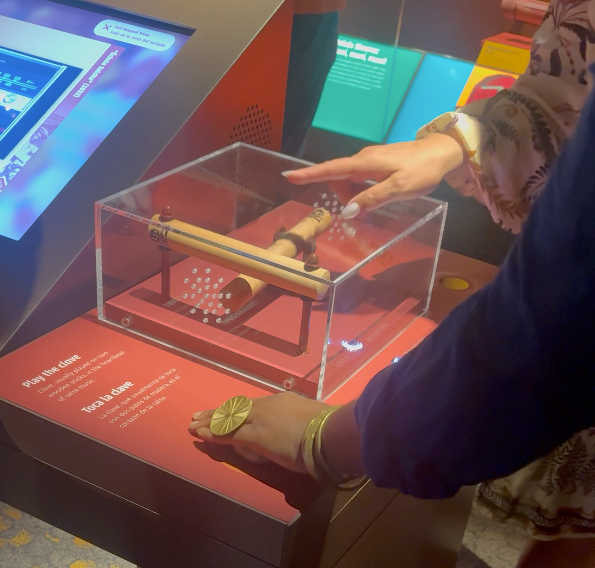
A pair of nondescript wooden sticks called claves — about 10-inches long and twice as thick as Lincoln Logs — are traditionally used in Afro-Cuban music to mete out this rhythm. “What look like two simple sticks actually have a lot of heritage, a lot of story,” Chávez said.
Among the nearly 300 items on view are a pair of claves in an interactive display. Set your hand over a small metallic half-sphere next to them and you feel the rhythm, which can be reproduced not just with claves but with other instruments. Musicians often use the drums, piano, or agogô, which looks like a double-cowbell, to anchor the rhythm.
On opening day of the exhibition, Chávez played a clave rhythm on a gankogui — a West African forerunner to the agogô — during a drumming demonstration.
Salsa Queen
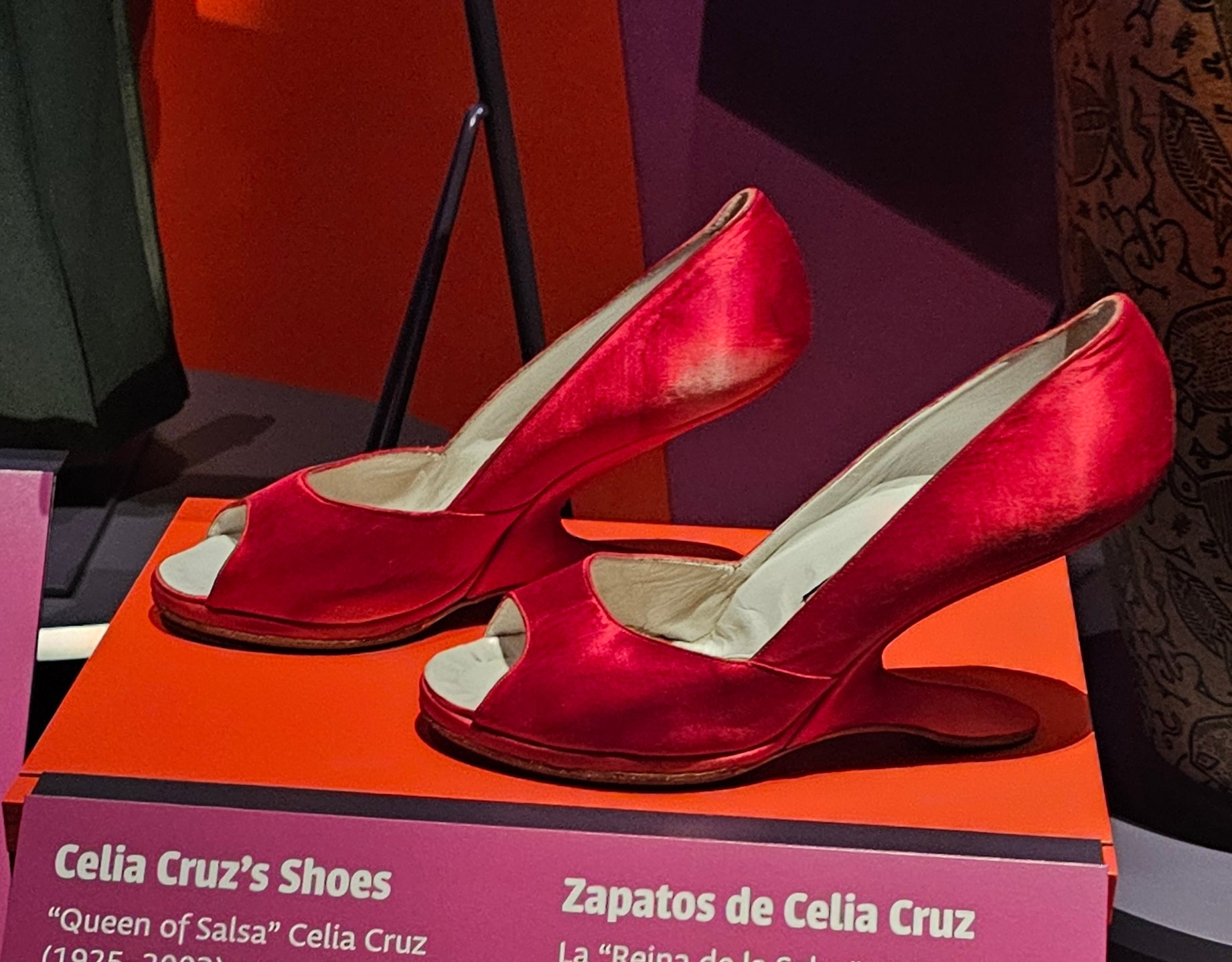
The exhibition includes displays of shoes and attire worn by the influential Latin singer Celia Cruz. (Chávez contributed text about several of these items.) The Havana-born “Queen of Salsa” moved to the U.S. after the Cuban Revolution and became a symbol of the expatriate Cuban community. In the early 1970s, she signed a contract with a subsidiary of Fania Records, the label that catapulted salsa into the American mainstream.
Fashion was key to Cruz’s musical identity, expressing Afro-Cuban cultural pride onstage and in exile, Chávez said. “Across both her visual style and her music, Cruz created a unified artistic message that celebrated resilience, diaspora, and cultural memory,” Chávez said.
Chávez also has been helping develop an online exhibit for “¡Puro Ritmo!” Visitors to the website can view and manipulate, in three dimensions, a digitally scanned pair of red satin platform shoes worn by Cruz, as well as read about the singer’s life and legacy. The Smithsonian says it plans to add more interactive content in the coming months. For example, Chávez is writing interactive labels for 12 noteworthy Afro-Cuban albums, which visitors to the online exhibit can listen to.
“This is exactly the kind of applied public humanities work I hope can serve as a model for current UCR students and future scholars,” she said. “It’s a way of integrating community-engaged research, public programming, and museum partnerships so that academic work reaches beyond the university and stays in meaningful dialogue with the communities at the heart of it.”
Top, Tito Puente Jr., son of the renowned musician, songwriter, and bandleader, plays the timbales with the Mambo Legends Orchestra at a VIP reception for the exhibition. (Xóchitl Chávez)