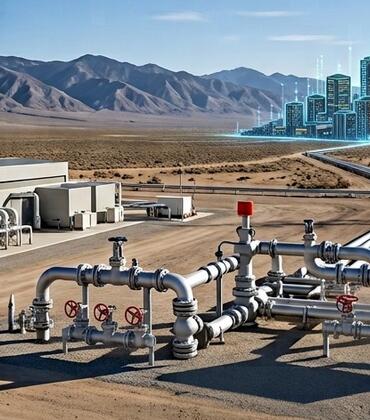

The rapid growth of artificial intelligence and cloud computing is outpacing the ability of many community water systems to deliver large bursts of water on the hottest days of the year to keep the nation’s data processing centers cool.

A study by a UC Riverside research team in collaboration with Caltech found that community waterworks across the United States will need billions of dollars in new infrastructure to meet spikes in data center water demands during peak usage.
Without new water efficiencies, data center cooling systems four years from now could require 697 million to 1.45 billion gallons of additional peak water capacity per day — roughly equal to the typical daily water supply of New York City. Even with optimistic water use reductions, the new water capacity, if pooled, could rival the supply to half of New York City for most of the year.
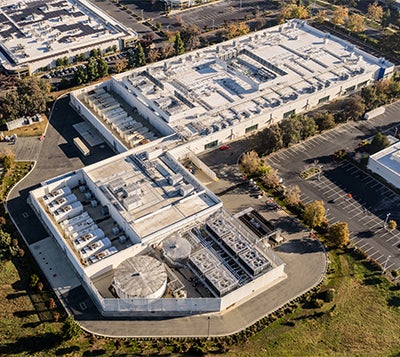
Such water demands stem from the need to keep cool millions of servers that process our AI queries and other computing needs in a growing number of warehouse-sized data processing centers. These centers use evaporative cooling systems, which are the most energy-efficient method of cooling in many places.
The cost of the required water infrastructure, depending on the rate of data center growth, is estimated at $10 billion to $58 billion, said Shaolei Ren, an associate professor in UC Riverside’s Bourns College of Engineering, who led research. And that assumes enough water will be available.
In February 2026 alone, three major technology companies announced they had secured multi-million gallons of water per day for projects in Virginia, Louisiana, and Indiana, with the total water infrastructure cost approaching $1 billion.
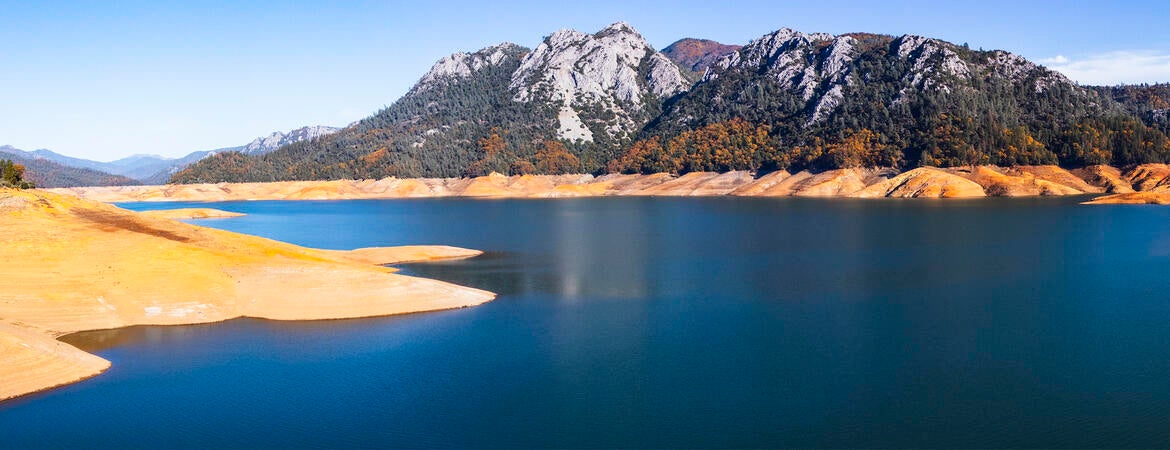
“Even if you have money, the water source is another challenge,” Ren said. “In many cases, the water is naturally replenished by snowpack and reservoirs. But reservoirs and snowpack are limited. You may have money to build treatment plants and pipes, but money can’t buy more snowpack.”
While most data center water reporting has focused on annual water use, the study highlights a largely overlooked challenge: whether municipal utilities can supply enough water during peak demand on the hottest days of summer.
While the annual total may appear modest, warehouse-sized data centers draw much larger volumes of water during hot weather. In many cases, daily water demand from evaporative cooling systems can spike six to 10 times higher than average usage. For some planned facilities, this figure even exceeds 30. That forces water utilities — most of them local government entities — to build infrastructure capable of handling those peaks, even if the capacity is rarely used.
On hot summer days, a large data center can withdraw more than a million gallons of water per day, and some facilities under construction have been allocated up to 8 million gallons daily, enough to supply multiple small towns, the study says, citing government records and water allocation agreements.
There is no national reservoir. Meeting those peak demands will require municipal utilities to build water treatment plants, storage reservoirs, pump stations, transmission pipelines, and wastewater treatment capacity large enough to safely handle peak loads.
Such improvements will be needed at a time when many public water systems are aging and financially constrained, the report says. The Environmental Protection Agency estimates the nation’s water and wastewater infrastructure already faces trillions of dollars in funding needs over the next two decades for upgrades and maintenance.
To address the problem, Ren and his co-authors recommend that data center developers report peak water use, not just yearly averages. Annual figures can hide short periods when cooling systems demand the most water.
Second, data center companies could partner with local communities to fund water infrastructure upgrades with verifiable outcomes, preventing expansion costs from falling entirely on local ratepayers.
The study also recommends that data center companies add enough water capacity — through new infrastructure or efficiency improvements — to offset their own use and preserve supplies for future community growth.
Finally, the researchers say data centers could work more closely with utilities by adjusting cooling methods — using water-based cooling when the power grid is stressed and switching to dry cooling when the community water system is stressed, which uses fans or vapor-compression technologies similar to home air-conditioning systems but often requires significantly more electricity.
The new paper by Ren and his colleagues is titled “Small bottle, big pipe: Quantifying and addressing the impact of data centers on public water systems.” In addition to Ren, the authors are Yuelin Han, a UCR doctoral student; Pengfei Li, an assistant professor at the Rochester Institute of Technology; and Adam Wierman, a professor at Caltech. Li earned his doctoral degree at UCR under the supervision of Ren.
“People recognize power as a constraint for data center growth,” Ren said, “but most of them haven’t realized water is a hidden and even more binding constraint in many communities.