
Some birds sing to attract a mate. Others dance or display colorful feathers. But in the moonlit forests and shrublands of northern Argentina, one bird courts romance by snapping its wrists together, producing a sharp clapping sound scientists have puzzled over for decades.
Now, researchers have captured the behavior in detail for the first time, revealing how scissor-tailed nightjars create one of the most curious sounds in the avian world.
The findings, published in the Journal of Avian Biology, shed light on a lesser-known side of bird communication: sounds made not with voices, but with wings, feathers, claws, and bones.
“These birds are opening up a hidden corner of biodiversity,” said Christopher Clark, a UC Riverside biologist who co-led the study. “People tend to focus on birdsong, but there are many species making important sounds mechanically rather than vocally.”
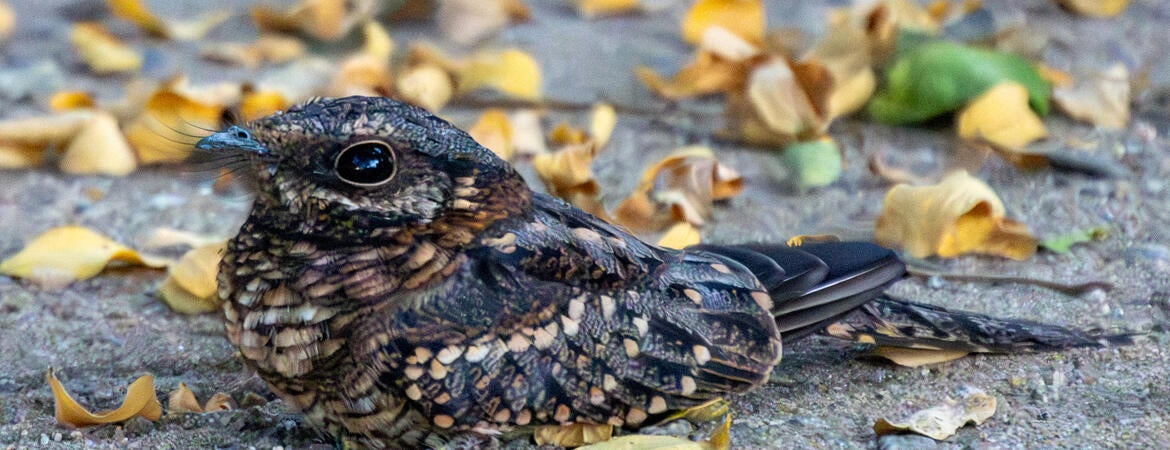
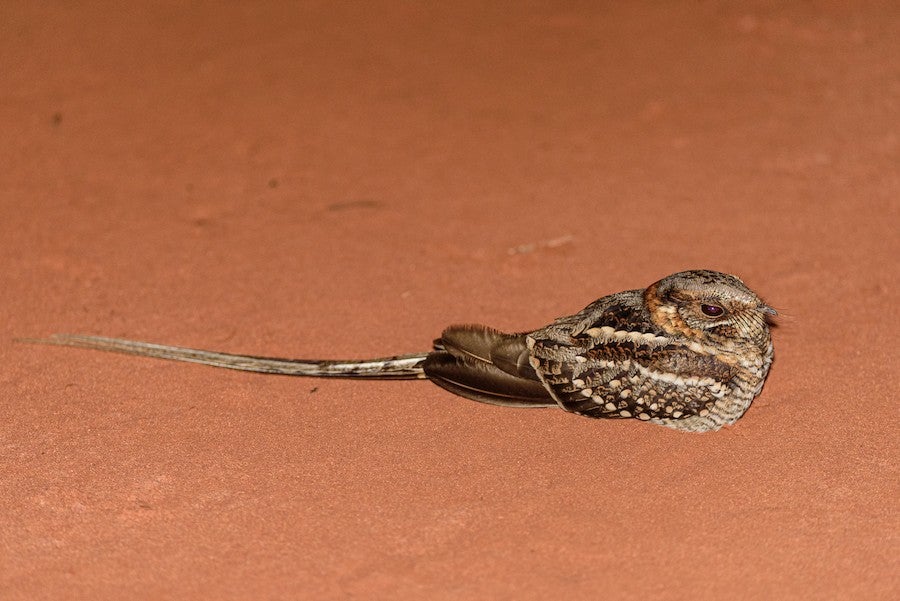
Nightjars are related to hummingbirds, though they are nocturnal and look more like small owls. Their mottled brown feathers camouflage them against rocks and dirt, and their large eyes help them hunt moths and beetles in darkness. Male nightjars are especially striking, with long forked tails that spread open like a pair of scissors during courtship displays.
For years, ornithologists working in South America had reported hearing mysterious snapping sounds around these birds. Clark and his collaborator Juan Ignacio Areta of Argentina’s national research council CONICET wanted to know exactly how the sounds were produced.
Using high-speed infrared cameras during predawn hours, the team recorded males striking the wrist joints of their wings together while attempting to mate. The birds performed the displays in darkness near the full moon, often between 3 and 4 a.m., when noise was low enough for researchers to observe them undisturbed.
“You have to approach the birds on their own terms,” Clark said. “We used infrared light they couldn’t see, so we could watch without affecting their behavior.”
The footage confirmed that the snapping noise is not vocal. Instead, the birds physically collide the radius bones in their wings, creating a sharp clap-like sound during courtship and copulation. The radius in a bird is roughly equivalent to a human forearm.
Scientists have documented similar non-vocal displays in a handful of birds, including tropical manakins, but the mechanics behind these sounds remain poorly understood. Clark’s team examined museum specimens to see whether the nightjars evolved specialized wrist structures to make the snapping easier or louder. They found no obvious anatomical modifications.
“Humans aren’t specially adapted to clap our hands either, but we can still make a loud sound,” Clark said. “These birds may not need major structural changes to do this.”
The study also raises broader questions about how animals use mechanical sounds to communicate. Human speech can produce enormous variation and subtlety through vocal cords and the mouth. Researchers still do not know whether wing snaps and similar noises can carry equally nuanced meanings.
“The physics of the sound affects what kinds of messages the birds can send,” Clark said. “Can they evolve different kinds of snaps? Or are they limited to one basic signal? That’s something we’d love to understand.”
Clark’s laboratory studies the physics behind unusual animal sounds, including whether some wing-generated noises may create tiny shock waves similar to those formed when metal objects collide at high speed. Understanding how the sounds work could help explain why they evolved and what information they convey.
The project began during a sabbatical in Argentina and expanded after the collaborators realized the scissor-tailed nightjar was easier to observe than other birds living deep inside forests or dense vegetation. Areta, lead author of the paper, helped identify species suitable for study and conducted extensive fieldwork alongside Clark.
In addition to the wrist snapping, the research team also observed another unusual sound made during aerial chases between birds, though its source remains unknown.
“We still have some questions, but we’re getting closer to understanding the secret language of these birds,” Clark said.
For Clark, the findings underscore how much remains undiscovered about the natural world, especially after dark.
“I’d love to someday have a complete list of all the weird ways birds make sounds,” he said. “There’s far more happening in nature than just birds singing.”
(Cover image of a nightjar: Nil Rodrigues/iNaturalist)