
Does consciousness depend on flesh and blood?
The answer is almost certainly no, according to Eric Schwitzgebel, a distinguished professor of philosophy at the University of California, Riverside.
In a new working paper, Schwitzgebel and Jeremy Pober, a former UCR graduate student who is now a postdoctoral researcher at the University of Lisbon, assert that consciousness is likely possible in life forms made of much different stuff. Think of the five-limbed alien with a rock-like exterior in the recent blockbuster movie “Project Hail Mary.”
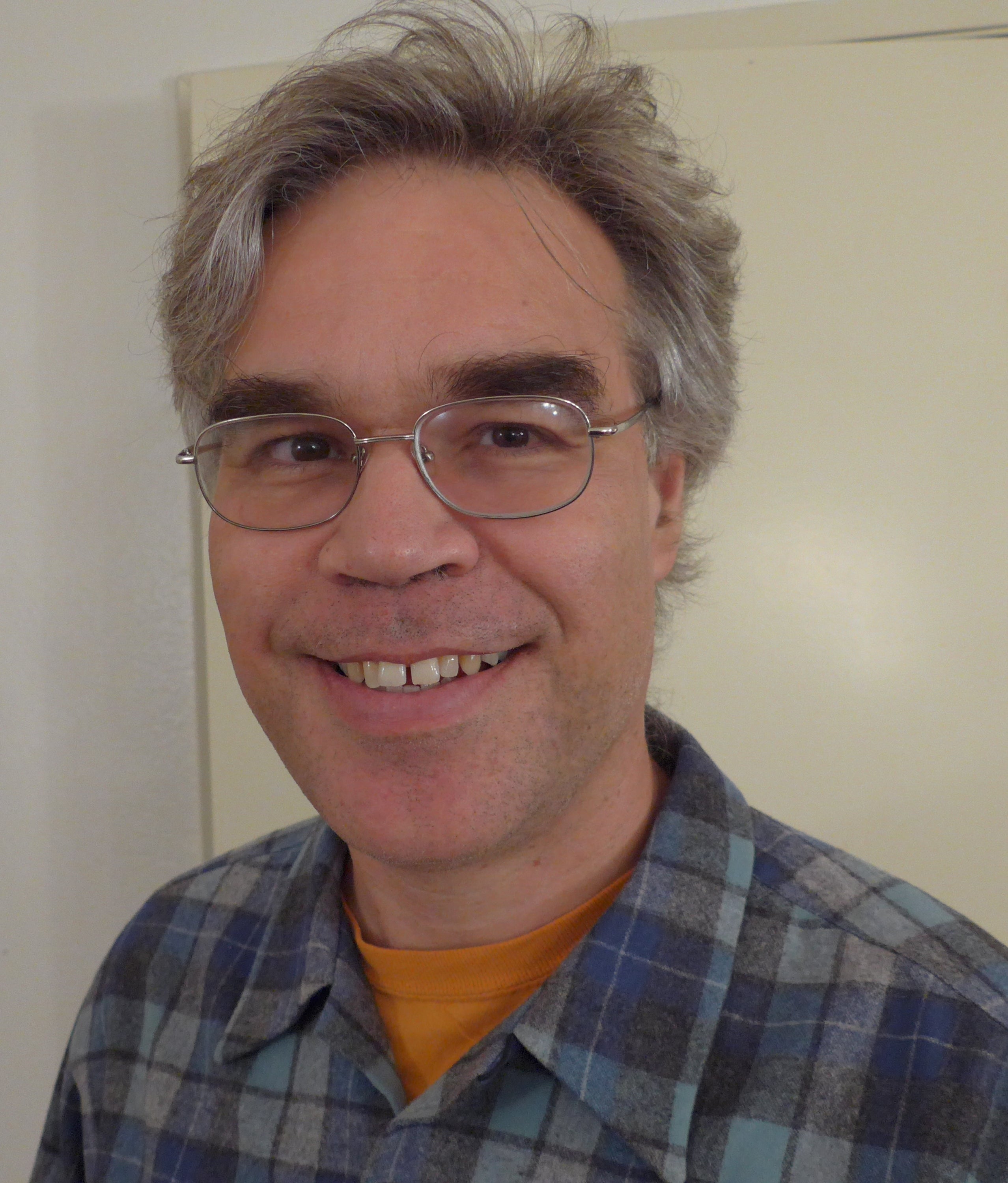
Schwitzgebel and Pober do not attempt to define consciousness. Instead, they proceed from the premise that it's a real and recognizable phenomenon, and pose a narrower question: Must it be tied to the biology found on Earth?
The paper comes at a time when the prospect of conscious artificial intelligence looms large, fueling utopian dreams and dystopian nightmares. The authors, who touch just briefly on the matter, do not take a firm position either way — and, in fact, diverge in their views. But the arguments they advance leave open the possibility that AI could be conscious, though perhaps not in its current form.
At the heart of the paper’s argument is the philosophical notion of “substrate flexibility.” As the authors explain it, a "target property," such as being a cup, is substrate flexible if it can be achieved with different kinds of materials. A cup is substrate flexible; it can be made with glass, plastic, or many other substances. Similarly, a book can be printed on paper or stored electronically, and a records can be encoded on vinyl or on compact discs.
Consciousness, Schwitzgebel and Pober argue, is also substrate flexible.
“The universe may contain minds stranger than we can imagine,” Schwitzgebel said.
High probability of alien life
The observable part of the universe contains about 1 trillion galaxies. Planets are common, and the great majority have environments quite different than Earth’s, astronomers believe.

For the purposes of their argument, Schwitzgebel and Pober estimate that at least 1,000 behaviorally sophisticated, extraterrestrial civilizations have existed at some point in the cosmos. It’s a conservative estimate, they say, noting that “one recent survey found median scientific estimates over one civilization per galaxy at some point in that galaxy’s lifetime.”
At the same time, astrobiologists have hypothesized about life made of different materials than it is on Earth. They have investigated alternative amino acids and solvents, and even the possibility of different chemical structures.
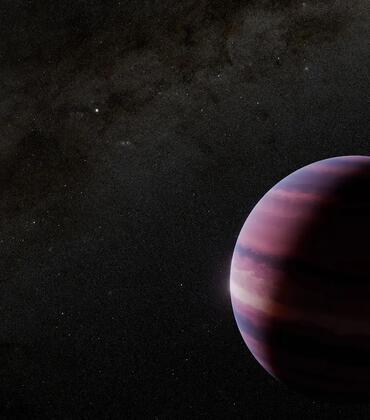
In the book version of “Project Hail Mary,” the author, Andy Weir, who is known for describing viable, rigorous science in his fiction, introduces readers to an alien with a shell of oxidized minerals, two circulatory systems, mercury blood, steam-powered muscle, and a crystal brain. It hails from a super-hot planet with an ammonia-saturated atmosphere.
Schwitzgebel and Pober, however, do not claim that exotic life definitely exists. Their point is more modest: If life can arise under a variety of chemical conditions, and if the universe contains vast numbers of opportunities for life to emerge, then it would be surprising if every successful evolutionary lineage converged on exactly the same biochemical building blocks.
On Earth alone, evolution has produced remarkable diversity in nervous systems, the philosophers note. Octopuses, bees, and dogs process information in different ways. Other parts of the universe, they argue, likely deal in as much if not more creativity.
Copernican principle of consciousness
The authors’ key argument turns on the Copernican tradition in astronomy. The Renaissance polymath Nicolaus Copernicus and his intellectual heirs made a humbling series of discoveries: Earth is not the center of the solar system, the solar system is not the center of the galaxy, and the Milky Way is not the center of the universe. In other words, humanity occupies a less exceptional position in the cosmos than once imagined.
Schwitzgebel and Pober extend this lesson to consciousness: To wit, it probably isn’t special.
Assuming there are many behaviorally sophisticated species in the universe with different biological structures, the authors argue that it would amount to a form of “terrocentrism”— unjustified treatment of Earth life as uniquely privileged — to believe consciousness belongs only to organisms like us. The authors coin a phrase, “the Copernican principle of consciousness,” to describe this idea.
They don’t claim, however, that every advanced life form must be conscious. Rather, they argue that if consciousness exists among behaviorally sophisticated beings, it would be strange to think that only organisms sharing our biochemical architecture could possess it.
For centuries, humans have repeatedly discovered that we are less central, less unique, and less privileged than we once believed.
It may be that consciousness, too, is not a rare gift bestowed on one particular kind of biological machine, Schwitzgebel and Pober suggest. Instead, it could be a phenomenon capable of appearing wherever evolution — or something like it — produces the right forms of complexity.
Where does this leave AI?
Inevitably, the paper raises questions about AI. However, the authors stop short of claiming that today’s AI systems are conscious.
In Pober’s view, we should not assume that today’s computer hardware supports consciousness. The fact that consciousness could occur in more than one substrate, he says, does not suggest that it could occur in every substrate.
Schwitzgebel is somewhat more open to the possibility. Once the idea that consciousness requires human biology is abandoned, he argues, it becomes harder to justify excluding silicon-based systems solely because they are made of silicon.
In any case, Schwitzgebel believes this part of the philosophical debate has been too narrow.
“It’s focused too much on whether silicon can duplicate a human brain and not enough on the broader question of what kinds of systems can be conscious,” he said.
In the paper, the authors distinguish between finely specified properties and coarser, or more general, ones. Asking whether human consciousness can exist in another substrate is a highly specific question, they say, because human consciousness may depend on many details of human biology. The general category of consciousness is coarser.
The distinction resembles the difference between asking whether an eagle’s style of flight can be duplicated exactly and whether flight itself can occur in different forms. Hummingbirds, bats, and insects all fly, but not in the same way. Likewise, consciousness might appear in many forms without looking exactly like human consciousness, the authors say.
(Header image: Getty Images/Trifonov_Evgeniy)