
While powerful medications can suppress the spread of HIV and its progression to AIDS, there are no cures, and many people living with HIV experience nervous system problems.
Called neuroHIV, these complications occur when HIV infection affects the function and structural integrity of the brain and, to some extent, the spinal cord and peripheral nervous system. The complications, including dementia and neuropathy, can cause problems with memory and thinking that make it hard for people to live a normal life.
Now, research led by biomedical scientists at the University of California, Riverside, has identified a brain protein driving this damage, pointing toward a possible treatment.
The research team studied the role of MAPK14, a gene integral to the inflammatory responses associated with viral infections. They found in a mouse model of neuroHIV that MAPK14’s presence and activity in a specific type of brain cell, called microglia, are required for HIV to cause brain injury and memory problems. The research is published in the journal Brain, Behavior, and Immunity.
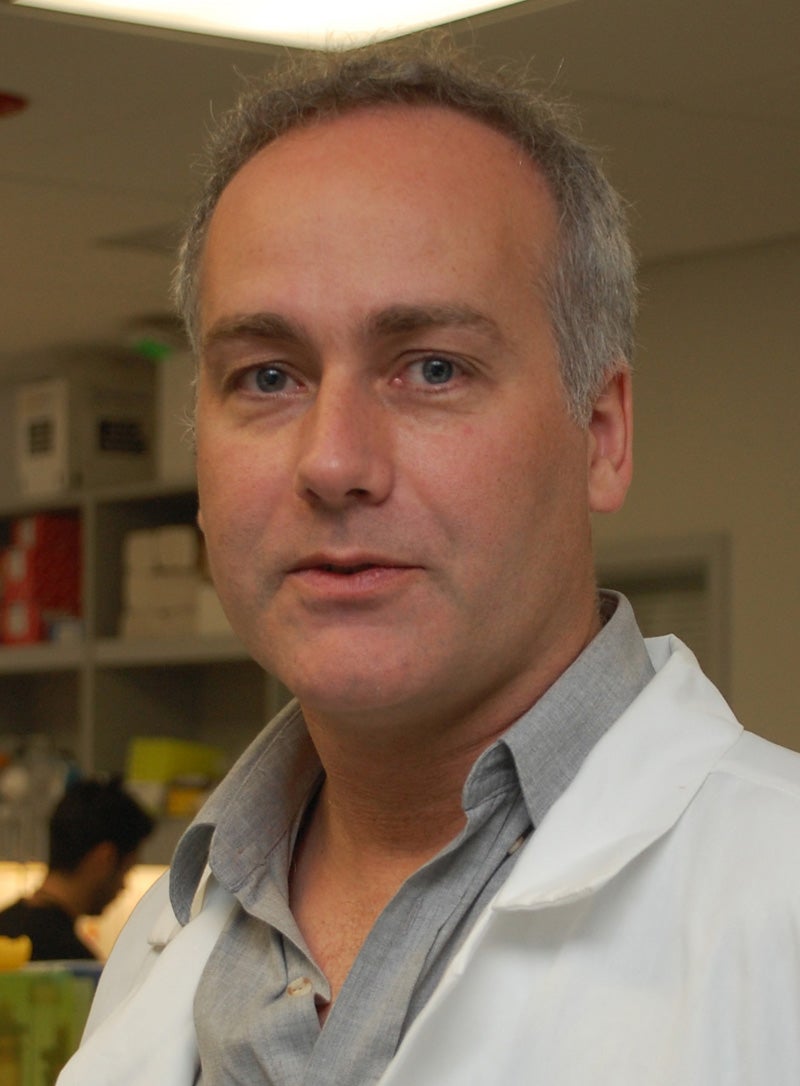
Marcus Kaul, a professor of biomedical sciences in the School of Medicine, who led the study, explained that MAPK14, also known as p38α mitogen-activated protein kinase, becomes activated in microglial cells by exposure to a component on the surface of HIV, whether or not infection occurs.
“This is because microglia carry three critical binding sites for the HIV envelope protein gp120,” Kaul said. “This interaction is sufficient for HIV to induce a neurotoxic state in microglia and compromise brain function.”
MAPK14/p38α is present in other cells of the body, as well as the brain, and has many other functions. Kaul’s team used a genetically driven approach to remove MAPK14/p38α specifically from microglial cells in the mouse model of neuroHIV and a human cell model. The team used neuroHIV mice, which express HIV envelope protein as a transgene in their brain (HIVgp120tg). A transgene is a gene that has been transferred from one organism to another.
“NeuroHIV mice in which microglia possess p38α have reduced nerve cell processes and connections, compared to control animals,” Kaul said. “Dendrites and synapses in the cerebral cortex and hippocampus are affected, indicating brain injury. If the microglia in neuroHIV mice lack p38α, this injury is absent.”
According to the researchers, the work adds important aspects to scientists’ understanding of how a specific cellular signaling mechanism affects the brain during chronic HIV and possibly other viral infections.
The findings are noteworthy because the mouse model of neuroHIV that Kaul and his team used shares key features of brain injury and compromised function, such as impaired memory, with people with HIV infection (PWH).
The research was spearheaded by Deepika Bhullar, a former associate specialist in Kaul’s lab and the first author of the research paper, in collaboration with Monica Carson, a professor of biomedical sciences at UCR.
Next, the team plans to work on confirming the findings of the neuroHIV model in PWH.
“For this, we will need to investigate tissues of PWH who consented to donate them for research after death,” Kaul said.
The study was funded by grants to Kaul from the National Institutes of Health. Kaul, Bhullar, and Carson were joined in the research by scientists at UCR, the Sanford Burnham Prebys Medical Discovery Institute, and The Scripps Research Institute.
The title of the research paper is “A Critical In Vivo Role for Microglial p38α MAPK in HIV-1 Associated Inflammatory Brain Injury.”
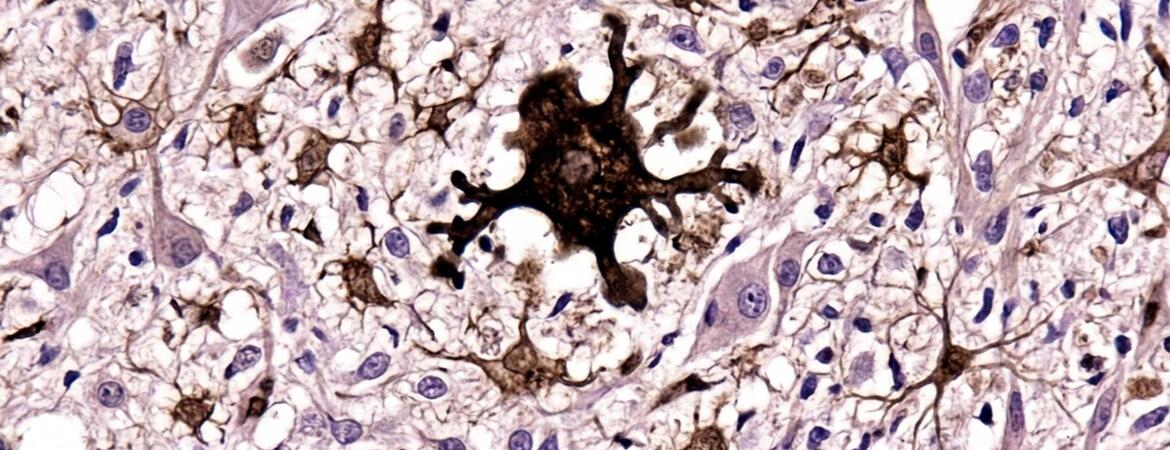
AI-generated header image shows an activated microglial cell next to other cells in a mouse brain. (UCR/Kaul lab)