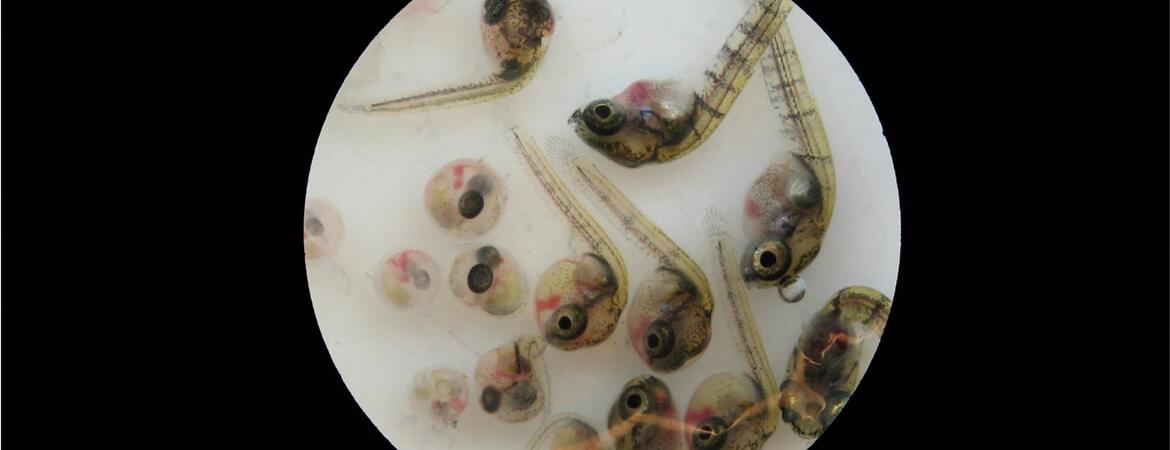

Left to their own devices, babies in the womb would suck their mothers dry.

A developing baby benefits from taking as many essential nutrients as possible, but evolutionary theory predicts that to survive pregnancy, mothers need to keep some of these nutrients for themselves.
New UC Riverside research published in Science Advances has found evidence of this struggle in another part of the animal kingdom. For the first time outside mammals, researchers identified a genetic conflict between fish with a placenta and their developing babies, suggesting that pregnancy itself can create this conflict.
When UCR evolutionary biologist David Reznick first heard the idea, years ago, that mothers and their unborn offspring might have competing interests, he thought it was nonsense. After all, mothers need healthy babies, and babies need healthy mothers. Why would nature pit them against each other?
“I thought it was the silliest thing I’d ever heard,” Reznick said. “I rejected the idea out of hand.”
The new findings support a theory Reznick once dismissed: that mothers and their developing babies have competing evolutionary interests. Scientists believe this conflict helps explain a process called genomic imprinting. Normally, both parents contribute working copies of genes to their offspring. But for some genes, only the copy inherited from the mother or the father is active, while the other is switched off.
In mammals, the affected genes influence how much nourishment a baby receives, with genes inherited from fathers sometimes encouraging growth and those inherited from mothers restraining it.
Why would genes inherited from mothers and fathers have different effects on a baby’s growth? The answer lies in how evolution favors the passing of genes from one generation to the next.
A mother’s evolutionary success depends not only on the survival of her current baby but also on her ability to pass her genes to additional offspring. For the developing baby, however, its own survival matters more than the survival of any future sibling.
That’s because a baby shares, on average, only half its genes with a full sibling, and even fewer with a sibling who has a different father. Evolution can therefore favor genes that help a baby obtain additional nourishment, even when doing so compromises its mother’s ability to have other healthy children.
This isn’t simply a struggle over limited food. Providing nourishment to a developing baby requires energy, and giving more to one offspring can leave a mother with less to support herself or future pregnancies. Even if she eventually recovers, the time and energy required may delay her next pregnancy or reduce the number of offspring she produces over her lifetime.
“What’s in the best interest of the baby to get from its mother is more than what’s in the mother’s best interest to give,” Reznick said.
Reznick calls genes that encourage growth and greater demands for nourishment the “give me more” genes, and those that restrain growth the “you can’t have it” genes. The father’s copy of a “give me more” gene isn’t automatically stronger or dominant over the mother’s copy, but if the mother’s copy is silenced then the father rules. Likewise, if the mother’s copy of a “you can’t have it” gene is active and the father’s copy is silenced, then the mother rules. Which parent’s copy is active depends on the particular gene.
Why would evolution produce this arrangement? A baby that gets more nourishment may have a better chance of surviving and passing on its genes, including those inherited from its father.
But because the mother’s future children could have different fathers, genes from a gestating baby’s father likely favor greater demands for nutrients at the expense of any future offspring. Genes from the mother, meanwhile, might favor self-preservation so she can pass her genes to more offspring.
Imprinting doesn’t necessarily resolve these competing interests. But it can influence how much nourishment a developing baby receives and keep competing influences from overtaking one another.
Scientists first discovered imprinting in mammals through experiments with mouse embryos and later found it in flowering plants, where mothers also nourish their developing offspring after fertilization.
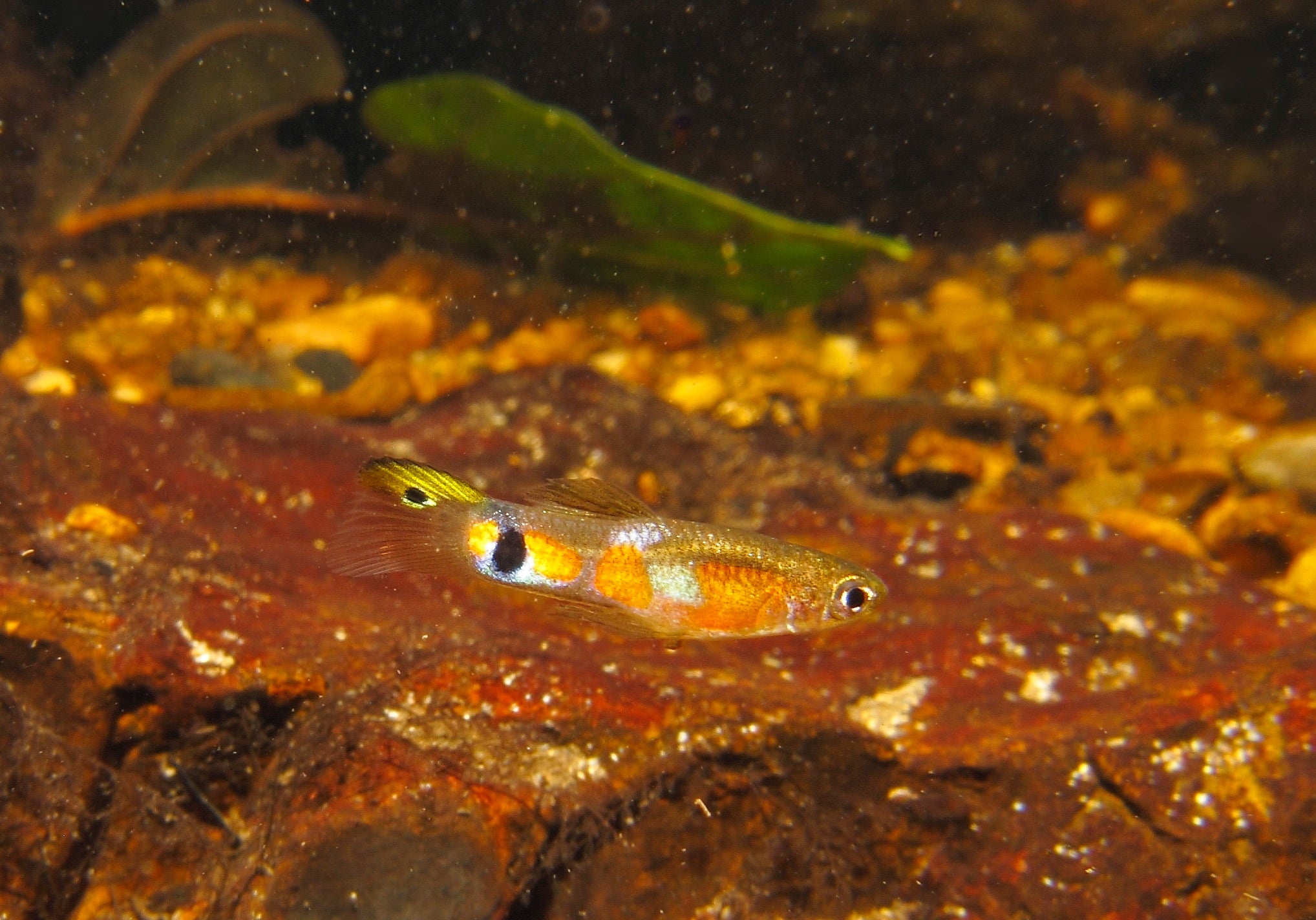
For Reznick, those discoveries were difficult to ignore. He had spent years studying a family of fish that includes guppies and mollies. Unlike most fish, which lay eggs, all the fish in this family give birth to live young, and some have also evolved placentas that deliver nourishment to their developing babies throughout pregnancy.
Many fish pack all the nourishment their young will need into eggs before fertilization. In species with placentas, however, mothers continue supplying nutrients during pregnancy, creating opportunities for genes to influence how much the developing babies receive.
These fish offered a way to test whether imprinting evolves when mothers and developing babies remain connected through a placenta. Fish and mammals last shared a common ancestor hundreds of millions of years ago, long before either group evolved its modern placenta.
To test the idea, Reznick bred separate fish family lines through 10 to 12 generations of brother-sister matings, then crossed fish from different lines. This allowed researchers to distinguish genes inherited from mothers and fathers in the resulting offspring.
Collaborators from the comparative genomics laboratory led by Xu Wang at the Auburn University College of Veterinary Medicine examined genetic activity in the developing fish’s placental tissue, looking for cases in which one parent’s copy of a gene was more active than the other’s.
They found patterns of gene activity consistent with the competing maternal and paternal interests predicted by evolutionary theory. The finding of imprinting in fish suggests that this mechanism may have evolved independently in animals that developed placentas millions of years apart.
Fish and mammal placentas also appear to use some of the same groups of genes to move nutrients into cells. Despite evolving their placentas independently, both groups seem to have arrived at some of the same biological solutions.
The findings could also shed new light on human pregnancy. Errors in imprinting are associated with developmental disorders and understanding why certain genes are active or silent may help scientists better understand how fetal growth is controlled.
For Reznick, the results represent a remarkable change of heart. The evolutionary struggle between mothers and their developing babies, which he once dismissed as nonsense, now appears to extend far beyond mammals.
“We like to think there’s something special about mammals,” Reznick said. “But it turns out these aren’t such special features.”
(Cover image of three different litters from the same least killifish ovary: Joe Travis/Florida State University)