
High in the forests of Hawai‘i, songbirds are stealing twigs and moss from one another’s nests. UC Riverside researchers found this quiet canopy crime is surprisingly common and could threaten species already struggling to survive.
A new study led by Erin Wilson Rankin, a UCR entomologist, offers a detailed look into nest-material theft among Hawaiian forest birds, a behavior known as kleptoparasitism. While scientists have long noted such theft anecdotally, this is the first time it’s been tracked and quantified in the wild.
“People working in the field have seen this behavior for years, but it’s never been documented at this level,” Wilson Rankin said. “Now we can say who’s doing it, who they’re stealing from, and what happens to the nests afterward.”
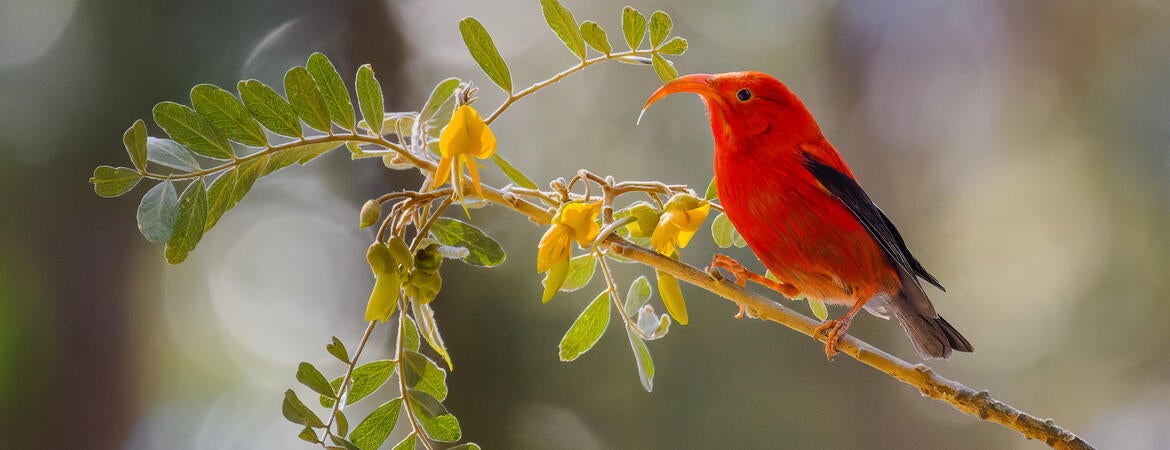
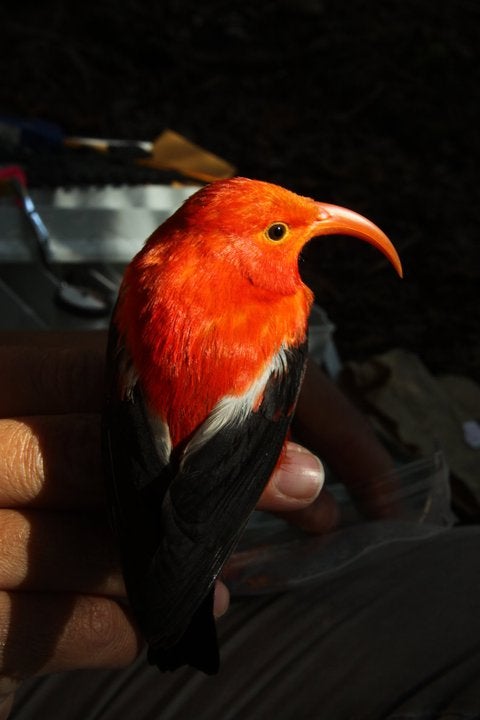
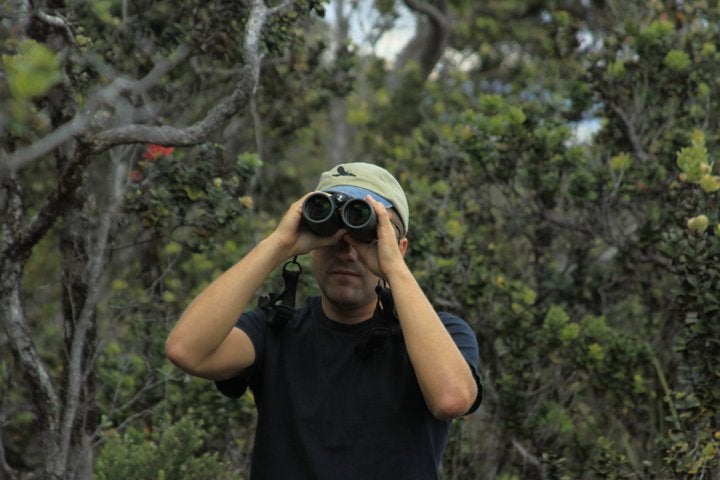
Over six months, a trained team observed more than 200 nests belonging to native canopy-nesting birds, including the scarlet I‘iwi, the crimson Apapane, and the yellow-green Hawai‘i Amakihi. The Apapane emerged as both the most frequent thief and the most common victim, likely due to its abundance in the forest.
Most theft occurred between nests built at similar heights in the trees, supporting what the researchers call the “height overlap hypothesis.” Birds may be pilfering from nests they happen upon while foraging.
In most cases, the nests targeted had already been abandoned. But in about 10% of thefts, the nests were still active, either being built or holding eggs or chicks. Of those, some ended in failure.
“We saw instances where nests failed, either because the nest structure was compromised or because the parents were disturbed and left,” Wilson Rankin said. Roughly 5% of the observed nests failed after a theft.
While that may sound like a small percentage, Wilson Rankin said it raises red flags for species already under stress due to habitat loss, disease, and climate change. In combination with threats like avian malaria, subtle risks like this could accelerate population decline.
The study, published in The American Naturalist, also sheds light on the thieving birds themselves. Though stealing may reduce the energy and time needed to build a nest, it’s not without potential costs. Stolen materials could carry parasites or disease, and some bird species are known to defend nests aggressively, though Hawaiian birds, the researchers noted, are generally peaceful.
“What’s fascinating is that this behavior is happening within species as well,” Wilson Rankin said. “Apapane were stealing from other Apapane.”
Wilson Rankin, who began this research while studying forest arthropods, collaborated with her husband, UCR biologist David Rankin, who led the nest-finding efforts. Their shared goal was to gather detailed life-history data on Hawaiian birds of conservation concern.
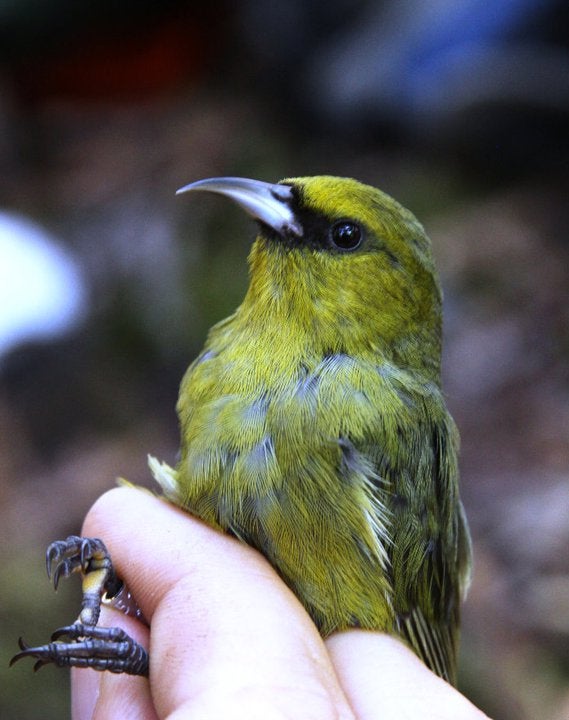
Although none of the species in the study are endangered, they are part of a shrinking group of native birds being pushed into higher elevations by mosquito-borne diseases introduced by humans. Conservationists worry forests like these, which were once safe havens, are becoming increasingly crowded and competitive for birds.
“This kind of behavior could be more common if nesting materials or safe nesting sites become scarce,” Wilson Rankin said. “It’s something we should measure.”
Understanding which birds are most vulnerable, and under what conditions kleptoparasitism is most likely to occur, could help scientists design better conservation strategies as habitat continues to fragment.
“If we can predict when and where this behavior happens, we might not be able to stop it, but we can intervene in other ways to support at-risk species,” Wilson Rankin said. “That’s a benefit of this work.”
She hopes the study also encourages researchers to take a second look at everyday wildlife behaviors that might seem trivial, like stealing a twig, but could carry weighty consequences.
“Sometimes threats to animal species don’t come from predators or people,” Wilson Rankin said. “They can come from similar animals.”
(Cover image of Hawaiian 'I'iwi: Christopher Hall/iStock/Getty)