
She’s a Grammy Award-winning international superstar, and now, Taylor Swift is also a genus of plant-feeding insects from Australia that were previously unknown to science.
Sarah Schroeder, a UC Riverside doctoral student in entomology, hopes that by naming these insects after the singer, both the insects, specifically, as well as the concept of insect conservation more generally will shine with a little of her reflected light.
“It felt authentic to me as a lifelong Swiftie to honor Taylor in this way, as well as bring attention to the diversity of insects that has yet to be discovered,” Schroeder said.
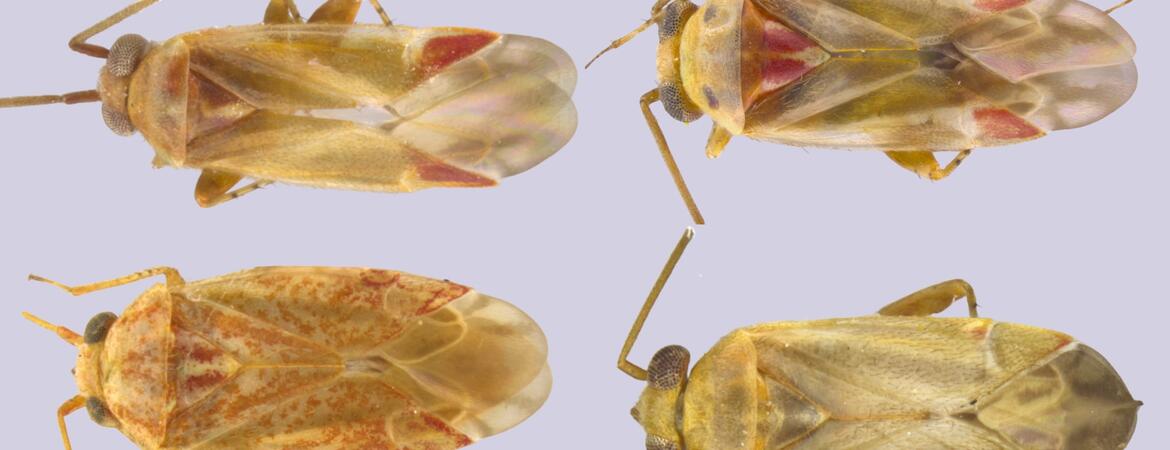
A paper describing 12 new species of insects was published today in the journal Insect Systematics and Evolution. Of these, one genus has been named Swiftiephylus, and it contains four species whose names are inspired by the artist herself as well as several of her albums: Swiftiephylus taylorae, Swiftiephylus amator, Swiftiephylus intrepidus, and Swiftiephylus poetorum.
The names are Latin versions of Taylor, lover, fearless, and poets, respectively. The genus name combines “Swiftie,” the term for Swift’s fans, with Phylus, a name commonly used for this group of insects.
These new insects are not known to be pests to either humans or animals. They are part of a family called Miridae, the largest family of true bugs, with more than 11,000 described species worldwide. The family includes plant feeders and predators, as well as insects with highly specialized lifestyles.
The newly described species are closely associated with Australian she-oaks, trees and shrubs adapted to environments ranging from tropical forests to coastal dunes and extreme heat. Many plant bugs spend their entire lives on a particular host plant, from hatching through adulthood and egg laying. Though they feed off the trees, they aren’t known to cause them harm.
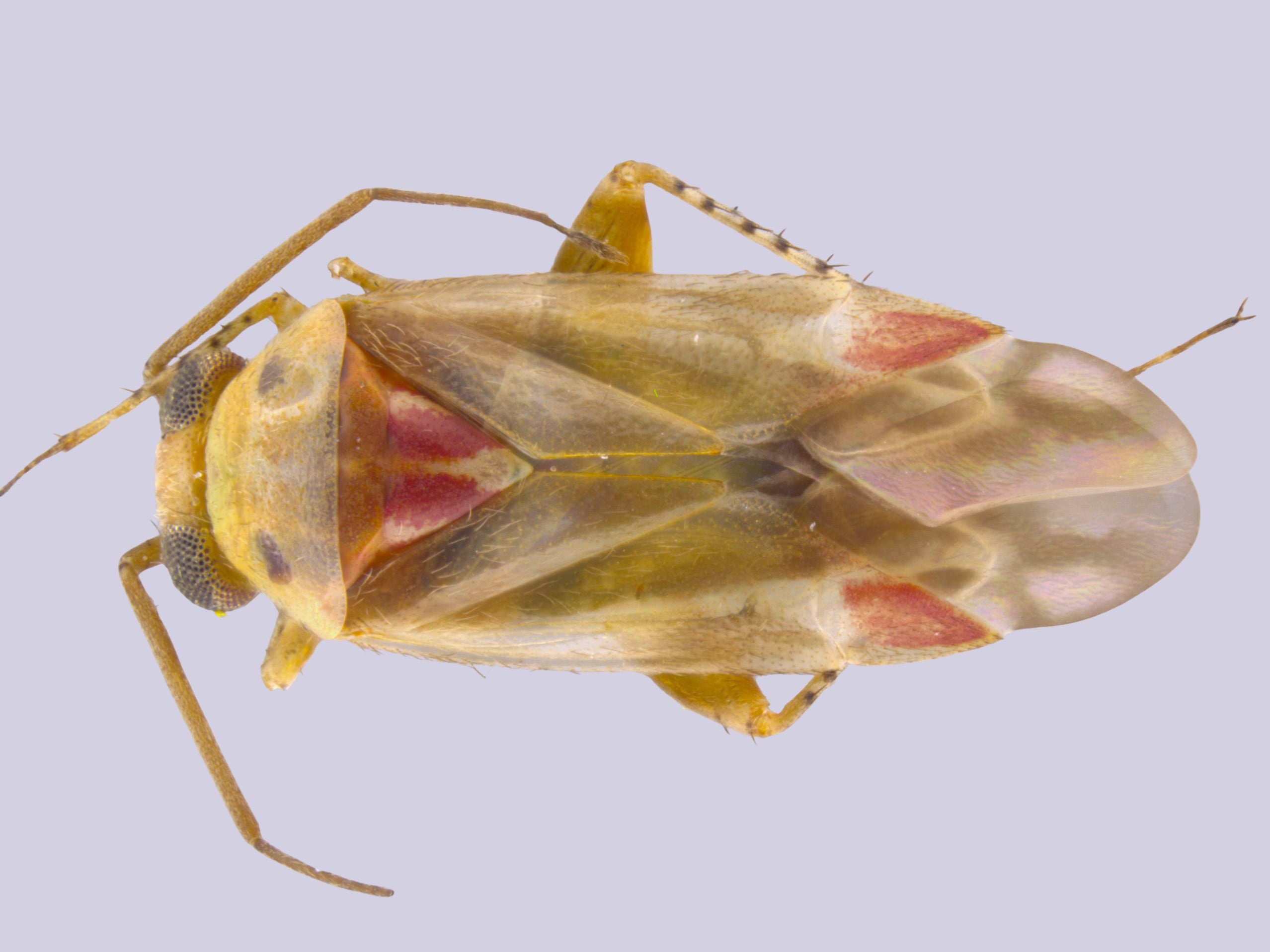
One of the reasons Schroeder dedicated the names of the new insects to Swift also has to do with their appearance. She believes their coloring helps them camouflage among she-oak flowers, which feature spindly red to orange structures. The paper notes that similar cream-and-red coloration has been observed in distantly related bugs living on the same plants, suggesting camouflage may have evolved independently multiple times.
“Taylor Swift’s iconic look is her blonde hair and red lips. These insects are pale yellow with accents of red throughout,” Schroeder said. “In the paper I refer to them as blonde.”
Though the insects are new to science, the specimens themselves have been waiting decades to be formally described.
They were among the plant bug specimens collected between 1995 and 2004 during a large biodiversity effort involving researchers from the American Museum of Natural History and Australian collaborators. The collecting effort yielded more than 50,000 specimens, many of which have required years of taxonomic work to sort, study, and describe.
A key member of that effort was Schroeder’s advisor and paper co-author, Christiane Weirauch, a UCR entomology professor who participated in the project as a postdoctoral researcher before coming to Riverside. Years later, knowing that there were still many undescribed insects from those Australian collection efforts, Weirauch suggested Schroeder investigate them as part of her dissertation.
Schroeder and Weirauch ultimately examined 593 specimens borrowed from the American Museum of Natural History and Australian Museum. The insects fall into distinct evolutionary groups despite sharing host plants and similar coloration.
For Schroeder, their long journey from Australian she-oaks to museum drawers and finally into the scientific record illustrates why the science of identifying and naming organisms, called taxonomy, remains essential.
Despite centuries of biological exploration, there may be as many as 30 million insects that remain undocumented.
Schroeder studies the evolution of this particular subfamily of plant bugs using both traditional taxonomy and genomic data. By reconstructing their evolutionary relationships, she hopes to better understand how the insects spread around the world, developed specialized relationships with plants, and diversified over time. Ultimately, she wants to connect that knowledge to conservation.
Naming the insects for an artist whose music has accompanied Schroeder from childhood through graduate school offered an opportunity to connect that scientific mission with something deeply personal.
Though it has been done for centuries, there is some controversy in entomological circles around naming parts of the natural world for humans. However, Schroeder felt strongly that the practice of doing so can be used in a positive way.
“Taxonomy is the cornerstone of conservation,” Schroeder said. “If we don’t describe species, we don’t know they exist and can’t conserve them. Honoring Taylor through naming these species after her is a way to honor conservation science and bring attention to all the unknown diversity.”