
California’s governor-elect, Xavier Becerra, should make flood and drought preparedness a top priority while protecting aging water infrastructure and replenishing depleted groundwater supplies, according to a new report co-authored by a UC Riverside water expert.
The report, “Priorities for California’s Water: Advice for the Incoming Governor,” warns that California’s water system is increasingly vulnerable to extreme weather from climate change, excessive groundwater pumping, and decades of deferred infrastructure improvements.
Prepared by the Public Policy Institute of California’s Water Policy Center, the report recommends better disaster preparedness, stronger groundwater protections, and long-term investments in water storage and delivery systems.
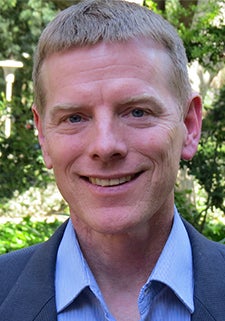
UCR public policy professor Kurt Schwabe, a report co-author, said California must prepare for more intense storms while addressing problems that threaten water deliveries to farms and cities.
“Our conveyance system is set up for 19th-century floods. So, both our storage and our conveyance is undersized right now,” Schwabe said. “Our storage system isn’t set up to mitigate the increased chances of floods, nor to mitigate the increased chances of drought.”
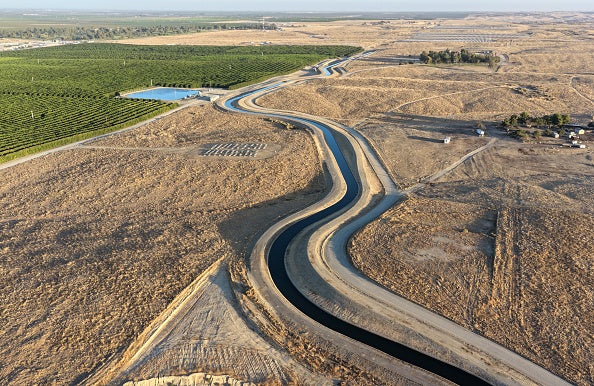
An immediate priority is preventing further damage to the State Water Project’s canals from sinking land in the Central Valley caused by excessive groundwater pumping.
“When the land subsides, these conveyance systems break, and so you don't have that water from the Bay Delta coming down and getting to where it needs to get, or it’s at a very reduced capacity,” he said. “Right now, and in the short run, though, we really want to keep the infrastructure from being broken.”
California’s water challenges are complicated by geography. About 75% of its water supply originates north of Sacramento, while roughly 75% of demand lies to the south.
The state relies on nearly 1,500 dams and an extensive network of canals and aqueducts to capture and transport water.
Much of that infrastructure was built decades ago, when Sierra Nevada snowfall provided a more dependable water supply during spring and summer.
Climate change is disrupting that system by bringing more rain instead of snow, along with more extreme swings between wet and dry conditions.
The report identifies three broad priorities for the next governor: disaster preparedness, stronger groundwater protections, and long-term investments in water storage and delivery systems.
The report ranks disaster preparedness as the governor’s most urgent responsibility. Since 2012, three major California floods have caused about $8 billion in economic damage and killed 29 people. Yet only 7% of California households at risk of flooding have flood insurance.
To address this, the report recommends updated flood protection standards, better emergency communications, clearer lines of authority, and infrastructure improvements to withstand increasingly severe storms. Schwabe said the state should act before the next major flood by improving evacuation planning and public warnings in vulnerable communities.
He also emphasized the need for reliable funding to replace aging infrastructure rather than relying on costly emergency responses.
Another priority is groundwater protection. California obtains about 40% of its water from underground aquifers, with groundwater becoming especially important during droughts. But decades of excessive pumping, exacerbated by an antiquated system of landowner water rights, have caused land to sink in parts of the Central Valley, damaging canals that transport water to farms and communities, Schwabe said.
The report warns that continued subsidence could reduce the State Water Project’s long-term delivery capacity by as much as 87% over 20 years. It calls for stronger implementation of California’s Sustainable Groundwater Management Act, enacted in 2014 to bring groundwater pumping into balance with replenishment. Recommendations include tighter pumping controls in vulnerable areas, better groundwater accounting, and streamlined permits to capture floodwater and store it underground.
Finally, the report urges long-term investments in water storage and delivery systems. It recommends California improve how it measures water supplies, establish dependable infrastructure financing, and restore natural systems that help absorb floodwaters.
Schwabe said California must improve both its water storage capacity and its ability to move large volumes through canals and aqueducts. Expanding reservoirs or underground storage alone will not solve shortages if existing canals cannot carry enough water during periods of heavy runoff.
“It’s just like a little tiny straw, and you got all this water you want to get through it,” he said.
The report also recommends restoring forests and wetlands to slow runoff, reduce flood damage, and improve water quality.
Such improvements will require sustained investments extending beyond any governor’s term, the report said.
Header image: An irrigation canal in Firebaugh, California, the Central Valley agricultural region.