
More than 150 years after the end of slavery and a generation after Civil Rights reforms, a new study finds that places designated as “sundown towns” in the past are more racist today. The study was led by UC Riverside psychology professor Jimmy Calanchini, who researches intergroup bias.
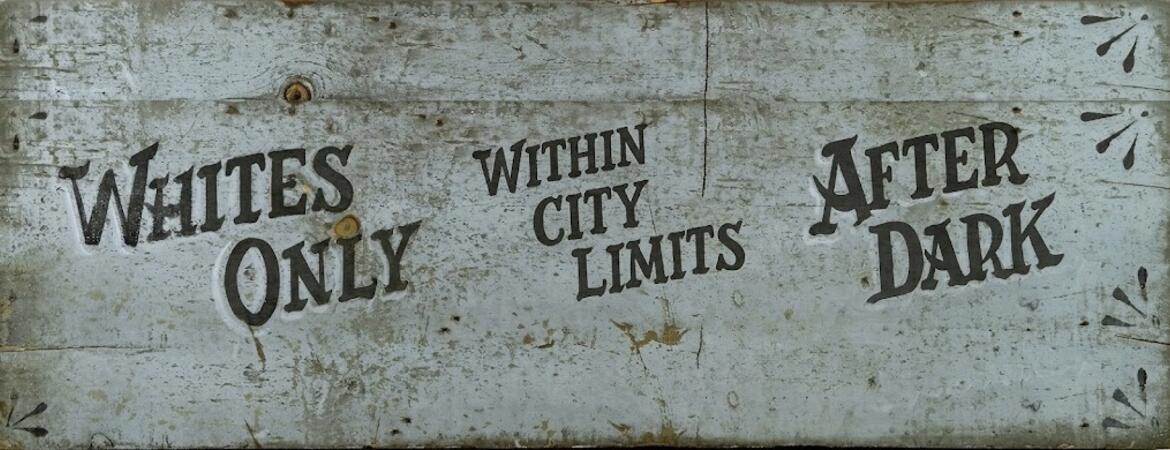
A sundown town is a community that prohibited Black people from staying within its borders after dark, or from owning property. This was done through laws, signs, threats, harassment, or violence.
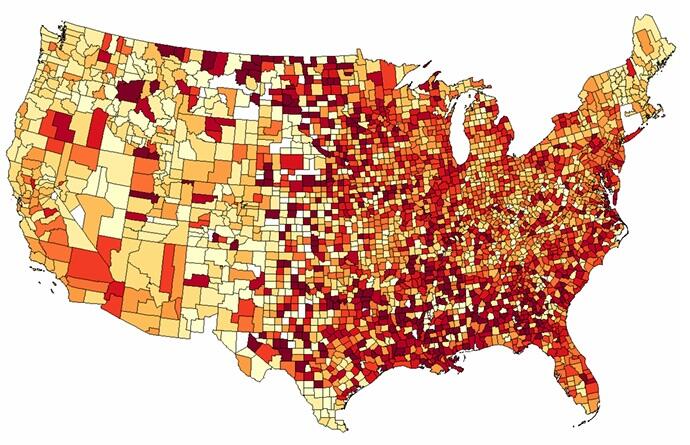
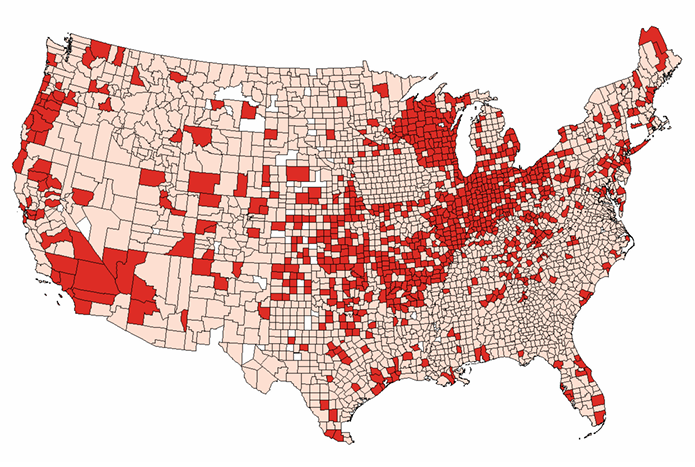
Given its history of Jim Crow segregation laws, the South might seem like it was the epicenter of sundown towns. In fact, they were located all over the United States and were most prevalent in the Midwest. In Anna, Illinois, for example, signs declaring Black people should leave before sunset persisted into the 1970s.
Some Southern California communities, including Glendale and Burbank, passed ordinances declaring that Black people should leave before dark. Other places, like the planned community of Levittown, Pennsylvania, prevented non-white people from buying homes.
The UCR study’s sample was enormous: More than 1.3 million white participants, about half of whom lived in counties that had at least one sundown town, and half lived in counties that did not have one. The sample was part of a large racial bias dataset collected between 2002-2024 by Project Implicit, an international coalition of psychological scientists.
The study considered both implicit racial bias — unconscious or automatic bias — and explicit bias, bias of which people are aware. An example of implicit racial bias would be an employer giving white applicants the benefit of the doubt over equally qualified Black candidates. In contrast, explicit bias would be an employer deliberately deciding to hire only white people.
Calanchini and his colleague Maximilian Primbs considered sundown towns in three contexts: whether a county had at least one sundown town; the number of sundown towns in the county; and whether the county as a whole was considered a sundown county.
Counties with at least one sundown town and counties identified as sundown counties had higher implicit and explicit racial bias today than counties with no sundown town.
Some counties were home to multiple sundown towns. However, the presence of more sundown towns beyond the first one within a county didn’t predict either form of bias.
The authors stop short of concluding that sundown towns’ legacies directly cause modern prejudicial attitudes. Instead, they suggest the historical legacies of discriminatory policing and laws; limited interracial contact; and violence established patterns that persist long after sundown towns’ symptoms are erased.
Calanchini said this study is at the crossroads of psychological and geospatial sciences.
“This growing area of research has shown that biased people build biased institutions, enact biased laws, and create cultures of bias,” he said. “Those structural forces persist long after the people who built them are gone. They continue to shape the biases of people who live and work in them, and also attract more biased people to those places, which further perpetuates the cycle of bias in places.”
To check whether modern racial biases were not caused by other lingering racialized historical effects, the researchers statistically accounted for the proportion of enslaved people in a county in 1860, and the proportion of Black people in a county during the Great Migration. The Great Migration was a period from 1910-1970 during which Black Americans moved from the rural South to urban centers throughout the country. They found that these factors did not explain the sundown town findings.
Calanchini and Primbs then considered whether sundown towns exhibit biases based on skin tone generally, rather than just to Black people. A sundown town was a predictor of implicit skin-tone bias, but not explicit bias.
Finally, the researchers compared racial bias against age bias and disability bias. They found sundown towns predicted implicit age bias, but the results did not extend to explicit bias. They also found positive associations with sundown towns and disability bias.
The authors’ conclusion suggests a link between sundown towns and racial bias, but also indicates sundown towns are more prone to prejudice generally.
The paper, “On Historical Sundown Towns and Racial Bias,” is a collaboration between Calanchini, who is senior author, and lead author Primbs, a postdoctoral fellow at the Dispute Resolution Research Center at Northwestern University’s Kellogg School of Management. It was published in the journal Social Psychological and Personality Science.