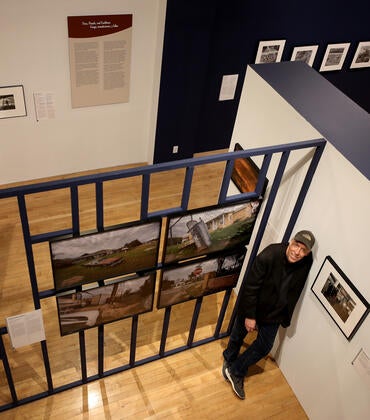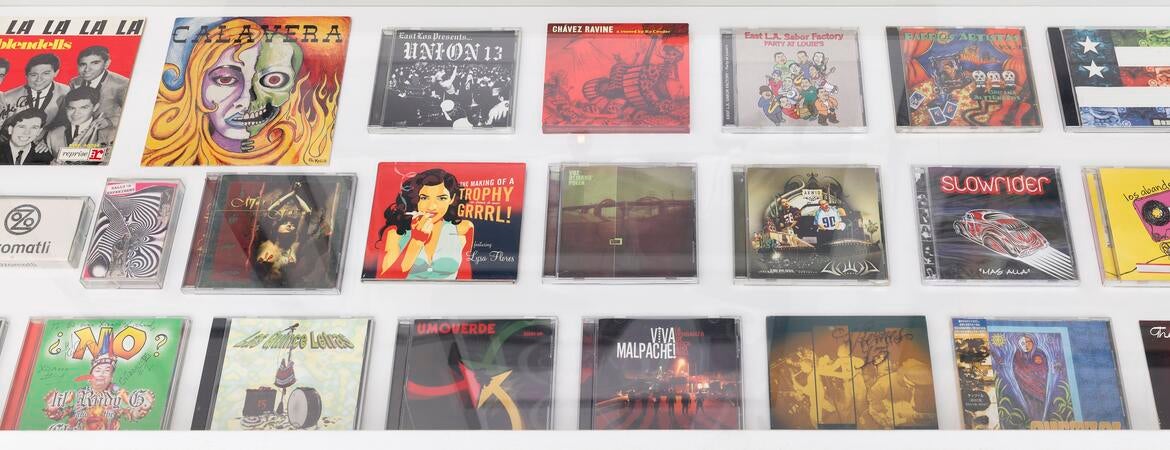

An expansive multimedia exhibition showcasing five decades of East Los Angeles music history is still on view but will close in about a week.
“A Great Day in East L.A.: Celebrando the Eastside Sound” ends its more than yearlong run at LA Plaza de Cultura y Artes, in downtown Los Angeles, after Aug. 23.
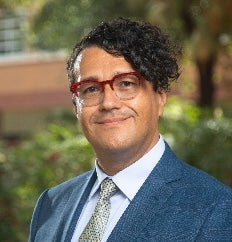
Jorge Leal, assistant professor of history at the University of California, Riverside, co-curated the exhibition. It features the largest collection of Eastside music memorabilia ever assembled in one place, including clothing, instruments, photographs, and records.
Most of it has never been displayed publicly before, and all of it came from people who lived the history, Leal said. “This is a community-led exhibit,” he said. “Every one of the more than 500 pieces in the exhibition was lent to us by band members or their families, or fans.”
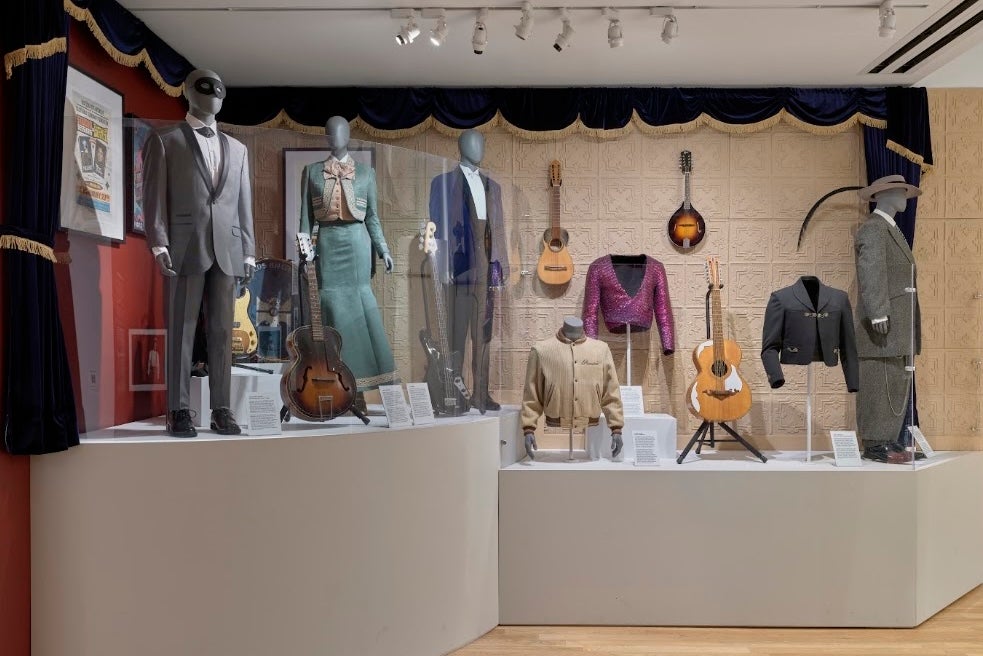
Among the objects are singer-songwriter Brenton Wood’s zoot suit; stage outfits worn by the bands Chicano Batman and Thee Midniters; Los Lobos’ first instruments and first Grammy; vintage issues of magazines and zines such as Frontera and La Banda Elástica; a draft script of the movie “La Bamba”; hand-lettered flyers; and acetate test pressings.
Oh, yeah — and lots of music.
In addition to a jukebox that visitors can use to queue up songs from albums in the exhibition, there are stations for viewing music videos and recordings of live performances. Playlists are accessible by scanning QR codes on the gallery walls or by visiting the exhibition’s website.
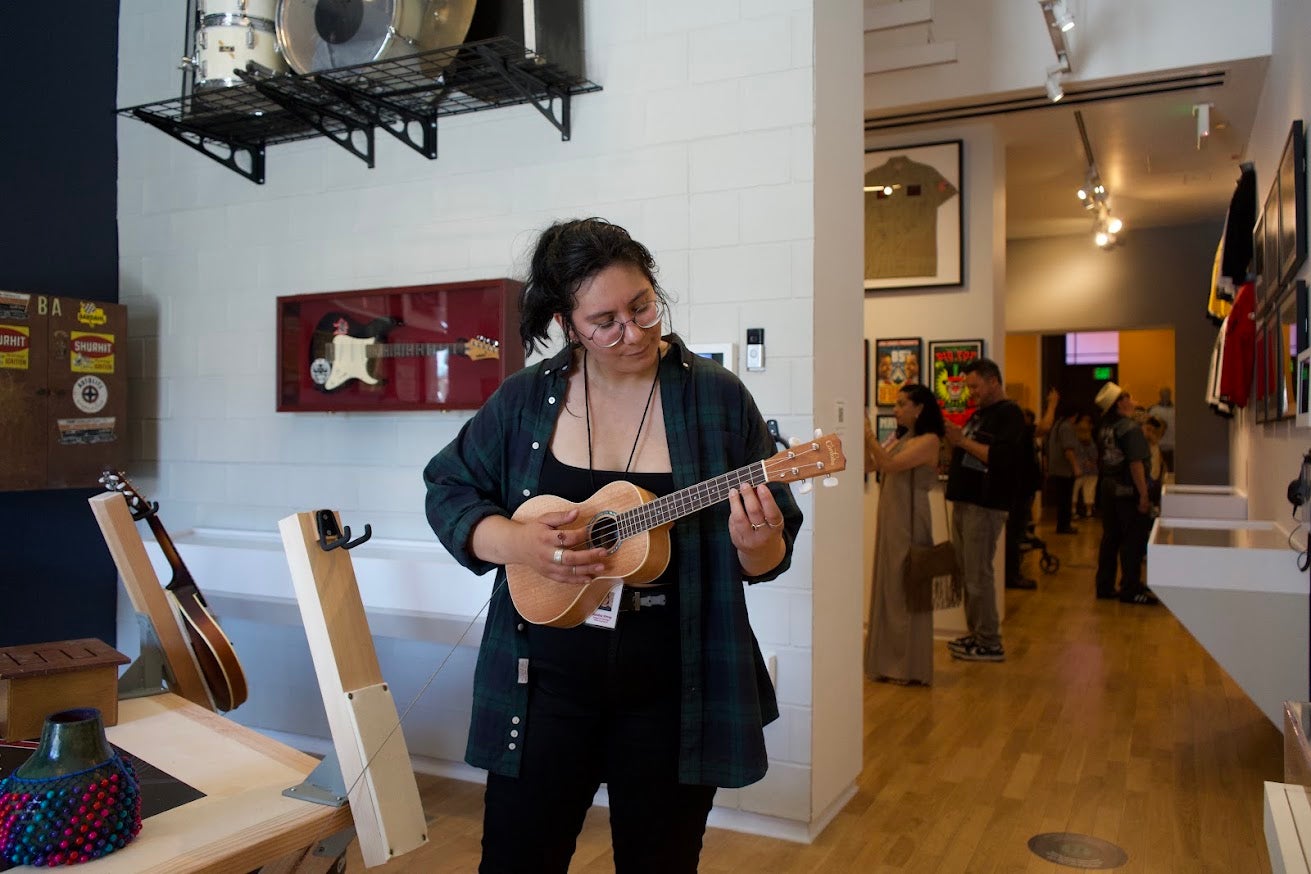
“The Eastside sound is an umbrella term we use to encompass different musical traditions that were created or reinvented in what we think of as the greater east side of Los Angeles,” said Leal, who wrote most of the exhibition’s text panels and leads guided tours of the show.
The music does not reflect a single genre, he said, but rather a confluence of styles that evolved from the 1940s — the era of zoot suits and bandleaders like Lalo Guerrero and Don Tosti — to today, with rock groups such as Quetzal and fusion bands like Aztlán Underground. For the purposes of the exhibition, the curators also include east San Fernando Valley, where Ritchie Valens grew up, in this musical geography.
And while Latin American music is the dominant strand, musicians from the area borrowed from many other genres, Leal said. Ranchera, corridos, jarocho, cumbia, American Indian drumming, rock ’n’ roll, soul, blues, hip-hop, and punk are just a sampling of the influences.
“East LA has always been a multi-ethnic, multicultural region — a place of encounter for people coming from other parts of the world,” Leal said.
Local sounds, global reach
The music also made waves nationally and internationally. In the exhibition, an album by Chan Romero that features his 1959 song “Hippy Hippy Shake” sits near a Beatles album with a recording of the same song. The connection catches visitors off guard, Leal said.
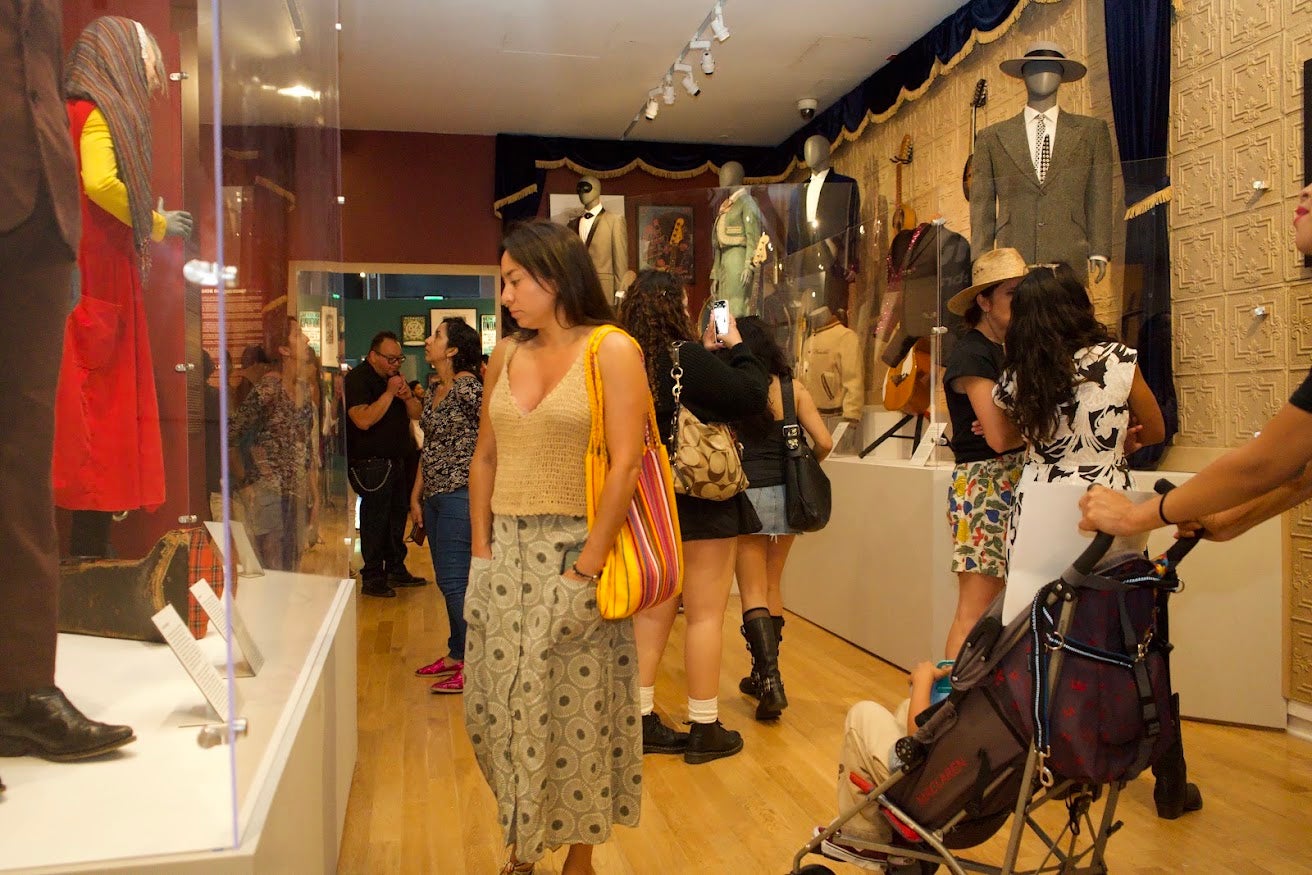
“They ask, ‘Why are the Beatles here?’” he said. “It turns out that as the Beatles were building their career, they heard that catchy song and decided to record their own version of it. From what I understand, Paul McCartney still includes it in his set list.”
The national and global reach of musicians who first gained prominence in this relatively small corner of California is one of the show’s delightful through lines.
The Grammy-winning Quetzal, led by MacArthur fellow Martha González, has toured Japan and Mexico and performed at Carnegie Hall in recent years.
The rock band Ozomatli, which became a worldwide phenomenon in the 90s and 2000s, was tapped by the State Department in 2006 as cultural ambassadors, Leal said, and toured Europe and Australia.
Then, a young Mexican Turkish musician in Australia, with the stage name Maya Jupiter, saw Ozomatli during its tour. Realizing “those are my people,” she eventually relocated to Los Angeles to build her career there, Leal said.
Thematic galleries
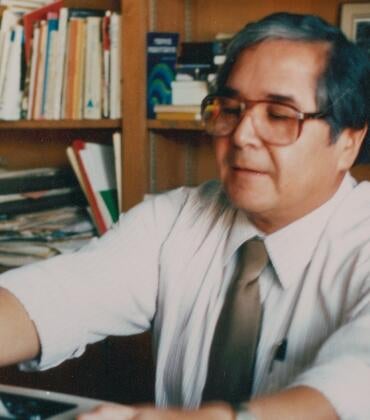
The exhibition grew out of a project started a decade ago by photographer and filmmaker Piero Giunti, who set out to track down and photograph Eastside musicians before their stories were lost. Giunti teamed up with the songwriter and music historian Mark Guerrero, son of the late Lalo Guerrero, to locate musicians, record oral histories, and gather objects.
Leal led a research team of current and former UCR students who worked alongside LA Plaza staff to help curate the exhibition. He also came up with the concept of organizing the show thematically, building it around six galleries, each designed to resemble a physical space from Eastside musical life.
Giunti’s portraits are displayed throughout the galleries of the exhibition.
Visitors begin at a gallery called The Venue. It is designed as a stage, where outfits and instruments from artists are displayed the way they might have looked under the lights of onetime Eastside dance halls such as the Paramount Ballroom, Leal said.
From there, visitors move to El Rockero Store, which is modeled on family-owned record shops that once served as informal community centers as much as retail spaces. These stores “played a crucial role in distributing the vibrant print culture that emerged out of East L.A.,” stocking homemade zines and magazines alongside vinyl records, cassettes, and CDs, Leal writes in the wall text.
Next is The Garage, an interactive gallery with guitars that visitors can play, built around the idea that garages were makeshift recording studios where teenage bands cut their first tracks on reel-to-reels and cassettes, as Guerrero writes in the gallery's accompanying text. Leal called the garage “the place of beginning” — a space where “your family would send you if you wanted to make noise.”
The show turns political in Radio Rebelde, a gallery devoted to the relationship between Eastside music and activism — from Thee Midniters’ 1968 song “Chicano Power” to the Chicano punk bands of the 1980s and the immigrant-rights anthems of recent groups like Las Cafeteras.
“The Eastside sound has always had a political and socially conscious dimension,” Leal said. “Many of these bands address injustice and demands for equality and perform at benefits and political actions.”
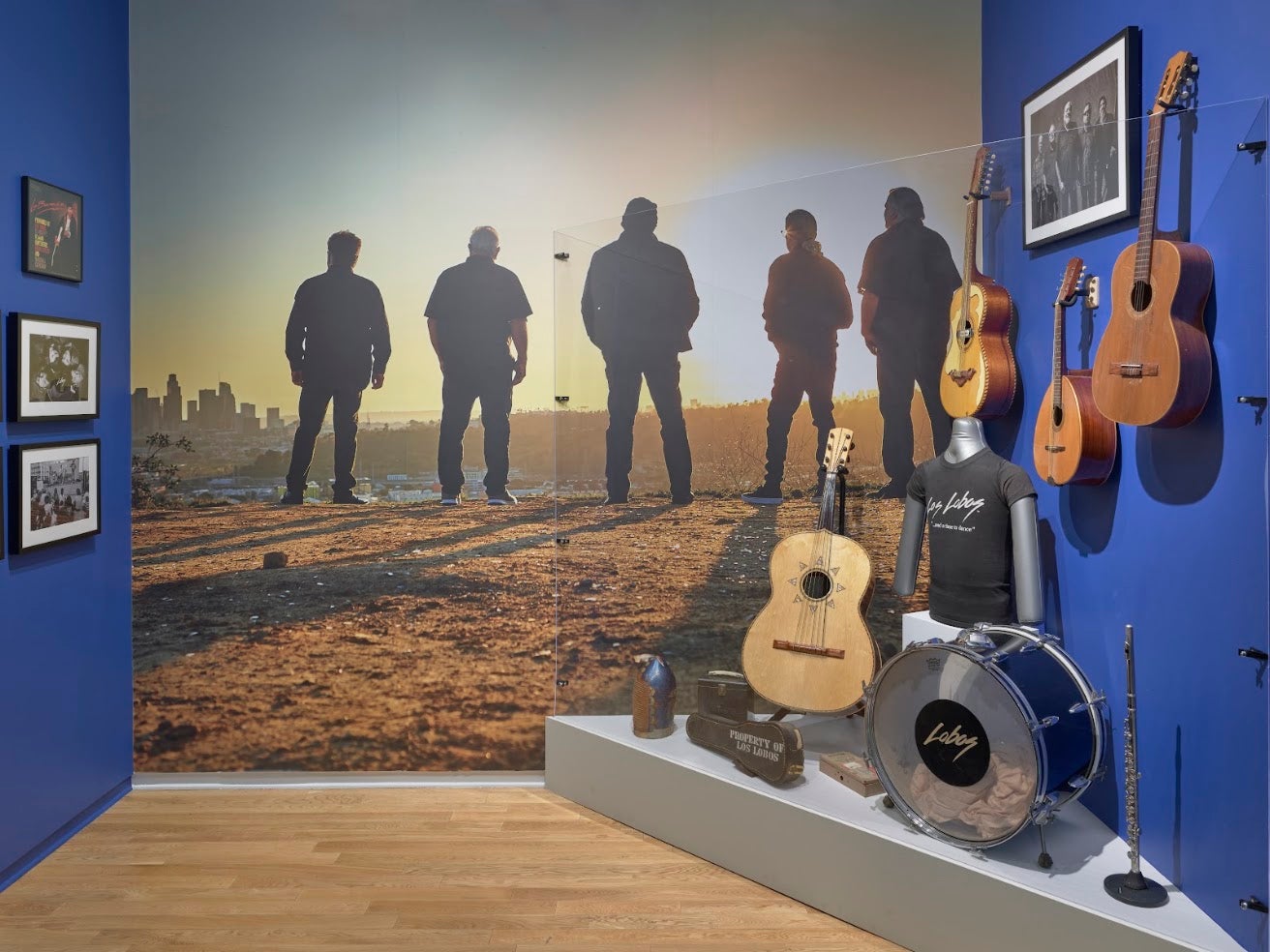
The gallery From East Los to the World focuses on how Eastside artists — despite starting out in the garages, streets, and stages of Southern California — reached international audiences. It documents artists’ appearances in influential music magazines, TV variety shows, film soundtracks, and performances at renowned venues around the world.
Finally, the Come On, Let’s Go! gallery traces the arc of Los Lobos from teenage musicians serenading family members at quinceañeras to their present-day status as one of the most decorated and internationally recognized bands to come out of the Eastside. The group has been performing for 52 years.
“They really have been the ambassadors of the Eastside sound — past, present, and hopefully future,” Leal said.
Take a virtual tour of the exhibition.
(Photos courtesy of LA Plaza de Cultura y Artes)