
Growing up in Mississippi, graphic novelist John Jennings was deeply impacted by the horrific death of 14-year-old Emmett Till from an early age.
Jennings, a UC Riverside professor of media and cultural studies, is helping to bring that story to a new medium with “Framing Emmett Till: Exposing Dark Fear,” a graphic novel released Oct. 27 by Abrams ComicsArts through Jennings’ Megascope imprint.
He formed Megascope in 2020 as a place to promote speculative and historical nonfiction stories about and by people of color.
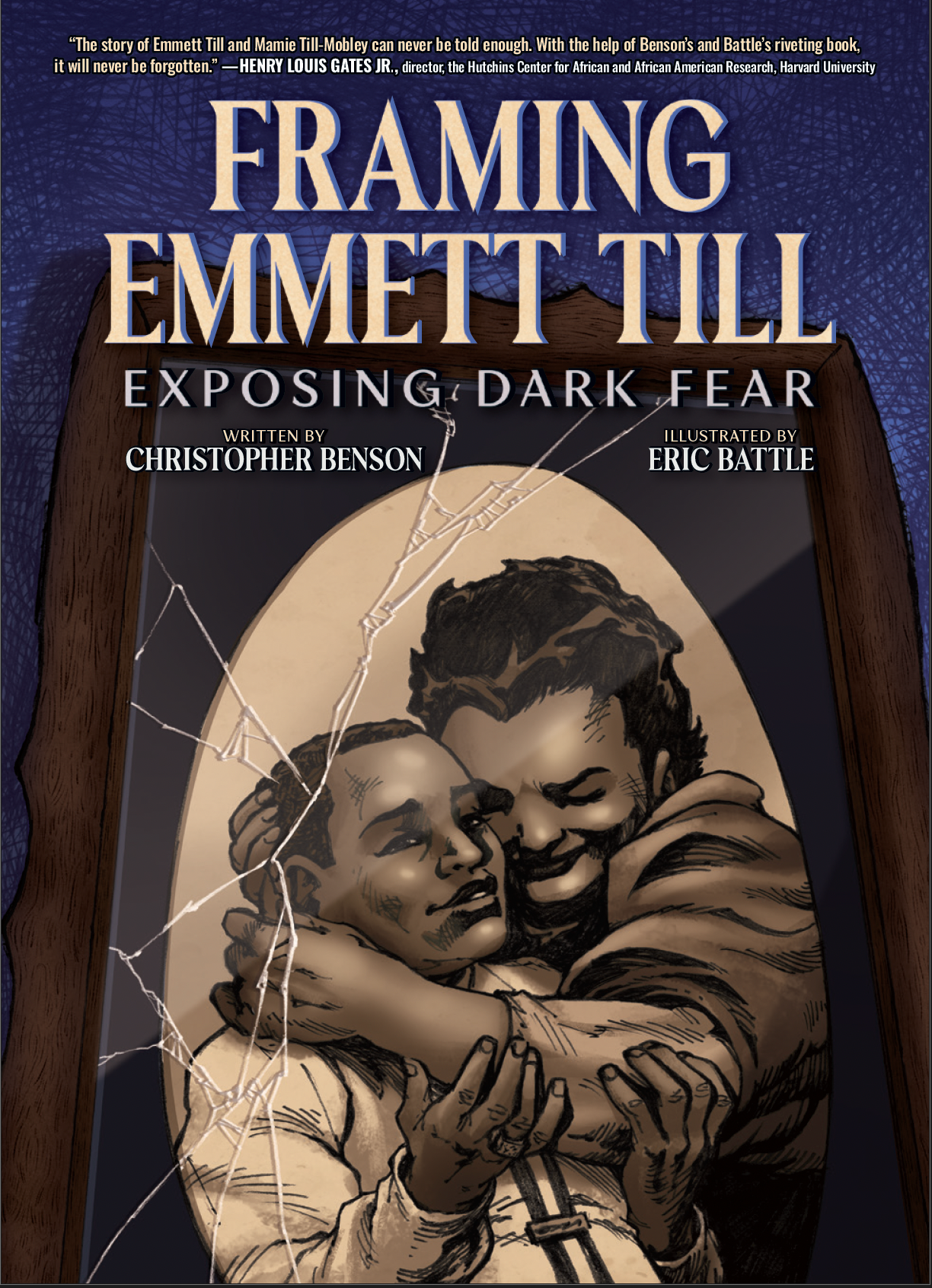
The graphic novel is based on an acclaimed 2003 book by journalist Christopher Benson, “Death of Innocence: The Story of the Hate Crime That Changed America.” Benson collaborated with Mamie Till-Mobley, Till’s mother, to tell the story of her son’s death and how it inspired outrage and helped motivate the civil rights movement. The book was nominated for the Pulitzer Prize and won the Robert F. Kennedy and BlackBoard book awards.
In 1955, Till was kidnapped in the middle of the night while visiting family in Mississippi and brutally murdered for allegedly whistling at a white woman. An all-white jury acquitted his killers.
“The story of Emmett Till is something that resonated with me most of my life,” Jennings said.
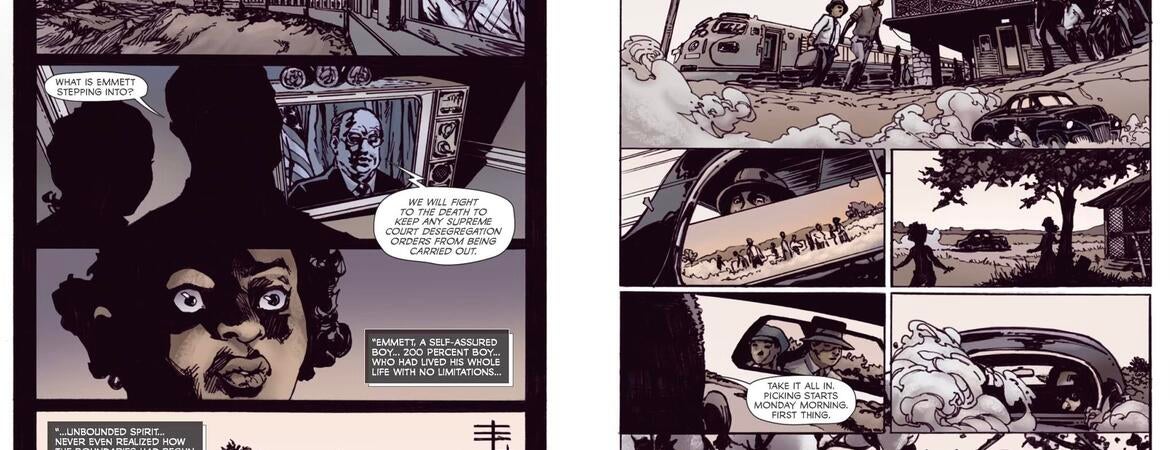
He saw the comic book medium as an opportunity to present the story in multiple ways. At one level, it’s a straightforward procedural of Till’s murder, the trial, and Benson’s research. But the graphic novel also provides a metafictional account of how Benson met Till-Mobley and worked with her in the final months of her life to protect the history that she spent her life relating.
It also allows for flashbacks using different color tones and adding imaginary elements like showing Emmett Till in the courtroom when his killing is being discussed.
“Comics are inherently surreal in some ways,” Jennings said. “Everything on the page has potential for storytelling.”
Jennings met Benson years earlier when he was teaching at the University of Chicago. When he formed Megascope, he thought an adaptation of Benson’s book would be a perfect fit.

Jennings acted as a curator working with Benson, who hadn’t written in the comics medium before, and pairing him with artist Eric Battle who he described as the “visual director” for the graphic novel. An industry veteran for 30 years, Battle has worked for DC and Marvel Comics on iconic characters including Batman, Spider-Man, and the X-Men.
It was difficult subject matter, especially for Battle who had to reference the photos of Till’s mutilated corpse. But Jennings said they felt a responsibility to Till-Mobley who had an open-casket funeral and allowed Jet magazine to publish the photos to show the brutality of her son’s death.
While Till’s story is well known, Jennings noted that he still finds people who are unaware of it. Jennings, who teaches a course on race and horror, said it strikes him as a horror story of sorts and a nightmare that many Black parents continue to deal with as Black children face violence at a disproportionate rate.
He noted the shooting death of a one-year-old in Mississippi by a police officer in June in which authorities refused to file charges as an example of how young Black children continue to face violence.
“One of the reasons we wanted to make this book is to remind people that this is something that has been happening for generations,” Jennings said.
Header image art by Eric Battle, courtesy of Abrams Comic Arts.