
Cancer, arthritis, and diabetes can develop when cells activate the wrong genes. Yet, those failures are remarkably rare. Every second of every day, trillions of cells correctly respond to environmental stress, keeping our bodies functional.
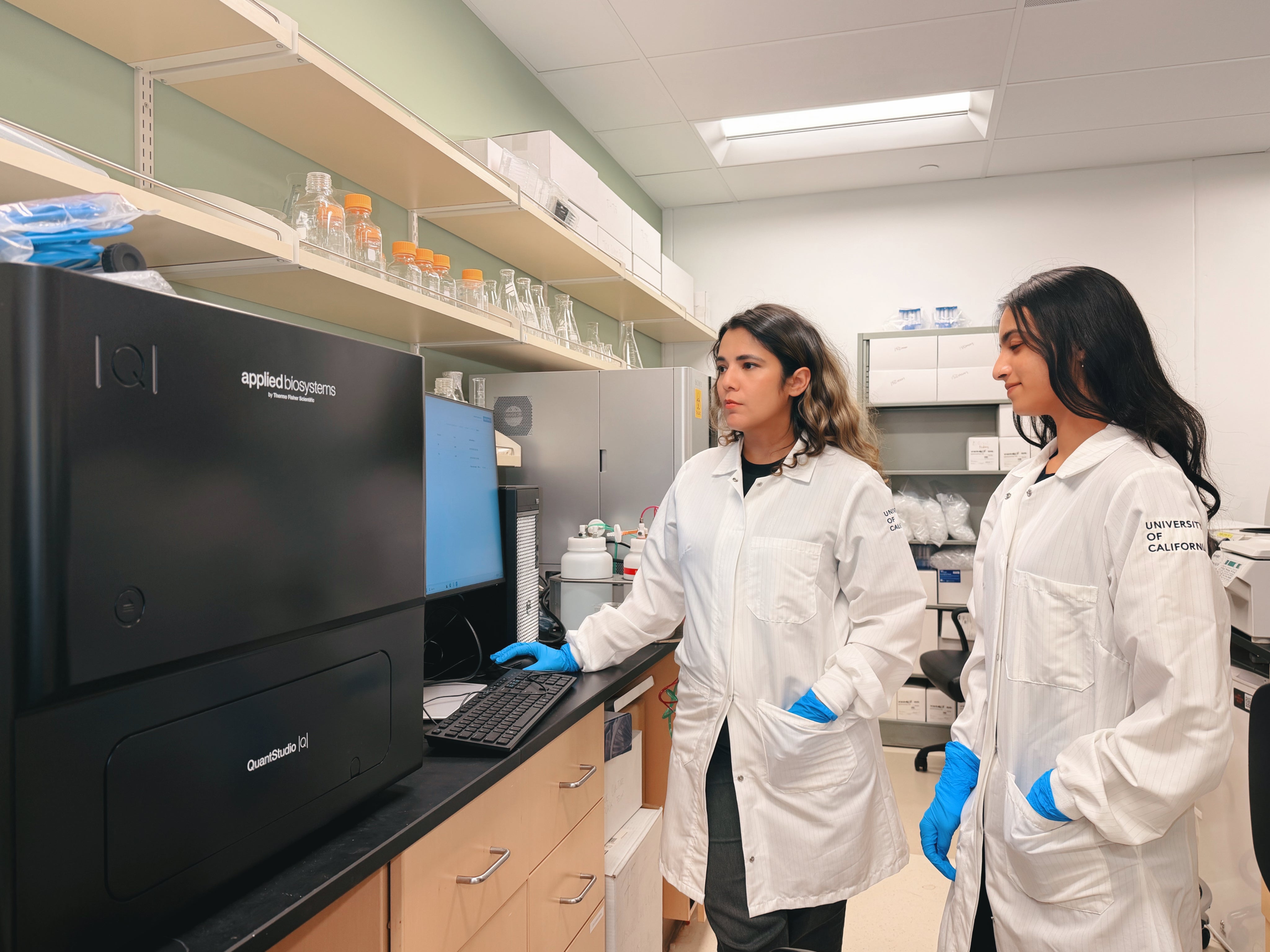
How cells achieve that extraordinary reliability is the focus of a new $2.1 million National Institutes of Health grant awarded to UC Riverside synthetic biologist Sonali Chaturvedi. Specifically, the research will investigate how cells maintain stability despite needing to adapt quickly to changes and stress.
The five-year Early Stage Investigator award from NIH’s National Institute of General Medical Science will support Chaturvedi’s research into the molecular control systems, transcriptional feedback circuits that determine which genes are switched on, how strongly they respond to external stimuli, and when they turn off again. Scientists know these circuits help cells stay stable while adapting to changing conditions, but many of the rules governing them remain unknown.
“Cells are constantly receiving signals from their environment, but they can’t overreact,” Chaturvedi said. “We’re trying to understand the basic rules that let cells remain stable while still adapting to stress. Those rules are fundamental to nearly every biological process.”
One question driving the research is whether cells pass more than DNA to future generations. As cells divide, Chaturvedi's lab will investigate whether they also inherit “molecular memories” or patterns of gene regulation that influence how daughter and even granddaughter cells will respond to stresses.
To answer those questions, her team will build simplified versions of transcriptional feedback circuits and observe how they behave under different environmental conditions. By reducing these complex systems to their essential components, the researchers hope to uncover general principles that apply across many types of cells.
While Chaturvedi’s previous work focused on how cells transfer genetic information, the new grant turns to the more fundamental question of how healthy cells reliably make the right decisions billions of times each day. Cells experience stress from things like infection, low oxygen, heat, cold, lack of nutrients, DNA damage from UV light, inflammation, toxins and pollutants.
Insights from this research could eventually help scientists better understand diseases in which gene regulation goes awry, perhaps in response to some of these stresses, while also informing the design of engineered cells with potential applications ranging from cancer therapies to regenerative medicine.
The R35 award is designed to support bold, curiosity-driven research rather than a single narrowly defined project. That flexibility allows investigators to follow unexpected discoveries as they emerge. It is a fitting approach for research aimed at uncovering the fundamental rules that govern how cells behave.
“This grant gives us the freedom to ask big questions,” Chaturvedi said. “If we can understand how cells maintain both stability and flexibility, we’ll have a much better understanding of how life works at its most fundamental level.”
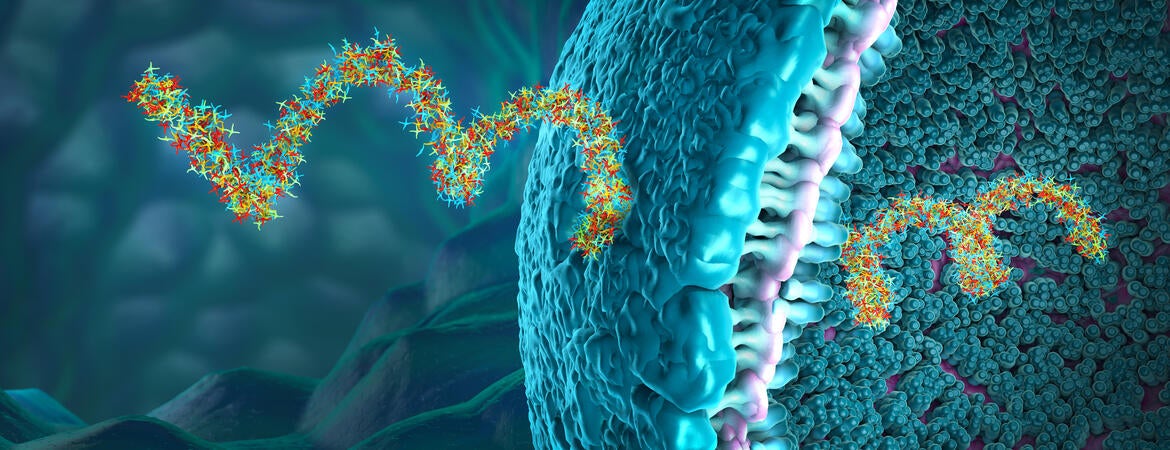
(Cover image of ribonucleic acid strands: Christoph Burgstedt/iStock/Getty)