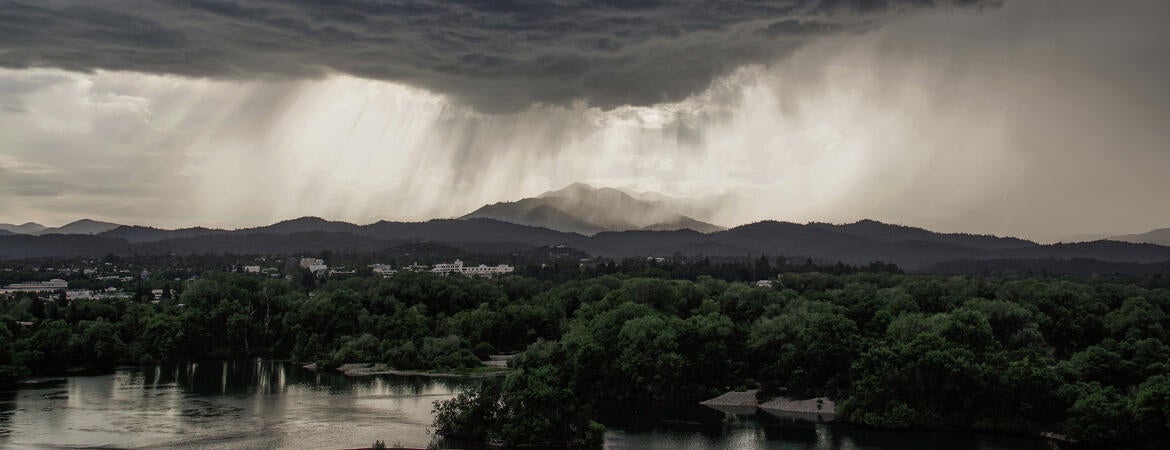

What could a stormy El Niño winter mean for California’s water supply? For the agencies that operate the state’s dams, reservoirs, and canals, the question is how much water they can capture and store for dry years while leaving enough room in reservoirs to manage floods.
In this Q&A, four UC Riverside scholars discuss what an El Niño winter could mean for California’s water system and how the region can prepare for the years ahead with climate change.
Kurt Schwabe is a professor of environmental economics and policy, and Ariel Dinar is a distinguished professor emeritus of environmental economics and policy, both with the School of Public Policy. Hoori Ajami is a professor of groundwater hydrology, and Francesca Hopkins is an associate professor of climate change and sustainability. Ajami and Hopkins are with the College of Natural and Agricultural Sciences.
What could a strong El Niño mean for California’s water supply this winter? Could one exceptionally wet year make a meaningful difference after years of water shortages?
Kurt Schwabe: It will not make a meaningful difference over the long run because so much, especially in Southern California, depends on Lake Mead and Lake Powell. Reservoirs will need a lot more than one winter to start to recover. We’re going to be fighting that shortage for a long time unless we have three, four, or five good years of above-normal precipitation and runoff within the whole Colorado River Basin. A good wet year will help fill up our own storage systems and get us through a couple of years. Is that meaningful? It’s meaningful for about two years. Is it meaningful after that? No. Furthermore, because our storage infrastructure is outdated and wasn’t built for the 21st-century climate, we won’t be able to store as much runoff as we could in the past, leading to less water availability overall.
Hoori Ajami: It takes a long time for California’s streams and groundwater to recover from droughts. Our continental-scale study of drought impacts on groundwater showed that recovery takes about three years on average, but many aquifers, particularly those that are overdrawn, may never fully recover.
Ariel Dinar: Of course not...It is most likely that even a strong one-year El Niño cannot make a meaningful difference after many years of water shortages.
Could an El Niño mean Southern California receives heavy rainfall while California's out-of-state water supplies at Lake Mead and Lake Powell remain extremely low? Why doesn’t a wet winter in California necessarily translate into significantly more water in the Colorado River system?
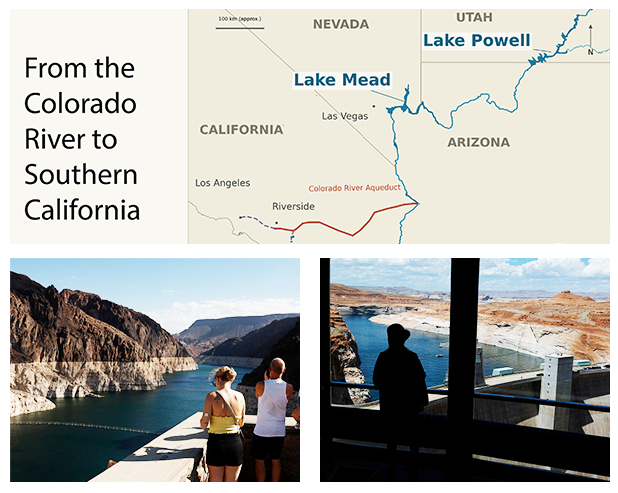
Schwabe: I think there’s enough uncertainty or variability in El Niño that we can’t say for sure. The Colorado River system is huge. We’ve had a drought in the Colorado River system for 25 years. Let that sink in. So, one year probably isn’t going to make a difference in terms of the overall water supply in that area. You need multiple back-to-back years. In addition, most of the water in the Colorado River comes from the Upper Basin states of Colorado and Utah. So, since we’re at the end of the system here in Southern California, what happens here doesn’t necessarily translate into more Colorado River water.
Ajami: While the Imperial and Coachella valleys in southeastern California are within the Lower Colorado River Basin, heavy El Niño rainfall in Southern California does not bring heavier precipitation to the Colorado River headwaters.
Dinar: To answer the second part of the question, California is in a different watershed than the Colorado River Basin, or CRB. California does not contribute water to the basin. California uses water from the CRB via canals. One way that a wet winter in Southern California could theoretically translate into significantly more water in the CRB is by lowering demand for CRB water from its two main users in California, the Metropolitan Water District and the Imperial Irrigation District. However, these two entities operate under senior water rights and are unlikely to give up those rights unless they are well compensated and guaranteed that such an “experiment” would be short-lived.
California sometimes receives enormous amounts of water during a few intense storms, yet much of the runoff ultimately reaches the ocean. How much more of that water could realistically be captured, stored, or used to recharge groundwater?
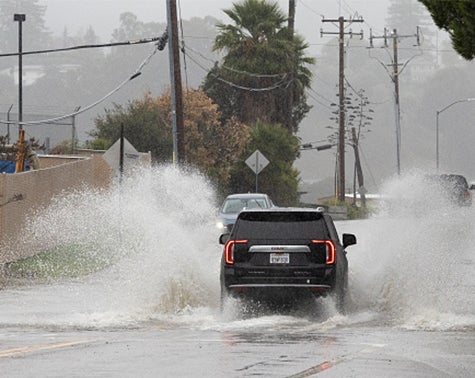
Schwabe: This gets into three things. You want not only to capture stormwater but also to convey it to where you traditionally want it to go, to agriculture and urban areas, while leaving water for the environment. You want to manage your headwaters up in the mountains. You can’t do anything about the melting snowpack. It’s going to melt. That’s just the effect of temperature and more precipitation falling as rain than as snow nowadays. But you can keep the green infrastructure (foliage) up there in as good a condition as possible so that it slows down runoff, absorbs water, and allows it to percolate more slowly back into the system, including our storage and conveyance systems. One thing is to make sure you have good land management practices. The second is more storage, and the third is more conveyance, in essence.
Ajami: There is great potential for storing additional water for managed aquifer recharge. However, this requires the development of appropriate infrastructure and the identification of the most suitable sites.
Dinar: California could have the ability to capture more water from the intense storms (flash floods) if proper institutions, investments and management practices are designed and implemented sooner rather than later.
Is California’s existing water infrastructure — reservoirs, dams, aqueducts, groundwater recharge systems and flood-control channels — well suited to a climate in which precipitation may increasingly arrive in fewer but more intense storms? If not, what needs to change?
Schwabe: Our infrastructure is undersized for the volume of water that can arrive during major storms. Because reservoirs must maintain enough empty capacity to protect against flooding, we cannot always capture and store as much water as we would like. We need more storage capacity and better conveyance systems, including infrastructure that allows us to move excess surface water underground to recharge aquifers.
We also need more accurate, real-time forecasts of precipitation and runoff. Better information would help reservoir operators determine how much water they can safely store without increasing flood risks.
Francesca Hopkins: California’s water system was built for a climate different from the one we have today and the one we’ll have for the rest of this century. We’ve already seen that a changing climate brings more variability in precipitation from year to year, with more wet years followed by much drier-than-normal years. In Southern California, it has concentrated our rainy season into a shorter period in winter, with more intense storms on those days. More intense storms mean more runoff and less chance for rainfall to infiltrate soils and reach groundwater. That means the infrastructure we currently have will become less efficient at capturing water as these changes continue to accelerate.
Furthermore, California’s water infrastructure relies heavily on storage in the Sierra snowpack, which historically melted and turned into river flow throughout the spring and summer after the winter storms that bring most of our rainfall. We’re seeing the Sierra snowpack melt much earlier in the year, shifting the timing of river flow and water availability closer to the rainy season. For example, we had a really significant heat wave in March 2026 that essentially decimated the snowpack. Surveys conducted on April 1 found only 18% of the snow that’s normally there. If we want to store water for the drier season, we can no longer rely on the snowpack to store it for us. We’re going to have to find new ways.
Storing water for the dry months and leaving enough space in reservoirs for flood control creates some difficult choices. How should water managers make that trade-off when a series of powerful storms is approaching?
Schwabe: There certainly is a trade-off, and this trade-off is becoming greater because of the size and volume of water coming into our system now. Right now, our infrastructure is undersized. With the amount of floodwater that comes down, we have to leave a lot of room in our current storage system to make sure it doesn’t overflow. If we had a larger system, we could capture more of that water, store it, and save it to send to the Central Valley and Southern California. But because the system is undersized, we actually have to hold less water for flood protection. If the storms don’t happen, we don’t have as much water for the dry months of June, July and August, when we need it.
Because everything is uncertain, you don’t know what’s actually going to come down. The trade-off is greater now because the consequences of getting it wrong about how much water to hold in your reservoir are greater than they were before. As for what to do about it, the long-term solution is, again, more storage. Maybe it’s being able to move that storage underground. You need the conveyance system to do that.
The second thing is that we need more accurate, real-time forecasting of what’s happening with the weather system and how much water is likely to flow into our reservoirs. The more reservoir managers are in the dark about what’s actually coming and what the runoff will be like, the more likely they are to keep reservoir levels lower than might be optimal. Their main concern is making sure there isn’t a flood. That’s the number one priority. The number two priority is trying to preserve enough water to get it south. If they don’t have good information, they’re always going to hold less water in the reservoir than they need.
Dinar: To make California’s water system much more flexible in dealing with extreme water situations such as droughts and intense storms, its infrastructure, water institutions, and policies have to be integrated into one system with overall investment, planning and even operational rules.
Agriculture uses most of the developed water supplies in many parts of California and the Colorado River Basin. If shortages persist, how much of the solution will have to come from changes in agriculture, and what would those changes mean economically?
Schwabe: Agriculture has to be part of the solution. The question is how much of the reduction farmers are asked to shoulder, given that they typically have priority rights, and how much they are paid to do it.
Hopkins: There has already been a shift in Colorado River water supply from farmers in the Imperial Valley to urban uses in San Diego in recent decades, and this is probably making the Imperial Valley more economically vulnerable. The farmers who are selling their water are not using their land, so there are fewer jobs for farmworkers. At the same time, there is a desire to develop other industries on this land, such as data centers. And we can’t forget that these diversions of water away from agriculture in this region are also having a direct impact on the water level and quality of the Salton Sea. Less Colorado River water going to agriculture is lowering the sea’s water level and contributing to the lake becoming saltier over time. Both of those issues are linked to high asthma rates along the shoreline. As the sea is increasingly viewed as a polluted place that is dangerous to health, the quality of life of people who live there is declining, and others are less likely to visit. And many who live there are not going to leave. There are some important tribal lands adjacent to the sea. So the question of where Colorado River water goes is a complicated one that’s linked to many other issues in the region, including human health, tribal issues, and environmental justice.
Looking beyond this winter, what should California and the Southwest be doing now to prepare for a future with a less reliable Colorado River, more extreme swings between drought and heavy precipitation, and continued population and economic pressures on water supplies?
Schwabe: I think the state is starting to do a better job of investing more money in recycling treated municipal wastewater, although the investment is more localized. Los Angeles, San Diego and Metropolitan combined are coming up with about 300,000 acre-feet of additional supplies over the next 10 years from water that would typically go out to the ocean. That would cover a large fraction of the reductions in Colorado River flows we’d be hit with under new shortage agreements.
So, more recycling, storage, conveyance, and partnerships. I think we’re starting to see opportunities for agricultural and municipal entities to engage in partnerships that move water to its highest-value uses during times of drought. That’s a much cheaper way of dealing with scarcity than other solutions, like desalination.
Hopkins: We really need to rethink our relationship with water in the Western U.S. Historically, we used this water to irrigate thirsty crops that don’t even directly feed people, such as alfalfa and other forage crops for cattle. This has enabled us to have relatively cheap beef, even though those calories are highly water intensive. Going forward, we need to rethink these historical practices and face up to the changing climate and coming water supply issues. For example, we could shift to crops that potentially use less water and provide more nutrition for people per unit of irrigation water. The issue with climate change is that we need to fundamentally rethink certain aspects of how we do things, essentially our culture, to meet the moment. That will mean changes in farming practices and land use, as well as changes in the foods we eat. Right now, beef gets this huge, invisible subsidy from cheap water in the Western U.S. The cost of that water will ultimately be passed on to consumers in the form of higher prices. We’ll have to adapt by eating less beef and shifting to other foods.
Dinar: Groundwater and surface water should be managed together, taking into account recycled water and desalinated water. Water agencies should also give greater priority to projects that replenish groundwater through managed aquifer recharge.
Could a strong El Niño help replenish depleted groundwater in California’s Central Valley?
Schwabe: It will help some. It will help more in the future once we get our conveyance system set up to move those floodwaters into the ground, into the aquifers. Recharge is naturally going to occur to some extent, but we’re still going to lose a lot more water than we have to. If we build better storage and conveyance systems, we can move that water into the aquifers. Otherwise, it will go out to the ocean.
Dinar: It depends on how strong El Niño will be. However, I would add that without proper infrastructure and the mechanisms and institutions to make it function, any El Niño water will continue to go to the Pacific Ocean.
If so, what could water managers and farmers do to maximize groundwater replenishment?
Schwabe: That gets into working with landowners, too, and asking whether we can put water on their land at certain times of year. Would you allow us to do that? It will recharge the aquifer. A lot of landowners will say yes if you pay them a little bit of money, a lot less than it’s going to cost you to find the water elsewhere.
Dinar: I do not think that farmers and local water managers can address such a complex water management system. What is needed is an economy-wide approach that integrates all sources, all users and all regions into one framework. Such a framework could address extreme and prolonged scarcity and intense precipitation events.
Ajami: They should identify suitable sites for managed aquifer recharge and partner with state agencies and universities to achieve project goals.